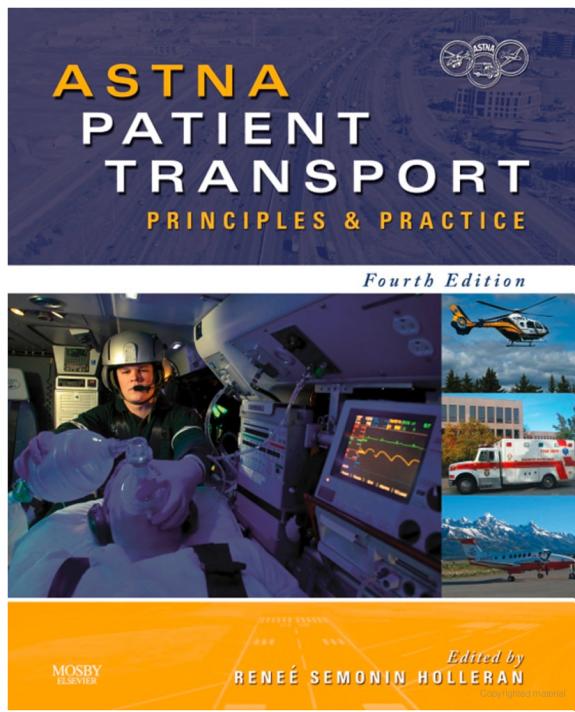
ASTNA Patient Transport
Principles and Practice
by ASTNA, Renee S. Holleran
848 pages· 2009· ISBN 9780323066136
About
Whether you’re caring for patients on the ground or in the air, this trusted, one-of-a-kind resource is an essential tool for your success in transport nursing. The 4th edition has been extensively revised to keep you up to date with the latest technological advances and help you meet the ever-changing needs of this critical nursing field. Comprehensive overviews familiarize you with the most common diseases and injuries encountered in practice, accompanied by important management considerations to help you ensure the most effective communication and the safest patient care in all transport settings. Case studies presented at the end of each clinical chapter demonstrate how to apply concepts to scenarios similar to those you’ll encounter in practice. Special Populations Unit helps you meet the unique care needs of pregnant, neonatal, pediatric, and military patients. Competencies listed at the beginning of each chapter help you identify key components of effective patient care. Collaborative, multidisciplinary focus meets the educational and reference needs of all transport health care providers and emphasizes the importance of teamwork in ensuring successful patient outcomes. 3 new chapters highlight emerging trends in transport care: The Use of Technology During Transport, including ventricular assist devices, a chapter devoted to Mechanical Ventilation, and Military Transport with EnRoute care. Updated content throughout provides a balance of ground and air coverage and reflects the recently published Flight and Ground Transport Nursing Core Curriculum to help you prepare for the CTRN or CFRN examination. Expanded disaster management coverage addresses front-line response to major disasters. Expanded disaster management coverage addresses important concerns for improving front-line response to major disasters. Additional pathophysiology content helps you better understand the effects of diseases and injuries on the body’s normal physiologic processes. Clear instructions for reading radiographs and CT scans simplify the use of these diagnostic tools and help you improve related outcomes. Information based on the latest updates from the Federal Aviation Association and the National Transportation Safety Board alerts you to important safety regulations. Obesity considerations included in the Patient Assessment and Preparation for Transport chapter outline special challenges and possible solutions for the care of obese patients.
Discuss ASTNA Patient Transport with other readers
Join or start a book club for ASTNA Patient Transport on Readfeed. Live chat, shared reading progress, and AI discussion questions — free to get started.
Frequently asked questions
How do I join a book club for ASTNA Patient Transport?
Sign up free on Readfeed, then browse public clubs or start your own club with ASTNA Patient Transport as the current read. Invite friends with a share link and discuss together with live chat and AI discussion questions.
Can I discuss ASTNA Patient Transport with other readers online?
Yes. Readfeed book clubs let you chat live, share progress, and join discussions about ASTNA Patient Transport with readers worldwide — whether your club is virtual, in-person, or hybrid.
Is Readfeed free?
Yes. Creating an account and joining book clubs is free. Sign up to find readers who love the same books and start discussing today.