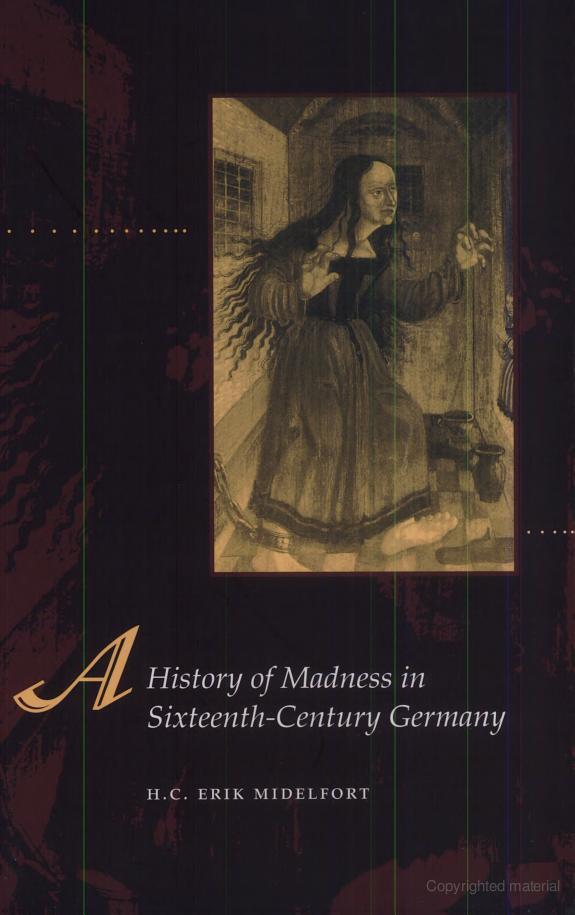
A History of Madness in Sixteenth-century Germany

A History of Madness in Sixteenth-century Germany

by H. C. Erik Midelfort

438 pages· 1999· ISBN 9780804741699
About
This magisterial work explores how Renaissance Germans understood and experienced madness. It focuses on the insanity of the world in general but also on specific disorders; examines the thinking on madness of theologians, jurists, and physicians; and analyzes the vernacular ideas that propelled sufferers to seek help in pilgrimage or newly founded hospitals for the helplessly disordered. In the process, the author uses the history of madness as a lens to illuminate the history of the Renaissance, the Reformation and Counter-Reformation, the history of poverty and social welfare, and the history of princely courts, state building, and the civilizing process. Rather than try to fit historical experience into modern psychiatric categories, this book reconstructs the images and metaphors through which Renaissance Germans themselves understood and experienced mental illness and deviance, ranging from such bizarre conditions as St. Vitus’s dance and demonic possession to such medical crises as melancholy and mania. By examining the records of shrines and hospitals, where the mad went for relief, we hear the voices of the mad themselves. For many religious Germans, sin was a form of madness and the sinful world was thoroughly insane. This book compares the thought of Martin Luther and the medical-religious reformer Paracelsus, who both believed that madness was a basic category of human experience. For them and others, the sixteenth century was an age of increasing demonic presence; the demon-possessed seemed to be everywhere. For Renaissance physicians, however, the problem was finding the correct ancient Greek concepts to describe mental illness. In medical terms, the late sixteenth century was the age of melancholy. For jurists, the customary insanity defense did not clarify whether melancholy persons were responsible for their actions, and they frequently solicited the advice of physicians. Sixteenth-century Germany was also an age of folly, with fools filling a major role in German art and literature and present at every prince and princeling’s court. The author analyzes what Renaissance Germans meant by folly and examines the lives and social contexts of several court fools.

Discuss A History of Madness in Sixteenth-century Germany with other readers

Join or start a book club for A History of Madness in Sixteenth-century Germany on Readfeed. Live chat, shared reading progress, and AI discussion questions — free to get started.

Frequently asked questions

How do I join a book club for A History of Madness in Sixteenth-century Germany?

Sign up free on Readfeed, then browse public clubs or start your own club with A History of Madness in Sixteenth-century Germany as the current read. Invite friends with a share link and discuss together with live chat and AI discussion questions.

Can I discuss A History of Madness in Sixteenth-century Germany with other readers online?

Yes. Readfeed book clubs let you chat live, share progress, and join discussions about A History of Madness in Sixteenth-century Germany with readers worldwide — whether your club is virtual, in-person, or hybrid.

Is Readfeed free?

Yes. Creating an account and joining book clubs is free. Sign up to find readers who love the same books and start discussing today.