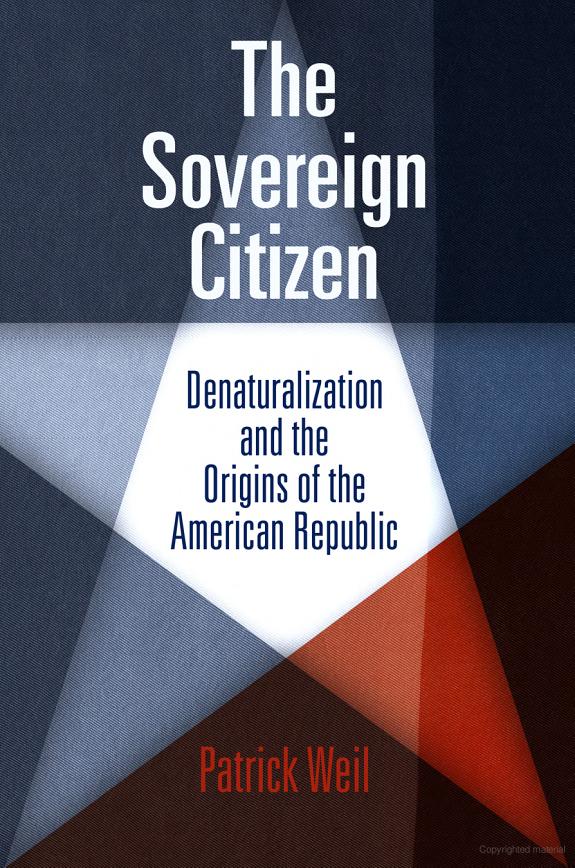
The Sovereign Citizen

The Sovereign Citizen

Denaturalization and the Origins of the American Republic

by Patrick Weil

296 pages· 2012· ISBN 9780812206210
About
Present-day Americans feel secure in their citizenship: they are free to speak up for any cause, oppose their government, marry a person of any background, and live where they choose—at home or abroad. Denaturalization and denationalization are more often associated with twentieth-century authoritarian regimes. But there was a time when American-born and naturalized foreign-born individuals in the United States could be deprived of their citizenship and its associated rights. Patrick Weil examines the twentieth-century legal procedures, causes, and enforcement of denaturalization to illuminate an important but neglected dimension of Americans' understanding of sovereignty and federal authority: a citizen is defined, in part, by the parameters that could be used to revoke that same citizenship. The Sovereign Citizen begins with the Naturalization Act of 1906, which was intended to prevent realization of citizenship through fraudulent or illegal means. Denaturalization—a process provided for by one clause of the act—became the main instrument for the transfer of naturalization authority from states and local courts to the federal government. Alongside the federalization of naturalization, a conditionality of citizenship emerged: for the first half of the twentieth century, naturalized individuals could be stripped of their citizenship not only for fraud but also for affiliations with activities or organizations that were perceived as un-American. (Emma Goldman's case was the first and perhaps best-known denaturalization on political grounds, in 1909.) By midcentury the Supreme Court was fiercely debating cases and challenged the constitutionality of denaturalization and denationalization. This internal battle lasted almost thirty years. The Warren Court's eventual decision to uphold the sovereignty of the citizen—not the state—secures our national order to this day. Weil's account of this transformation, and the political battles fought by its advocates and critics, reshapes our understanding of American citizenship.

Discuss The Sovereign Citizen with other readers

Join or start a book club for The Sovereign Citizen on Readfeed. Live chat, shared reading progress, and AI discussion questions — free to get started.

Frequently asked questions

How do I join a book club for The Sovereign Citizen?

Sign up free on Readfeed, then browse public clubs or start your own club with The Sovereign Citizen as the current read. Invite friends with a share link and discuss together with live chat and AI discussion questions.

Can I discuss The Sovereign Citizen with other readers online?

Yes. Readfeed book clubs let you chat live, share progress, and join discussions about The Sovereign Citizen with readers worldwide — whether your club is virtual, in-person, or hybrid.

Is Readfeed free?

Yes. Creating an account and joining book clubs is free. Sign up to find readers who love the same books and start discussing today.