Interactions Between the Ants Linepithema Humile, Tapinoma Sessile and Aphid Mutualists

Interactions Between the Ants Linepithema Humile, Tapinoma Sessile and Aphid Mutualists

180 pages· 2008· ISBN 9781109004014
About
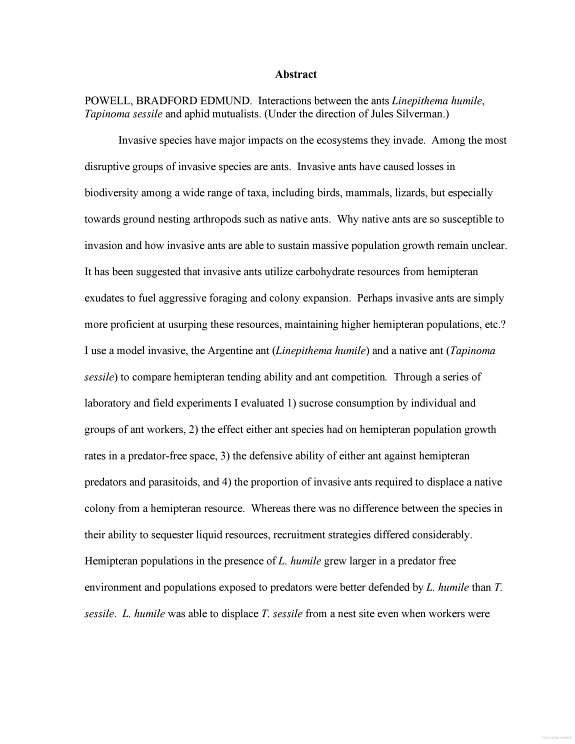
Invasive species have major impacts on the ecosystems they invade. Among the most disruptive groups of invasive species are ants. Invasive ants have caused losses in biodiversity among a wide range of taxa, including birds, mammals, lizards, but especially towards ground nesting arthropods such as native ants. Why native ants are so susceptible to invasion and how invasive ants are able to sustain massive population growth remain unclear. It has been suggested that invasive ants utilize carbohydrate resources from hemipteran exudates to fuel aggressive foraging and colony expansion. Perhaps invasive ants are simply more proficient at usurping these resources, maintaining higher hemipteran populations, etc.? I use a model invasive, the Argentine ant (Linepithema humile) and a native ant (Tapinoma sessile) to compare hemipteran tending ability and ant competition. Through a series of laboratory and field experiments I evaluated (1) sucrose consumption by individual and groups of ant workers, (2) the effect either ant species had on hemipteran population growth rates in a predator-free space, (3) the defensive ability of either ant against hemipteran predators and parasitoids, and (4) the proportion of invasive ants required to displace a native colony from a hemipteran resource. Whereas there was no difference between the species in their ability to sequester liquid resources, recruitment strategies differed considerably. Hemipteran populations in the presence of L. humile grew larger in a predator free environment and populations exposed to predators were better defended by L. humile than T. sessile. L. humile was able to displace T. sessile from a nest site even when workers were outnumbered two to one. Aggression by either ant species was significantly reduced without hemipterans present. By having intrinsic affects on hemipteran population growth rate and being better defenders, invasive ants can sustain larger carbohydrate resources that can partially explain their rapid growth and spread.

Discuss Interactions Between the Ants Linepithema Humile, Tapinoma Sessile and Aphid Mutualists with other readers

Join or start a book club for Interactions Between the Ants Linepithema Humile, Tapinoma Sessile and Aphid Mutualists on Readfeed. Live chat, shared reading progress, and AI discussion questions — free to get started.

Frequently asked questions

How do I join a book club for Interactions Between the Ants Linepithema Humile, Tapinoma Sessile and Aphid Mutualists?

Sign up free on Readfeed, then browse public clubs or start your own club with Interactions Between the Ants Linepithema Humile, Tapinoma Sessile and Aphid Mutualists as the current read. Invite friends with a share link and discuss together with live chat and AI discussion questions.

Can I discuss Interactions Between the Ants Linepithema Humile, Tapinoma Sessile and Aphid Mutualists with other readers online?

Yes. Readfeed book clubs let you chat live, share progress, and join discussions about Interactions Between the Ants Linepithema Humile, Tapinoma Sessile and Aphid Mutualists with readers worldwide — whether your club is virtual, in-person, or hybrid.

Is Readfeed free?

Yes. Creating an account and joining book clubs is free. Sign up to find readers who love the same books and start discussing today.