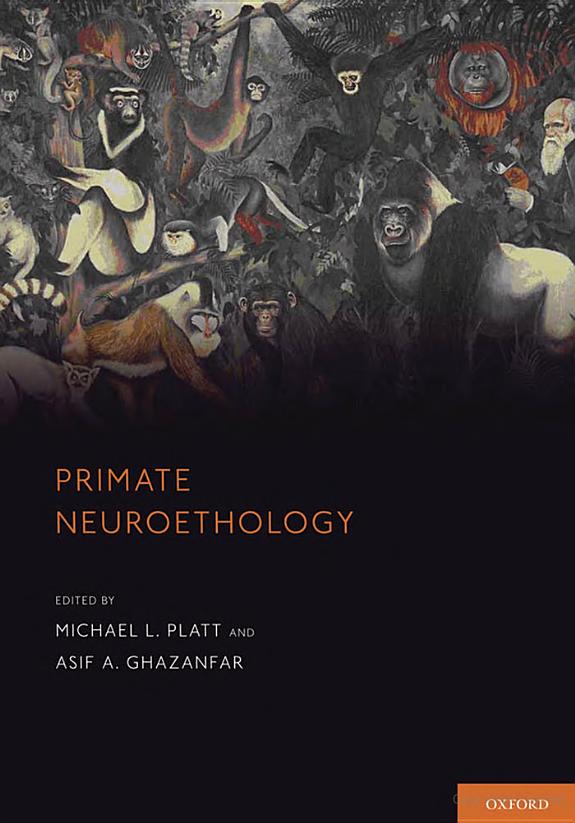
Primate Neuroethology
by Michael L. Platt, Asif A. Ghazanfar
704 pages· 2012· ISBN 9780199929245
About
Why do people find monkeys and apes so compelling to watch? One clear answer is that they seem so similar to us—a window into our own minds and how we have evolved over millennia. As Charles Darwin wrote in his Notebook, "He who understands baboon would do more toward metaphysics than Locke." Darwin recognized that behavior and cognition, and the neural architecture that support them, evolved to solve specific social and ecological problems. Defining these problems for neurobiological study, and conveying neurobiological results to ethologists and psychologists, is fundamental to an evolutionary understanding of brain and behavior. The goal of this book is to do just that. It collects, for the first time in a single book, information on primate behavior and cognition, neurobiology, and the emerging discipline of neuroethology. Here leading scientists in several fields review work ranging from primate foraging behavior to the neurophysiology of motor control, from vocal communication to the functions of the auditory cortex. The resulting synthesis of cognitive, ethological, and neurobiological approaches to primate behavior yields a richer understanding of our primate cousins that also sheds light on the evolutionary development of human behavior and cognition.
Discuss Primate Neuroethology with other readers
Join or start a book club for Primate Neuroethology on Readfeed. Live chat, shared reading progress, and AI discussion questions — free to get started.
Frequently asked questions
How do I join a book club for Primate Neuroethology?
Sign up free on Readfeed, then browse public clubs or start your own club with Primate Neuroethology as the current read. Invite friends with a share link and discuss together with live chat and AI discussion questions.
Can I discuss Primate Neuroethology with other readers online?
Yes. Readfeed book clubs let you chat live, share progress, and join discussions about Primate Neuroethology with readers worldwide — whether your club is virtual, in-person, or hybrid.
Is Readfeed free?
Yes. Creating an account and joining book clubs is free. Sign up to find readers who love the same books and start discussing today.