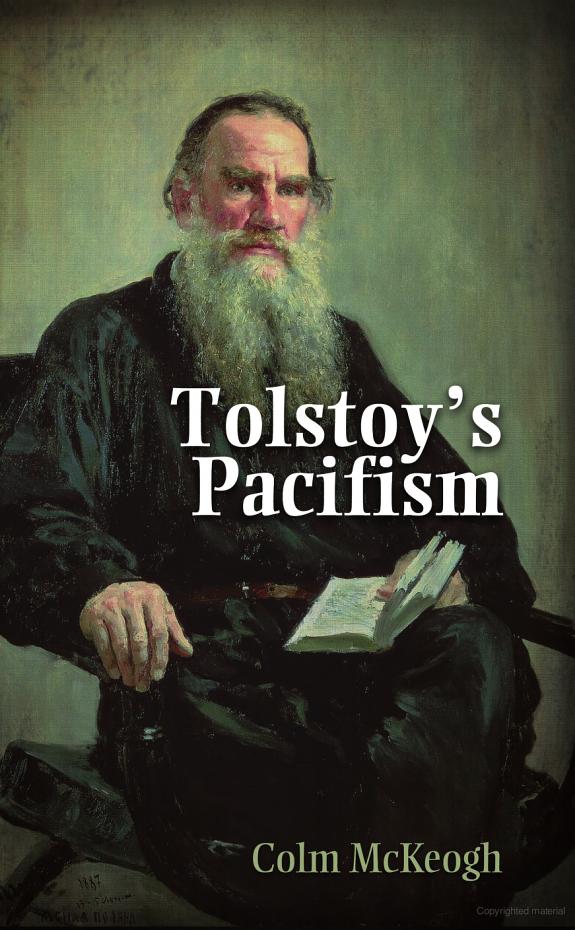
Tolstoy's Pacifism
by Colm McKeogh
233 pages· 2009· ISBN 9781604976342
About
Leo Tolstoy (1828-1910) was the most influential, challenging, and provocative pacifist of his generation. The most famous person alive at the dawn of the twentieth century, his international stature came not only from his great novels but from his rejection of violence and the state. Tolstoy was a strict pacifist in the last three decades of his life, and wrote at length on a central issue of politics, namely, the use of violence to maintain order, to promote justice, and to ensure the survival of society, civilization, and the human species. He unreservedly rejected the use of physical force to these or any ends. Tolstoy was a religious pacifist rather than an ethical or political one. His pacifism was rooted not in a moral doctrine or political theory but in his straightforward reading of the teachings of Jesus as recorded in the Gospels. Despite his fame, Tolstoy's pacifism remains insufficiently studied. A hundred years after his death, Tolstoy is a figure unfamiliar in political science, encountered, if at all, as the author of hortatory quotations on the wrongness of political violence or of allegiance to the state. This work of political science offers an account of Leo Tolstoy as a Christian thinker on political violence. It presents Tolstoy's pacifism as a striking case of the impact of religious idealism on political attitudes. The Russian novelist offers an instructive case study in Christian pacifism and in the attractions and failings of strict, literalist, and simplistic religious approaches to the many and complex issues of politics. Today, the political implications of religious fundamentalism, scriptural literalism, and Christian faith are very much live issues and the contemporary discussion of them should not omit pacifism. In this first study of Tolstoy's pacifism by a political scientist, Colm McKeogh unravels the complexities of Tolstoy's writings on Christianity and political violence. This work serves scholars of political science by bringing together relevant extracts from Tolstoy's writings and providing a succinct treatment of the core political issues. It establishes that Tolstoy's stance is primarily one of non-violence rather than non-resistance. McKeogh's work then assesses the internal consistency of Tolstoy's pacifism, its grounding in the Gospels and Christian tradition, its political and anti-political implications, and the meaning in life that it offers. It finds that Tolstoy does great service to the pacifist cause (with his defense of peace as close to the centre of Christ's message) and yet harm to it too (by divorcing peace from the love that is even more central to Christ's message). Tolstoy's political and religious legacy is not that of a prophet, a social activist, a moral reformer, a political idealist or pacifist theorist but that of a dissident. Tolstoy stands as one of the great dissidents of twentieth-century Russia, a man who condemned the system utterly and who refused to perform any act that could be construed as compromising with it. He left behind a powerful statement of the urgent human need to connect our daily living to a deep and fulfilling conception of the meaning of life. Tolstoy's Pacifism is important for political science, Christian ethics, literature, and Russian collections.
Discuss Tolstoy's Pacifism with other readers
Join or start a book club for Tolstoy's Pacifism on Readfeed. Live chat, shared reading progress, and AI discussion questions — free to get started.
Frequently asked questions
How do I join a book club for Tolstoy's Pacifism?
Sign up free on Readfeed, then browse public clubs or start your own club with Tolstoy's Pacifism as the current read. Invite friends with a share link and discuss together with live chat and AI discussion questions.
Can I discuss Tolstoy's Pacifism with other readers online?
Yes. Readfeed book clubs let you chat live, share progress, and join discussions about Tolstoy's Pacifism with readers worldwide — whether your club is virtual, in-person, or hybrid.
Is Readfeed free?
Yes. Creating an account and joining book clubs is free. Sign up to find readers who love the same books and start discussing today.