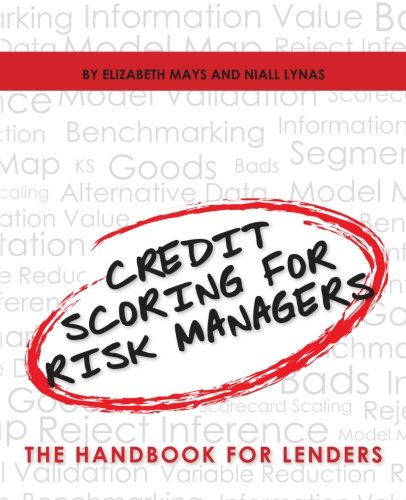
Credit Scoring for Risk Managers: The Handbook for Lenders

Credit Scoring for Risk Managers: The Handbook for Lenders

by Elizabeth Mays, Niall Lynas

264 pages· 2011· ISBN 9781450578967
About
This is the second edition of Credit Scoring For Risk Managers: The Handbook for Lenders. Like the first edition, it was written for bankers and other consumer lenders who need a clear understanding of how to use credit scoring effectively throughout the loan life cycle. In today's financial system, scoring is used by virtually all lenders for all types of consumer lending assets, making it vitally important that risk managers understand how to manage and monitor scores and how to set policies for their use. This edition is substantially different from the first edition published in 2004. The world's economies have been through a major financial crisis and severe recession and some have questioned the role and value of models and scores used by lenders in the years leading up to the U.S. housing collapse and economic downturn. We have devoted a significant portion of the book to topics relevant to ensuring scorecards are properly managed through volatile environments and controlling the risk of using credit scores for decision-making. Ten of the book’s sixteen chapters are new. Many focus on scorecard management practices and on controlling model risk. Score management refers to all the activities model managers and users engage in after the scorecard is developed. These include setting proper lending policies to use in conjunction with the score, periodic back-testing and validation, and remediation of any issues that may arise related to scorecard performance. Chapter 4 takes the reader step by step through a scorecard development project and discusses best practices for managing and documenting scorecard projects to increase the transparency of the performance, assumptions and limitations of scoring models. The last three chapters are devoted to the important topic of score model governance. Chapter 14 describes how to design a model governance framework to ensure credit scoring models are properly developed, used and validated on an on-going basis. Chapter 15 is focused on model monitoring and back-testing and describes a set of reports lenders should create and review to ensure their scorecards are performing well. Independent review of risk models by a third-party model expert is an important part of sound model governance. In Chapter 16 we describe how to carry out a thorough independent model review. Other chapters focus on new material not covered in the previous edition including types of data that are used as predictive information in scores (Chapter 3), fair lending analysis of scorecards and the creation of adverse action reasons (Chapter 11), the use of scores as components of other models (Chapter 10), common scoring mistakes to avoid (Chapter 12) and the important topic of reject inference (Chapter 9).

Discuss Credit Scoring for Risk Managers: The Handbook for Lenders with other readers

Join or start a book club for Credit Scoring for Risk Managers: The Handbook for Lenders on Readfeed. Live chat, shared reading progress, and AI discussion questions — free to get started.

Frequently asked questions

How do I join a book club for Credit Scoring for Risk Managers: The Handbook for Lenders?

Sign up free on Readfeed, then browse public clubs or start your own club with Credit Scoring for Risk Managers: The Handbook for Lenders as the current read. Invite friends with a share link and discuss together with live chat and AI discussion questions.

Can I discuss Credit Scoring for Risk Managers: The Handbook for Lenders with other readers online?

Yes. Readfeed book clubs let you chat live, share progress, and join discussions about Credit Scoring for Risk Managers: The Handbook for Lenders with readers worldwide — whether your club is virtual, in-person, or hybrid.

Is Readfeed free?

Yes. Creating an account and joining book clubs is free. Sign up to find readers who love the same books and start discussing today.