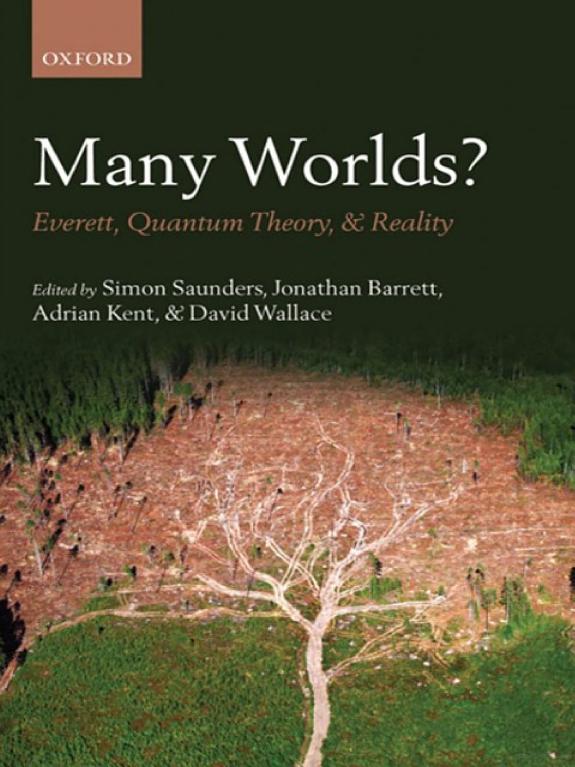
What does realism about the quantum state imply? What follows when quantum theory is applied without restriction, if need be, to the whole universe? These are the questions which an illustrious team of philosophers and physicists debate in this volume. All the contributors are agreed on realism, and on the need, or the aspiration, for a theory that unites micro- and macroworlds, at least in principle. But the further claim argued by some is that if you allow the Schrödinger equation unrestricted application, supposing the quantum state to be something physically real, then this universe is one of countlessly many others, constantly branching in time, all of which are real. The result is the many worlds theory, also known as the Everett interpretation of quantum mechanics. The contrary claim sees this picture of many worlds as in no sense inherent in quantum mechanics, even when the latter is allowed unrestricted scope and even given that the quantum state itself is something physically real. For this picture of branching worlds fails to make physical sense, let alone common sense, even on its own terms. The status of these worlds, what they are made of, is never adequately explained. Ordinary ideas about time and identity over time become hopelessly compromised. The concept of probability itself is brought into question. This picture of many branching worlds is inchoate, it is a vision, an error. There are realist alternatives to many worlds, some even that preserve the Schrödinger equation unchanged. Twenty specially written essays, accompanied by commentaries and discussions, examine these claims and counterclaims in depth. They focus first on the question of ontology, the existence of worlds (Part 1 and 2), second on the interpretation of probability (Parts 3 and 4), and third on alternatives or additions to many worlds (Parts 5 and 6). The introduction offers a helpful guide to the arguments for the Everett interpretation, particularly as they have been formulated in the last two decades.