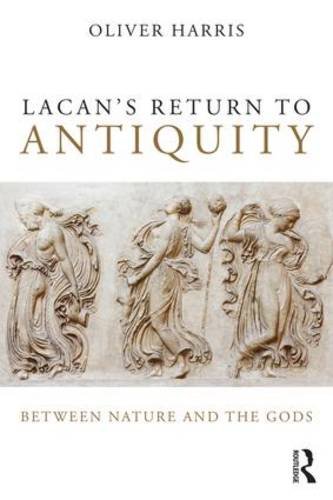
Lacan's Return to Antiquity
Between Nature and the Gods
by Oliver Harris
216 pages· 2016· ISBN 9781138820388
About
Lacan's Return to Antiquityis the first book devoted to the role of classical antiquity in Lacan's work. Oliver Harris poses a question familiar from studies of Freud: what are Ancient Greece and Rome doing in a twentieth-century theory of psychology? In Lacan's case, the issue has an additional edge, for he employs antiquity to demonstrate what is radically new about psychoanalysis. It is a tool with which to convey the revolutionary power of Freud's ideas by digging down to the philosophical questions beneath them. It is through these questions that Lacan allies psychoanalysis with the pioneering intellectual developments of his time in anthropology, philosophy, art and literature. Harris begins by considering the role of Plato and Socrates in Lacan's conflicted thoughts on teaching, writing and the process of becoming an intellectual icon. In doing so, he provides a way into considering the uniquely challenging nature of the Lacanian texts themselves, and the live performances behind them. Two central chapters explore when and why myth is drawn upon in psychoanalysis, its threat to the discipline's scientific aspirations, and Lacan's embrace of its expressive potential. The final chapters explore Lacan's defence of tragedy and his return to Ovidian themes. These include the unwitting voyeurism of Actaeon, and the fate of Narcissus, a figure of tragic metamorphosis that Freud places at the heart of infantile development. Lacan's Return to Antiquity brings to Lacan studies the close reading and cross-disciplinary research that has proved fruitful in understanding Freud's invention of psychoanalysis. It will appeal to psychoanalysts and advanced students studying in the field, being of particular value to those interested in the roots of Lacanian concepts, the evolution of his thought, and the cultural context of his work. What emerges is a more nuanced, self-critical figure, a corrective to the reputation for dogmatism and obscurity that Lacan has attracted. In the process, new light is thrown on enduring controversies, from Lacan's pronouncements on feminine sexuality to the opaque drama of the seminars themselves.
Discuss Lacan's Return to Antiquity with other readers
Join or start a book club for Lacan's Return to Antiquity on Readfeed. Live chat, shared reading progress, and AI discussion questions — free to get started.
Frequently asked questions
How do I join a book club for Lacan's Return to Antiquity?
Sign up free on Readfeed, then browse public clubs or start your own club with Lacan's Return to Antiquity as the current read. Invite friends with a share link and discuss together with live chat and AI discussion questions.
Can I discuss Lacan's Return to Antiquity with other readers online?
Yes. Readfeed book clubs let you chat live, share progress, and join discussions about Lacan's Return to Antiquity with readers worldwide — whether your club is virtual, in-person, or hybrid.
Is Readfeed free?
Yes. Creating an account and joining book clubs is free. Sign up to find readers who love the same books and start discussing today.