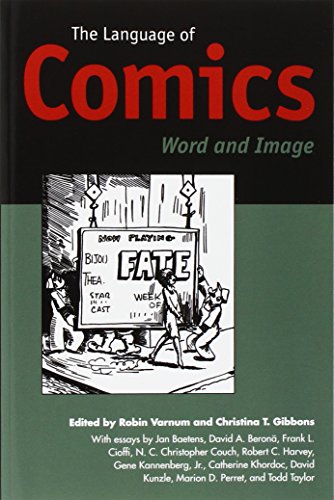
The Language of Comics
Word and Image
by Robin Varnum, Christina T. Gibbons
222 pages· 2001· ISBN 9781578064144
About
With essays by Jan Baetens, David A. Beronä, Frank L. Cioffi, N. C. Christopher Couch, Robert C. Harvey, Gene Kannenberg, Jr., Catherine Khordoc, David Kunzle, Marion D. Perret, and Todd Taylor In our culture, which depends increasingly on images for instruction and recreation, it is important to ask how words and images make meaning when they are combined. Comics, one of the most widely read media of the twentieth century, serves as an ideal for focusing an investigation on the word-and-image question. This collection of essays attempts to give an answer. The first six see words and images as separate art forms that play with or against each other. David Kunzle finds that words restrict the meaning of the art of Adolphe Willette and Theophile-Alexandre Steinlen in Le Chat Noir. David A. Beronä, examining wordless novels, argues that the ability to read pictures depends on the ability to read words. Todd Taylor draws on classical rhetoric to demonstrate that images in The Road Runner are more persuasive than words. N. C. Christopher Couch--writing on The Yellow Kid--and Robert C. Harvey--discussing early New Yorker cartoons--are both interested in the historical development of the partnership between words and images in comics. Frank L. Cioffi traces a disjunctive relationship of opposites in the work of Andrzej Mleczko, Ben Katchor, R. Crumb, and Art Spiegelman. The last four essays explore the integration of words and images. Among five comic book adaptations of Hamlet Marion D. Perret finds one in which words and images form a dialectic. Jan Baetens critiques the semiotically inspired theory of Phillippe Marion. Catherine Khordoc explores speech balloons in Asterix the Gaul. Gene Kannenberg, Jr., demonstrates how the Chicago-based artist Chris Ware blurs the difference between word and image. The Language of Comics, however, is the first collection of critical essays on comics to explore a single issue as it affects a variety of comics. Robin Varnum, an instructor of English at the American International College in Springfield, Massachusetts, has been published in Writing on the Edge, Journal of Advanced Composition, Harvard Library Bulletin, and Rhetoric Society Quarterly. Christina T. Gibbons, an independent scholar living in Brattleboro, Vermont, has been published in Journal of Regional Cultures.
Discuss The Language of Comics with other readers
Join or start a book club for The Language of Comics on Readfeed. Live chat, shared reading progress, and AI discussion questions — free to get started.
Frequently asked questions
How do I join a book club for The Language of Comics?
Sign up free on Readfeed, then browse public clubs or start your own club with The Language of Comics as the current read. Invite friends with a share link and discuss together with live chat and AI discussion questions.
Can I discuss The Language of Comics with other readers online?
Yes. Readfeed book clubs let you chat live, share progress, and join discussions about The Language of Comics with readers worldwide — whether your club is virtual, in-person, or hybrid.
Is Readfeed free?
Yes. Creating an account and joining book clubs is free. Sign up to find readers who love the same books and start discussing today.