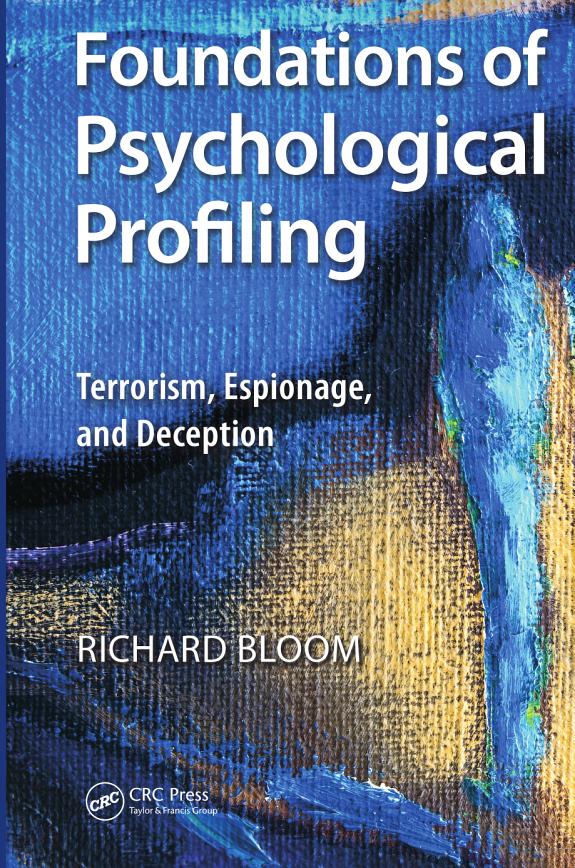
Foundations of Psychological Profiling

Foundations of Psychological Profiling

Terrorism, Espionage, and Deception

by Richard Bloom

226 pages· 2016· ISBN 9781466570320
About
Profiling is a hot topic today. The post-9/11 "War on Terrorism" has engendered political, ethical, and scientific controversy over its use. The proliferation of recent films, television programs, and books is a sociocultural indicator of widespread interest. Designed for a diverse audience—including law enforcement officers, intelligence and security officers, attorneys, and researchers—Foundations of Psychological Profiling: Terrorism, Espionage, and Deception presents scientific theory and data on the notion of profiles, integrating essential interdisciplinary knowledge related to the practice and applications of profiling that is rarely found in books on the subject. Exploring the related fields of historiography, hermeneutics, epistemology, and narratology, the book: Examines the definitions, history, and politics of profiling Explains how valid profiling can confront challenges such as the suitability of common scientific methods for the behavioral sciences Discusses how schematics allow profilers to best ask and answer the right questions when attempting to predict what might happen, identify what is or has already happened, and understand and influence any related events Describes various psychological events within, or exhibited by, profilers impacting the five desired endpoints of profiling Presents the theories, constructs, and illustrations related to two crucial tasks: (1) creating a representation of how events relate to each other and to events of interest, and (2) creating a narrative based on that matrix Demonstrates applications in profiling related to terrorism, espionage, and deception When conducted successfully, profiling can immensely benefit intelligence, security, and law enforcement professionals to help unearth behaviors, clues, and "triggers" to when, why, and how someone with bad intent may act on that intent. The book examines this phenomenon and concludes with the author’s speculation on how developments in scientific method and statistical procedures—as well as the integration of interdisciplinary sources, politics, and the cyberworld—may impact the future of profiling.

Discuss Foundations of Psychological Profiling with other readers

Join or start a book club for Foundations of Psychological Profiling on Readfeed. Live chat, shared reading progress, and AI discussion questions — free to get started.

Frequently asked questions

How do I join a book club for Foundations of Psychological Profiling?

Sign up free on Readfeed, then browse public clubs or start your own club with Foundations of Psychological Profiling as the current read. Invite friends with a share link and discuss together with live chat and AI discussion questions.

Can I discuss Foundations of Psychological Profiling with other readers online?

Yes. Readfeed book clubs let you chat live, share progress, and join discussions about Foundations of Psychological Profiling with readers worldwide — whether your club is virtual, in-person, or hybrid.

Is Readfeed free?

Yes. Creating an account and joining book clubs is free. Sign up to find readers who love the same books and start discussing today.