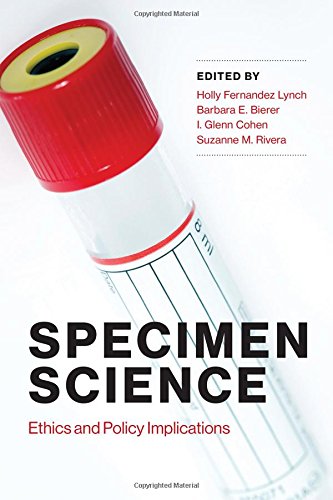
Specimen Science: Ethics and Policy Implications (Basic Bioethics)
by Arthur L. Caplan, Mark Barnes, Bernard Lo, I. Glenn Cohen, Dan Brock, Russell Korobkin, Holly Fernandez Lynch, Elisa A. Hurley, Ellen Wright Clayton, Carol Weil, Suzanne M. Rivera, Barbara J. Evans, Barbara E. Bierer, David Peloquin, Kimberly Hensle Lowrance, Avery Avrakotos, David Korn, Rachel E. Sachs, Eric M. Meslin, Heide Aungst, Bradley A. Malin, Christine Grady, Lisa Eckstein, Benjamin Berkman, Sara Chandros Hull, Rebecca Pentz, Benjamin Wilfond, David Wendler, Nanibaa' A. Garrison, Ivor Pritchard, Julie Kaneshiro, Aaron J. Goldenberg, Jeffrey R. Botkin, Erin Rothwell, Rebecca A. Anderson, Geoffrey Lomax, Karen Maschke, Susan M. Wolf, Isaac S. Kohane, Jane Perlmutter, Erin P. Johnson, Quinn T. Ostrom, Jill Barnholtz-Sloan, Kate Gallin Heffernan
Advances in medicine often depend on the effective collection, storage, research use, and sharing of human biological specimens and associated data. But what about the sources of such specimens? When a blood specimen is drawn from a vein in your arm, is that specimen still you? Is it your property, intellectual or otherwise? Should you be allowed not only to consent to its use in research but also to specify under what circumstances it may be used? These and other questions are at the center of a vigorous debate over the use of human biospecimens in research. In this book, experts offer legal, regulatory, and ethical perspectives on balancing social benefit and human autonomy in biospecimen research.
After discussing the background to current debates as well as several influential cases, including that of Henrietta Lacks, the contributors consider the rights, obligations, risks, and privacy of the specimen source; different types of informed consent under consideration (broad, blanket, and specific); implications for special patient and researcher communities; and the governance of biospecimen repositories and the responsibilities of investigators.
Contributors
Rebecca A. Anderson, Heide Aungs, Avery Avrakotos, Mark Barnes, Jill Barnholtz-Sloan, Benjamin Berkman, Barbara E. Bierer, Mark A. Borreliz, Jeffrey R. Botkin, Dan Brock, Ellen Wright Clayton, I. Glenn Cohen, Lisa Eckstein, Barbara J. Evans, Emily Chi Fogler, Nanibaa' A. Garrison, Pamela Gavin, Aaron J. Goldenberg, Christine Grady, Kate Gallin Heffernan, Marylana Saadeh Helou, Sara Chandros Hull, Elisa A. Hurley, Steven Joffe, Erin P. Johnson, Julie Kaneshiro, Aaron S. Kesselheim, Isaac Kohane, David Korn, Russell Korobkin, Bernard Lo, Geoffrey Lomax, Kimberly Hensle Lowrance, Holly Fernandez Lynch, Bradley A. Malin, Karen J. Maschke, Eric M. Meslin, P. Pearl O'Rourke, Quinn T. Ostrom, David Peloquin, Rebecca Pentz, Jane Perlmutter, Ivor Pritchard, Suzanne M. Rivera, Erin Rothwell, Andrew P. Rusczek, Rachel E. Sachs, Carol Weil, David Wendler, Benjamin Wilfond, Susan M. Wolf
Discuss Specimen Science: Ethics and Policy Implications (Basic Bioethics) with other readers
Join or start a book club for Specimen Science: Ethics and Policy Implications (Basic Bioethics) on Readfeed. Live chat, shared reading progress, and AI discussion questions — free to get started.
Frequently asked questions
How do I join a book club for Specimen Science: Ethics and Policy Implications (Basic Bioethics)?
Sign up free on Readfeed, then browse public clubs or start your own club with Specimen Science: Ethics and Policy Implications (Basic Bioethics) as the current read. Invite friends with a share link and discuss together with live chat and AI discussion questions.
Can I discuss Specimen Science: Ethics and Policy Implications (Basic Bioethics) with other readers online?
Yes. Readfeed book clubs let you chat live, share progress, and join discussions about Specimen Science: Ethics and Policy Implications (Basic Bioethics) with readers worldwide — whether your club is virtual, in-person, or hybrid.
Is Readfeed free?
Yes. Creating an account and joining book clubs is free. Sign up to find readers who love the same books and start discussing today.