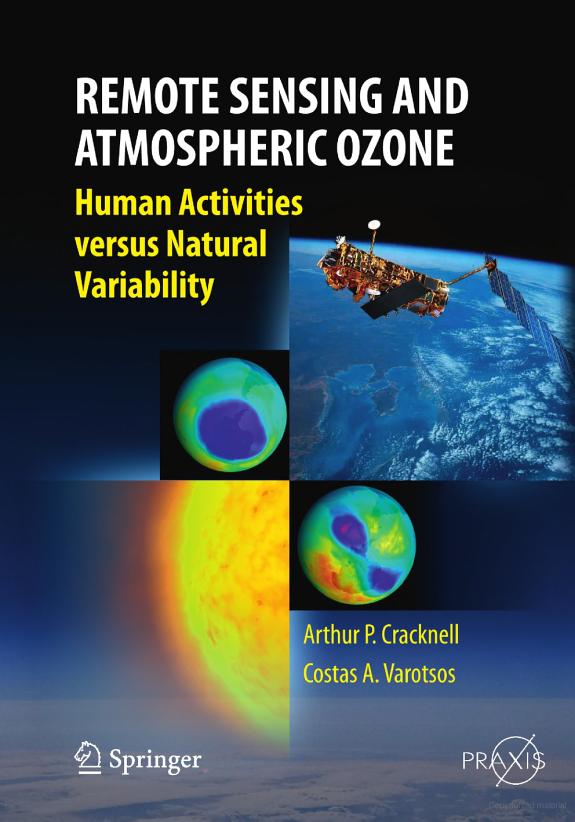
Remote Sensing and Atmospheric Ozone

Remote Sensing and Atmospheric Ozone

Human Activities versus Natural Variability

by Arthur Philip Cracknell, Costas A. Varotsos

662 pages· 2012· ISBN 9783642103346
About
The destruction of the ozone layer, together with global warming, is one of the hot environmental topics of today. This book examines the effect of human activities on atmospheric ozone, namely the increase of tropospheric ozone and the general diminution of stratospheric ozone and the production of the Antarctic ozone hole. Also discussed is the role of remote sensing techniques in the understanding of the effects of human activities on atmospheric ozone as well as in the development of social and political awareness of the damage to the ozone layer by man-made chemicals, principally CFCs. This led to the formulation and ratification in 1989 of the Montreal Protocol on controlling/banning the manufacture and use of chemicals that damage the ozone layer. Since then, remote sensing has played a key role in monitoring atmospheric ozone concentration and determining the success of the Montreal Protocol in protecting the ozone layer from further damage. In this book, the renowned authors discuss the sophisticated instruments that have been launched into space to study not only ozone but also other trace gases in the atmosphere, some of which play a key role in the generation and destruction of ozone in the atmosphere. Professors Cracknell and Varotsos also examine the satellite-flown instruments which are involved in monitoring the absorption of solar ultraviolet light in the atmosphere in relation both to the generation and destruction of ozone and consequently to human health. This scholarly book, written by the foremost experts in the field, looks at remote sensing and its employment in the various aspects of ozone science. It is widely acknowledged that global warming, due to anthropogenic greenhouse gases emissions, represents a threat to the sustainability of human life on Earth. However, many other threats are potentially just as serious, including atmospheric pollution, ozone depletion, water pollution, the degradation of agricultural land, deforestation, the depletion of the world's mineral resources and population growth.

Discuss Remote Sensing and Atmospheric Ozone with other readers

Join or start a book club for Remote Sensing and Atmospheric Ozone on Readfeed. Live chat, shared reading progress, and AI discussion questions — free to get started.

Frequently asked questions

How do I join a book club for Remote Sensing and Atmospheric Ozone?

Sign up free on Readfeed, then browse public clubs or start your own club with Remote Sensing and Atmospheric Ozone as the current read. Invite friends with a share link and discuss together with live chat and AI discussion questions.

Can I discuss Remote Sensing and Atmospheric Ozone with other readers online?

Yes. Readfeed book clubs let you chat live, share progress, and join discussions about Remote Sensing and Atmospheric Ozone with readers worldwide — whether your club is virtual, in-person, or hybrid.

Is Readfeed free?

Yes. Creating an account and joining book clubs is free. Sign up to find readers who love the same books and start discussing today.