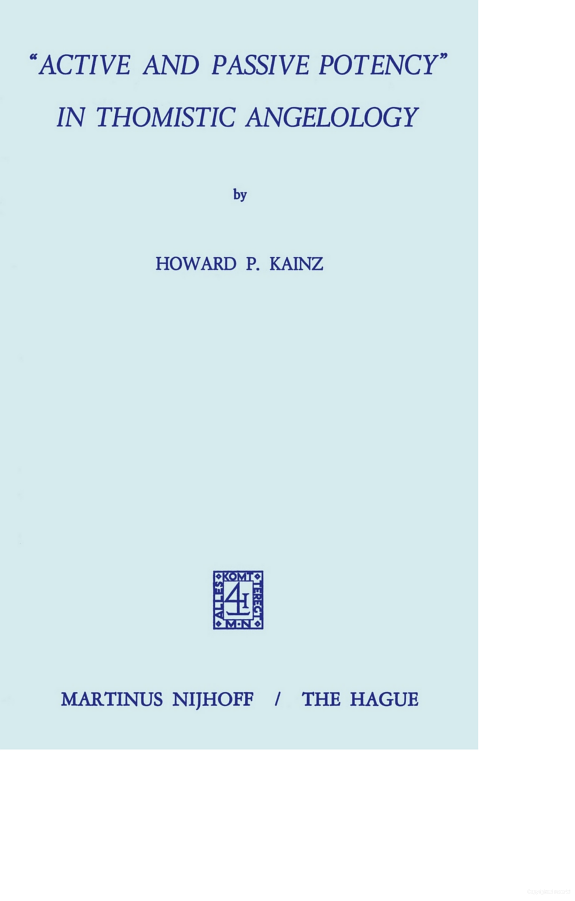
“Active and Passive Potency” in Thomistic Angelology

“Active and Passive Potency” in Thomistic Angelology

by H.P. Kainz

111 pages· 2012· ISBN 9789401028004
About
A. "SEPARATE SUBSTANCES" AND lOR" ANGELS"? It is interesting to note that, in an expressly theological treatise such as the Summa theologiae, St. Thomas generally uses the term "angel", in preference to "separate substance"; while in works with a less explicit theological intent - e. g. the Summa contra gentiles and the De substantiis separatis 1 - he generally prefers the term "separate substance". But at any rate there is little doubt that the two terms, "separate sub stance" and "angel" have a certain interchangeability and equivalence in the works of St. Thomas. In other words, "the separate substance" is equivalent to "the angel, insofar as its existence and attributes are knowable through human reason alone". And this has led Karl Barth 2 to charge that St. Thomas' angelology is primarily a philosophical presenta tion, with little relevance to theology. 1 We might say that these works are "philosophical" insofar as arguments from reason are emphasized in them, rather than arguments from revelation or faith. However, as Lescoe points out (in the Introduction to his edition of the De substantUs separatis, p. 8), the treatise on separate substances leads up to theological subject-matter in Ch. 's XVII ff- namely, an exposition of Catholic teaching as found in Sacred Scripture, the Fathers, and especially Dionysius. And Chenu maintains that the Summa contra gentiles is basically a theological work, because it not only leads up to theological subject-matter in Bk.

Discuss “Active and Passive Potency” in Thomistic Angelology with other readers

Join or start a book club for “Active and Passive Potency” in Thomistic Angelology on Readfeed. Live chat, shared reading progress, and AI discussion questions — free to get started.

Frequently asked questions

How do I join a book club for “Active and Passive Potency” in Thomistic Angelology?

Sign up free on Readfeed, then browse public clubs or start your own club with “Active and Passive Potency” in Thomistic Angelology as the current read. Invite friends with a share link and discuss together with live chat and AI discussion questions.

Can I discuss “Active and Passive Potency” in Thomistic Angelology with other readers online?

Yes. Readfeed book clubs let you chat live, share progress, and join discussions about “Active and Passive Potency” in Thomistic Angelology with readers worldwide — whether your club is virtual, in-person, or hybrid.

Is Readfeed free?

Yes. Creating an account and joining book clubs is free. Sign up to find readers who love the same books and start discussing today.