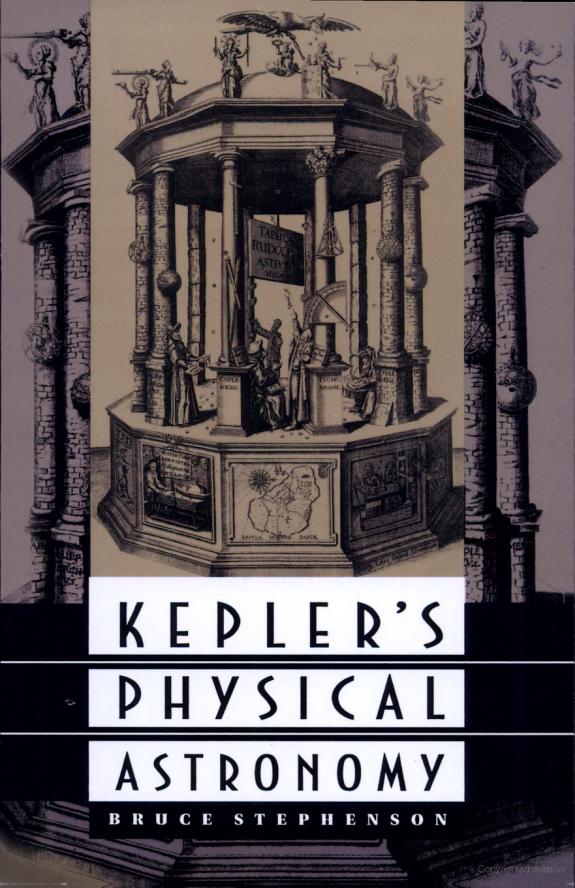
Kepler's Physical Astronomy
by Bruce Stephenson
216 pages· 1994· ISBN 9780691036526
About
From Hipparchus and Ptolemy in the ancient world, through Copernicus and Brahe in the sixteenth century, astronomers had used geometrical models to give a kinematic account of the movements of the sun, moon, and planets. Johannes Kepler revolutionized this most ancient of sciences by being the first to understand astronomy as a part of physics. By closely and clearly analyzing the texts of Kepler's great astronomical works, in particular the Astronomia nova of 1609, Bruce Stephenson demonstrates the importance of Kepler's physical principles--principles now known to be "incorrect"--in the creation of his first two laws of planetary motion.From Hipparchus and Ptolemy in the ancient world, through Copernicus and Brahe in the sixteenth century, astronomers had used geometrical models to give a kinematic account of the movements of the sun, moon, and planets. Johannes Kepler revolutionized this most ancient of sciences by being the first to understand astronomy as a part of physics. By closely and clearly analyzing the texts of Kepler's great astronomical works, in particular the Astronomia nova of 1609, Bruce Stephenson demonstrates the importance of Kepler's physical principles--principles now known to be "incorrect"--in the creation of his first two laws of planetary motion.
Discuss Kepler's Physical Astronomy with other readers
Join or start a book club for Kepler's Physical Astronomy on Readfeed. Live chat, shared reading progress, and AI discussion questions — free to get started.
Frequently asked questions
How do I join a book club for Kepler's Physical Astronomy?
Sign up free on Readfeed, then browse public clubs or start your own club with Kepler's Physical Astronomy as the current read. Invite friends with a share link and discuss together with live chat and AI discussion questions.
Can I discuss Kepler's Physical Astronomy with other readers online?
Yes. Readfeed book clubs let you chat live, share progress, and join discussions about Kepler's Physical Astronomy with readers worldwide — whether your club is virtual, in-person, or hybrid.
Is Readfeed free?
Yes. Creating an account and joining book clubs is free. Sign up to find readers who love the same books and start discussing today.