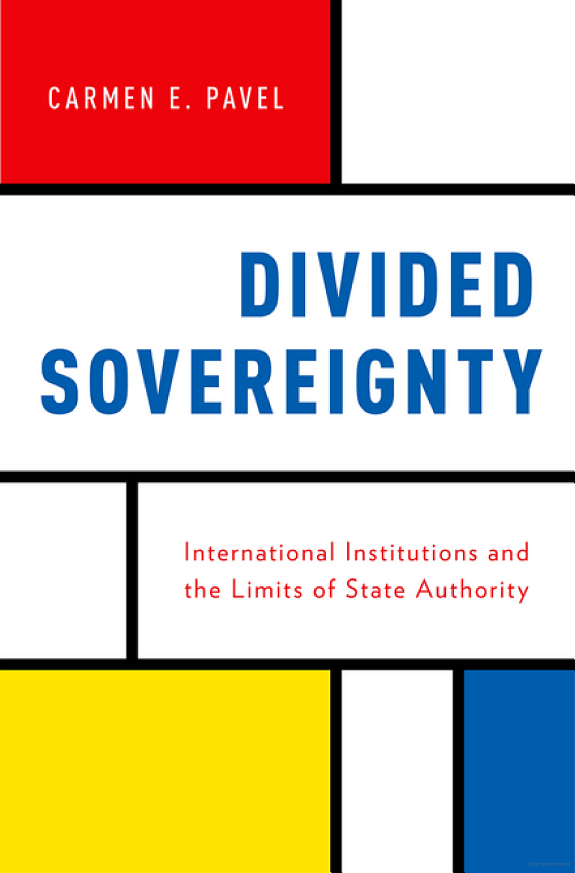
Divided Sovereignty

Divided Sovereignty

International Institutions and the Limits of State Authority

by Carmen E. Pavel

211 pages· 2015· ISBN 9780199376346
About
Divided Sovereignty explores new institutional solutions to the old question of how to constrain states when they commit severe abuses against their own citizens. The book argues that coercive international institutions can stop these abuses and act as an insurance scheme against the possibility of states failing to fulfill their most basic sovereign responsibilities. It thus challenges the long standing assumption that collective grants of authority from the citizens of a state should be made exclusively for institutions within the borders of that state. Despite worries that international institutions such as the International Criminal Court could undermine domestic democratic control, citizens can divide sovereign authority between state and international institutions consistent with their right of democratic self-governance. States are imperfect, incomplete political forms. They presuppose a monopoly of coercive power and final jurisdictional authority over their territory. These twin elements of sovereignty and authority can be used by state leaders and political representatives in ways that stray significantly from the interests of citizens. In the most extreme cases, when citizens become inconvenient obstacles in the pursuit of the self-serving ambitions of their leaders, state power turns against them. Genocide, torture, displacement, and rape are often the means of choice by which the inconvenient are made to suffer or vanish. The book defends universal, principled limits on state authority based on jus cogens norms, a special category of norms in international law that prohibit violations of basic human rights. Against skeptics, it argues that many of the challenges of building an additional layer of institutions can be met if we pay attention to the conditions of institutional success, which require (1) experimentation with different institutional forms, (2) limitations on the scope of authority for coercive international institutions through clear, narrow, well defined mandates, and (3) understanding the limits of existing knowledge on institutional design, which should make us suspicious of proposals for grand institutional schemes, such as global democracy.

Discuss Divided Sovereignty with other readers

Join or start a book club for Divided Sovereignty on Readfeed. Live chat, shared reading progress, and AI discussion questions — free to get started.

Frequently asked questions

How do I join a book club for Divided Sovereignty?

Sign up free on Readfeed, then browse public clubs or start your own club with Divided Sovereignty as the current read. Invite friends with a share link and discuss together with live chat and AI discussion questions.

Can I discuss Divided Sovereignty with other readers online?

Yes. Readfeed book clubs let you chat live, share progress, and join discussions about Divided Sovereignty with readers worldwide — whether your club is virtual, in-person, or hybrid.

Is Readfeed free?

Yes. Creating an account and joining book clubs is free. Sign up to find readers who love the same books and start discussing today.