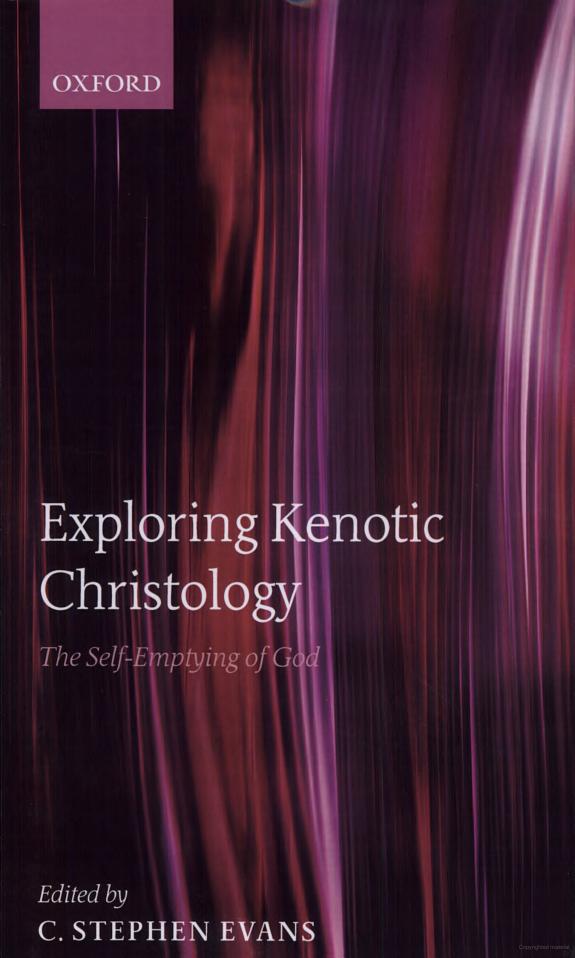
Exploring Kenotic Christology

Exploring Kenotic Christology

The Self-emptying of God

by C. Stephen Evans

348 pages· 2006· ISBN 9780199283224
About
This collection of essays, by a team of Christian philosophers, theologians, and biblical scholars, explores the viability of a kenotic account of the incarnation. Such an account is inspired by Paul's lyrical claims in Philippians 2:6-11 that Christ Jesus, though God in nature, 'emptied himself' or 'made himself nothing' by becoming human. The biblical support for such a view can be found throughout the four gospels and the book of Hebrews, as well as in other places. A kenotic account takes seriously the possibility that Christ, in becoming incarnate, temporarily divested himself of such properties as omnipotence, omniscience, and omnipresence. Several of the contributors argue that this view is fully orthodox, and that it has great strengths in giving us a picture of a God who is willing to become completely vulnerable for the sake of human beings, and one that is completely consistent with the very human portrait of Jesus in the New Testament. The proponents of kenotic Christology argue that the philosophical accounts of God's nature that have led to rejection of this theory ought themselves to be subjected to criticism in light of the biblical data. Some essays test the theory by raising critical questions and arguing that traditional accounts of the incarnation can achieve the goals of kenotic theories as well as kenotic theories can. The book also explores the implications of a kenotic view of the incarnation for philosophical theology in general and the doctrine of the Trinity in particular, and it concludes with essays that examine the validity of the ideal of kenosis for women, and a challenge to traditional Christology to take a kenotic theory seriously. Book jacket.

Discuss Exploring Kenotic Christology with other readers

Join or start a book club for Exploring Kenotic Christology on Readfeed. Live chat, shared reading progress, and AI discussion questions — free to get started.

Frequently asked questions

How do I join a book club for Exploring Kenotic Christology?

Sign up free on Readfeed, then browse public clubs or start your own club with Exploring Kenotic Christology as the current read. Invite friends with a share link and discuss together with live chat and AI discussion questions.

Can I discuss Exploring Kenotic Christology with other readers online?

Yes. Readfeed book clubs let you chat live, share progress, and join discussions about Exploring Kenotic Christology with readers worldwide — whether your club is virtual, in-person, or hybrid.

Is Readfeed free?

Yes. Creating an account and joining book clubs is free. Sign up to find readers who love the same books and start discussing today.