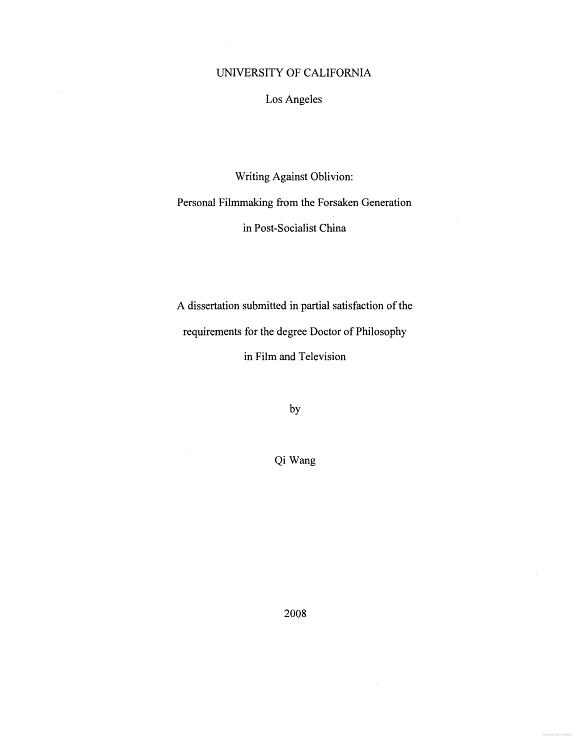
Writing Against Oblivion: Personal Filmmaking from the Forsaken Generation in Post-socialist China

Writing Against Oblivion: Personal Filmmaking from the Forsaken Generation in Post-socialist China

352 pages· 2008· ISBN 9780549900689
About
This dissertation reviews a strong yet rarely discussed personal cinematic mode of (re)writing history and reality and (re)inventing identity in Mainland Chinese cinema since the early 1990s. The word personal denotes an independent, sometimes underground, mode of film production and serves as a pointer to a persistent desire for self-inscription in post-socialist Chinese mediascape. Cutting across the Sixth Generation of Chinese directors, independent documentaries, experimental videos and digital media, the cinematic works studied here are mostly by filmmakers from what I call the "Forsaken Generation" in post-socialist China. The majority of them born between 1960 and 1970, they share a generational experience of interrupted historicity as socialist China quickly changed gears to embrace capital, commercialism, and globalization. Such a crucial break in personal development informs their peculiar desire for and manners of self-inscription in reality and history through the movie camera. In the four chapters of my dissertation, I investigate in turn the locations of the Forsaken Generation's memory of socialism, their creative relocations of that memory in narrative cinema, their attempts to challenge previous socialist historiography and to re-inscribe the self in documenting post-socialist reality, and various forms of self-inscription in film, video and digital media that promise further breakthroughs for a more fully liberated, post-socialist historiography. Thereby they try their best to redress the painful breakage they suffered earlier in life as young victims of socialist historiography. This dissertation complements existent Chinese cinema and cultural studies in at least three ways. First, through a rigorous textual analysis on the highly charged constructions of cinematic space and subjectivity, it offers fresh angles of understanding selected films. Second, by connecting these texts together in a combined investigation of history, memory, identity and representation, it proposes a new framework of assessing their significance in the larger post-socialist Chinese cultural and social discourse. Third, through in-depth interviews with over thirty filmmakers and film scholars on their personal memories and experiences of socialist China, it contributes toward the construction of an oral history archive on the psychological roots of the most exciting development in contemporary Chinese cinema.

Discuss Writing Against Oblivion: Personal Filmmaking from the Forsaken Generation in Post-socialist China with other readers

Join or start a book club for Writing Against Oblivion: Personal Filmmaking from the Forsaken Generation in Post-socialist China on Readfeed. Live chat, shared reading progress, and AI discussion questions — free to get started.

Frequently asked questions

How do I join a book club for Writing Against Oblivion: Personal Filmmaking from the Forsaken Generation in Post-socialist China?

Sign up free on Readfeed, then browse public clubs or start your own club with Writing Against Oblivion: Personal Filmmaking from the Forsaken Generation in Post-socialist China as the current read. Invite friends with a share link and discuss together with live chat and AI discussion questions.

Can I discuss Writing Against Oblivion: Personal Filmmaking from the Forsaken Generation in Post-socialist China with other readers online?

Yes. Readfeed book clubs let you chat live, share progress, and join discussions about Writing Against Oblivion: Personal Filmmaking from the Forsaken Generation in Post-socialist China with readers worldwide — whether your club is virtual, in-person, or hybrid.

Is Readfeed free?

Yes. Creating an account and joining book clubs is free. Sign up to find readers who love the same books and start discussing today.