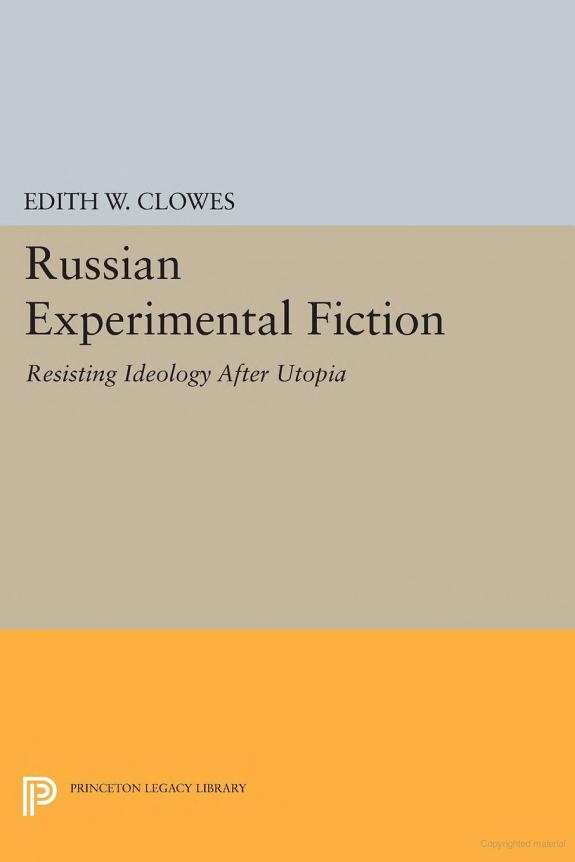
Russian Experimental Fiction

Russian Experimental Fiction

Resisting Ideology after Utopia

by Edith W. Clowes

254 pages· 2014· ISBN 9781400863532
About
In the three decades following Stalin's death, major underground Russian writers have subverted Soviet ideology by using parody to draw attention to its basis in utopian thought. Referring to utopian writing as diverse as Defoe's Robinson Crusoe, Dostoevsky's Notes from Underground, and Orwell's Animal Farm, they have tested notions of truth, reality, and representation. They have gone beyond their precursors by experimenting with the tensions between ludic and didactic art. Edith Clowes explores these "meta-utopian" narratives, which address a wide range of attitudes toward utopia, to expose the challenge that literary play poses to dogmatism and to elucidate the sense of renewal it can bring to social imagination. Using both structural analysis and reception theory, she introduces readers outside Russia to a fascinating body of literature that includes Aleksandr Zinoviev's The Yawning Heights, Abram Terts's Liubimov, Vladimir Voinovich's Moscow 2042, and Liudmila Petrushevskaia's "The New Robinsons.". Not advocating its own utopian alternative to current social realities, meta-utopian fiction investigates the function of a deep human impulse to imagine, project, and enforce alternative social orders. Clowes examines the technical innovations meta-utopian writers have made in style, image, and narrative structure that inform fresh modes of social imagination. Her analysis leads to an inquiry into the intended and real audiences of this fiction, and into the ways its authors try to move them toward more sophisticated social discourse. Originally published in 1993. The Princeton Legacy Library uses the latest print-on-demand technology to again make available previously out-of-print books from the distinguished backlist of Princeton University Press. These paperback editions preserve the original texts of these important books while presenting them in durable paperback editions. The goal of the Princeton Legacy Library is to vastly increase access to the rich scholarly heritage found in the thousands of books published by Princeton University Press since its founding in 1905.

Discuss Russian Experimental Fiction with other readers

Join or start a book club for Russian Experimental Fiction on Readfeed. Live chat, shared reading progress, and AI discussion questions — free to get started.

Frequently asked questions

How do I join a book club for Russian Experimental Fiction?

Sign up free on Readfeed, then browse public clubs or start your own club with Russian Experimental Fiction as the current read. Invite friends with a share link and discuss together with live chat and AI discussion questions.

Can I discuss Russian Experimental Fiction with other readers online?

Yes. Readfeed book clubs let you chat live, share progress, and join discussions about Russian Experimental Fiction with readers worldwide — whether your club is virtual, in-person, or hybrid.

Is Readfeed free?

Yes. Creating an account and joining book clubs is free. Sign up to find readers who love the same books and start discussing today.