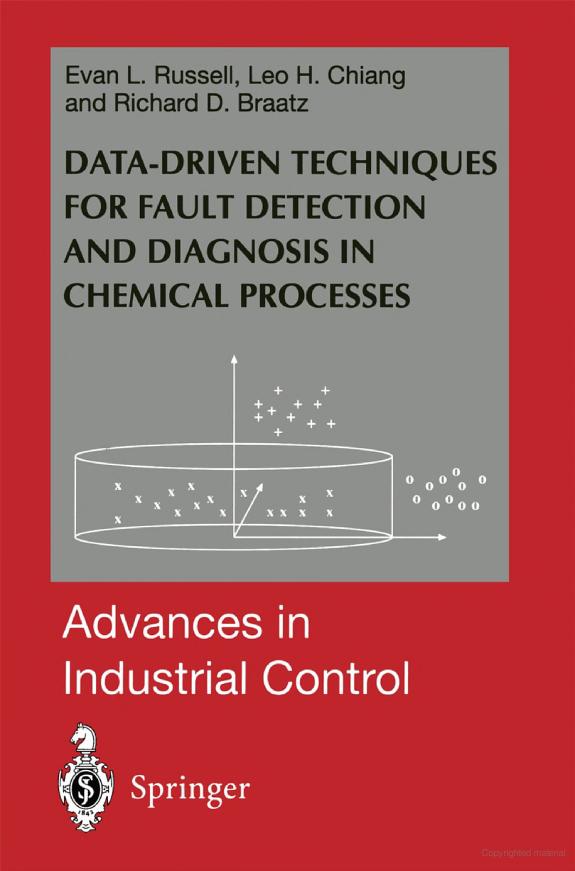
Data-driven Methods for Fault Detection and Diagnosis in Chemical Processes

Data-driven Methods for Fault Detection and Diagnosis in Chemical Processes

by Richard D. Braatz, Evan L. Russell, Leo H. Chiang

192 pages· 2012· ISBN 9781447104094
About
Early and accurate fault detection and diagnosis for modern chemical plants can minimise downtime, increase the safety of plant operations, and reduce manufacturing costs. The process-monitoring techniques that have been most effective in practice are based on models constructed almost entirely from process data. The goal of the book is to present the theoretical background and practical techniques for data-driven process monitoring. Process-monitoring techniques presented include: Principal component analysis; Fisher discriminant analysis; Partial least squares; Canonical variate analysis. The text demonstrates the application of all of the data-driven process monitoring techniques to the Tennessee Eastman plant simulator - demonstrating the strengths and weaknesses of each approach in detail. This aids the reader in selecting the right method for his process application. Plant simulator and homework problems in which students apply the process-monitoring techniques to a nontrivial simulated process, and can compare their performance with that obtained in the case studies in the text are included. A number of additional homework problems encourage the reader to implement and obtain a deeper understanding of the techniques. The reader will obtain a background in data-driven techniques for fault detection and diagnosis, including the ability to implement the techniques and to know how to select the right technique for a particular application.

Discuss Data-driven Methods for Fault Detection and Diagnosis in Chemical Processes with other readers

Join or start a book club for Data-driven Methods for Fault Detection and Diagnosis in Chemical Processes on Readfeed. Live chat, shared reading progress, and AI discussion questions — free to get started.

Frequently asked questions

How do I join a book club for Data-driven Methods for Fault Detection and Diagnosis in Chemical Processes?

Sign up free on Readfeed, then browse public clubs or start your own club with Data-driven Methods for Fault Detection and Diagnosis in Chemical Processes as the current read. Invite friends with a share link and discuss together with live chat and AI discussion questions.

Can I discuss Data-driven Methods for Fault Detection and Diagnosis in Chemical Processes with other readers online?

Yes. Readfeed book clubs let you chat live, share progress, and join discussions about Data-driven Methods for Fault Detection and Diagnosis in Chemical Processes with readers worldwide — whether your club is virtual, in-person, or hybrid.

Is Readfeed free?

Yes. Creating an account and joining book clubs is free. Sign up to find readers who love the same books and start discussing today.