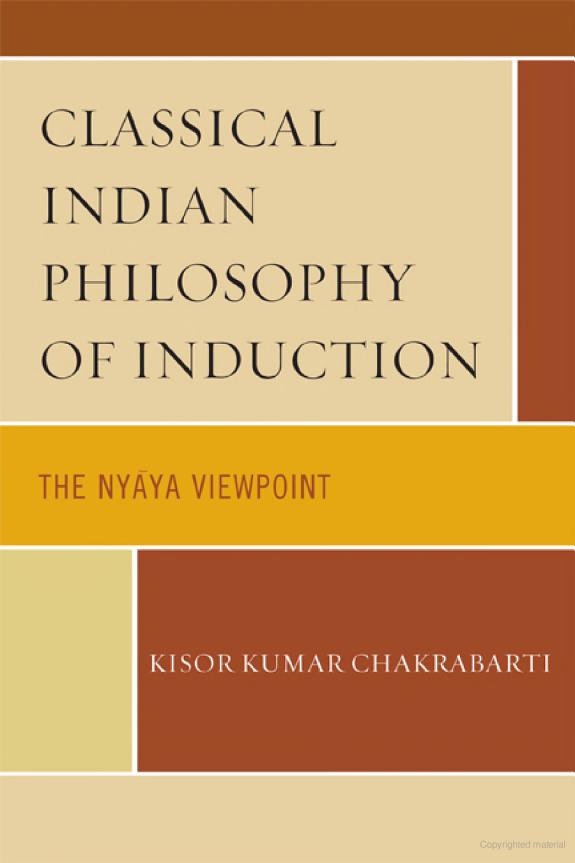
Classical Indian Philosophy of Induction

Classical Indian Philosophy of Induction

The Nyaya Viewpoint

by Kisor Kumar Chakrabarti

328 pages· 2010· ISBN 9780739147054
About
Induction is a basic method of scientific and philosophical inquiry. The work seeks to show against the skeptical tide that the method is secure and reliable. The problem of induction has been a hotly debated issue in modern and contemporary philosophy since David Hume. However, long before the modern era Indian philosophers have addressed this problem for about two thousand years. This work examines some major Indian viewpoints including those of Jayarasi (7th century), Dharmakirti (7th century), Prabhakara (8th century), Udayana (11th century) and Prabhacandra (14th century). It also discusses some influential contemporary positions including those of Russell, Strawson, Popper, Reichenbach, Carnap, Goodman and Quine. The main focus is on the Nyaya view developed by Gangesa (13th century). A substantial part of the work is devoted to annotated translation of selected chapters from Gangesa's work dealing with the problem of induction with copious references to the later Nyaya philosophers including Raghunatha (15th century), Mathuranatha (16th century), Jagadisa (17th century) and Gadadhara (17th century). An annotated translation of selections from Sriharsa (12th century) of the Vedanta school, Prabhacandra of the Jaina school and Dharmakirti of the Buddhist school is also included. A solution is presented to the classical problem of induction and the Grue paradox based on the Nyaya perspective. The solution includes an argument from counterfactual reasoning, arguments in defense of causality, analyses of circularity and logical economy, arguments for objective universals and an argument from belief-behavior contradiction.

Discuss Classical Indian Philosophy of Induction with other readers

Join or start a book club for Classical Indian Philosophy of Induction on Readfeed. Live chat, shared reading progress, and AI discussion questions — free to get started.

Frequently asked questions

How do I join a book club for Classical Indian Philosophy of Induction?

Sign up free on Readfeed, then browse public clubs or start your own club with Classical Indian Philosophy of Induction as the current read. Invite friends with a share link and discuss together with live chat and AI discussion questions.

Can I discuss Classical Indian Philosophy of Induction with other readers online?

Yes. Readfeed book clubs let you chat live, share progress, and join discussions about Classical Indian Philosophy of Induction with readers worldwide — whether your club is virtual, in-person, or hybrid.

Is Readfeed free?

Yes. Creating an account and joining book clubs is free. Sign up to find readers who love the same books and start discussing today.