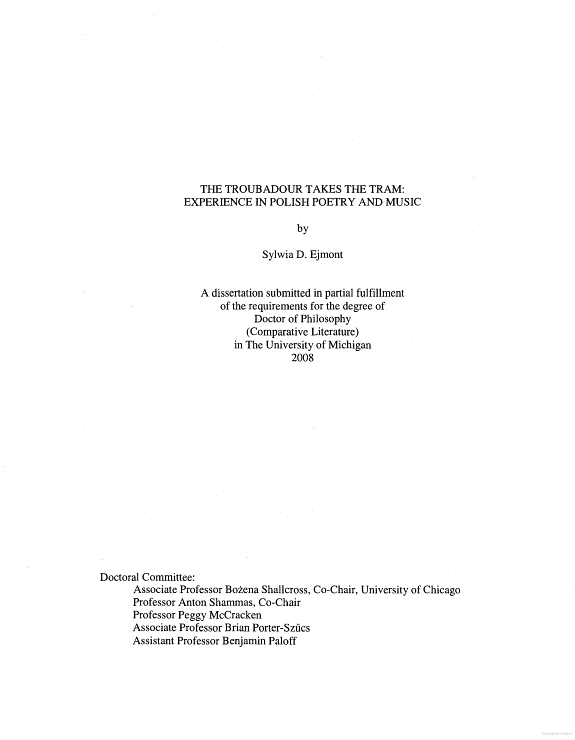
The Troubadour Takes the Tram: Experience in Polish Poetry and Music

The Troubadour Takes the Tram: Experience in Polish Poetry and Music

190 pages· 2008· ISBN 9780549814887
About
"The Troubadour Takes the Tram: Experience in Polish Poetry and Music" follows select developments in Polish poetry over three decades in order to show how they culminated in the surge of poetic performance activity of the 1980s, known as poezja spiewana ("sung poetry"). The eighties culture in Poland produced an astounding amount and variety of songs; each style responded and contributed in its own distinct way to the social and political changes that took place over that last decade before the fall of communism in 1989, drawing energy from the frustrations of young people and fueling their desire to transform the world around them. I examine the genre of poezja spiewana as a phenomenon that fostered personal growth through a unique experience of poetry, centered around intimate interpretations of common texts and ideas, embodied in the figure of the "bard." While music facilitated distribution of these ideas and brought people together in private settings conducive to their reception, it played only one part in a set of self-didactic practices. I argue that Polish artists resurrected the bard in order to revive the national imagination and assist society in its efforts to re-invent itself as more humane, equitable, and just. Using a variety of sources (published poetry, opinions of poets and critics, reviews and recordings of live shows), I demonstrate how sung poetry enthusiasts fashioned it as an instrument of social and political critique. In particular, I focus on Edward Stachura (1937-1979), a poet who personified the ultimate bard, both as an experimentator and a thinker vitally interested in designing new forms of artistic expression. I contextualize the reception of his work against the major tenets of the Nowa Fala ("New Wave") literary movement (which included Adam Zagajewski, Julian Kornhauser, Stanislaw Baranczak, Ryszard Krynicki, and others) and its attempts to construct an ideology of culture. Through a seemingly nostalgic look at the past, and through intense personal involvement, poezja spiewana creates an affectively charged space in which the present can be profoundly interrogated and transformed. The performers discussed include Jacek Kaczmarski, Marek Galazka, Jan Kondrak, and Stare Dobre Malzenstwo.

Discuss The Troubadour Takes the Tram: Experience in Polish Poetry and Music with other readers

Join or start a book club for The Troubadour Takes the Tram: Experience in Polish Poetry and Music on Readfeed. Live chat, shared reading progress, and AI discussion questions — free to get started.

Frequently asked questions

How do I join a book club for The Troubadour Takes the Tram: Experience in Polish Poetry and Music?

Sign up free on Readfeed, then browse public clubs or start your own club with The Troubadour Takes the Tram: Experience in Polish Poetry and Music as the current read. Invite friends with a share link and discuss together with live chat and AI discussion questions.

Can I discuss The Troubadour Takes the Tram: Experience in Polish Poetry and Music with other readers online?

Yes. Readfeed book clubs let you chat live, share progress, and join discussions about The Troubadour Takes the Tram: Experience in Polish Poetry and Music with readers worldwide — whether your club is virtual, in-person, or hybrid.

Is Readfeed free?

Yes. Creating an account and joining book clubs is free. Sign up to find readers who love the same books and start discussing today.