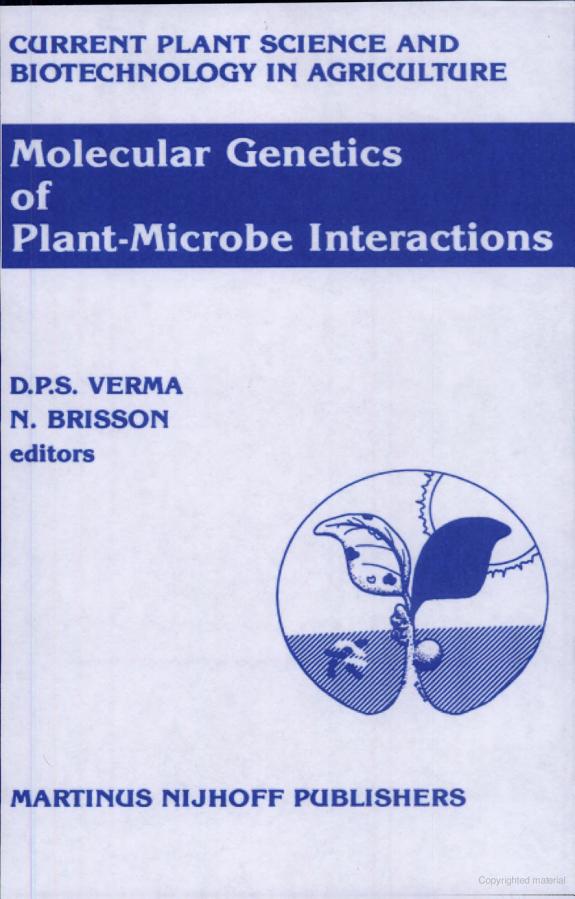
Molecular Genetics of Plant-Microbe Interactions

Molecular Genetics of Plant-Microbe Interactions

Proceedings of the Third International Symposium on the Molecular Genetics of Plant-Microbe Associations, Montréal, Québec, Canada, July 27–31, 1986

by Desh Pal S Verma, N. Brisson

338 pages· 1986· ISBN 9789024734269
About
Increased interest in the basic biology of plants and microorganisms stems from the fact that crop productivity is directly affected by plant-microbe interactions. In spite of the fact that plants exist in the environment amongst diverse species of microorganisms, only a few ever establish a direct relationship. Emerging awareness concerning the indirect effect of microbial association on plant growth and the possibility of using one microbe against another for controlling pathogenic interactions is at the genesis of new fields of studies. The primary reason for a microbe to associate with· photoautotrophic organisms (plants) is to tap its nutritional requirements, fixed carbon, as a source of energy. By hook or by crook, a microbe must survive. Some have evolved mechanisms to exploit plants to develop a niche for their biotropic demands. When in contact with a living plant, microorganisms may live in a passive association using exudates from the plant, invade it pathogenically or coexist with it in symbiosis. The plant responds to the interloper, either reacting in a hypersensitive manner to contain the invasion of pathogens, or by inducing a set of genes that leads toward symbiosis, or by simply succumbing to the invader. Thus, prior to contact wi th the plant, mic roorganism is able to sense the presence of the host and activate accordingly a set of genes required for the forthcoming interaction, whether symbiotic or pathogenic.

Discuss Molecular Genetics of Plant-Microbe Interactions with other readers

Join or start a book club for Molecular Genetics of Plant-Microbe Interactions on Readfeed. Live chat, shared reading progress, and AI discussion questions — free to get started.

Frequently asked questions

How do I join a book club for Molecular Genetics of Plant-Microbe Interactions?

Sign up free on Readfeed, then browse public clubs or start your own club with Molecular Genetics of Plant-Microbe Interactions as the current read. Invite friends with a share link and discuss together with live chat and AI discussion questions.

Can I discuss Molecular Genetics of Plant-Microbe Interactions with other readers online?

Yes. Readfeed book clubs let you chat live, share progress, and join discussions about Molecular Genetics of Plant-Microbe Interactions with readers worldwide — whether your club is virtual, in-person, or hybrid.

Is Readfeed free?

Yes. Creating an account and joining book clubs is free. Sign up to find readers who love the same books and start discussing today.