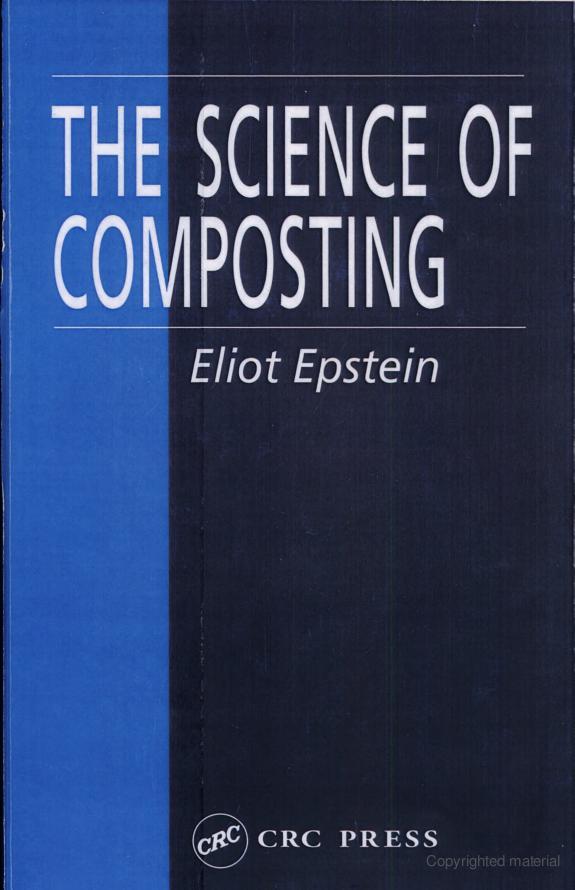
The Science of Composting
by Eliot Epstein
504 pages· 1996· ISBN 9781566764780
About
FROM THE PREFACE The main objective of composting is to transform organic materials into a stable usable product. Often organic materials which may have limited beneficial use in their raw state or have regulatory disposal constraints can be transformed by composting into marketable products. The limits on beneficial reuse may be regulations or they may be due to the potential for materials to be putrescible or pathogenic. Composting can be a solution for each of these. The implementation of composting on a large scale (in contrast to home or backyard composting) involves materials handling. Technological implementation of composting must be consistent with the biological demand of the system. If the biological system is violated, conditions will not be optimized for composting, and problems such as odor generation, insufficient aeration or moisture, or a combination of these conditions may result. Past problems and closure of facilities have been largely due to violations of the biological systems. Product quality with respect to particle size, inclusions, moisture content and other physical aspects are a function of engineering design. A well designed system must have the biological and engineering principles in harmony at all times.
Discuss The Science of Composting with other readers
Join or start a book club for The Science of Composting on Readfeed. Live chat, shared reading progress, and AI discussion questions — free to get started.
Frequently asked questions
How do I join a book club for The Science of Composting?
Sign up free on Readfeed, then browse public clubs or start your own club with The Science of Composting as the current read. Invite friends with a share link and discuss together with live chat and AI discussion questions.
Can I discuss The Science of Composting with other readers online?
Yes. Readfeed book clubs let you chat live, share progress, and join discussions about The Science of Composting with readers worldwide — whether your club is virtual, in-person, or hybrid.
Is Readfeed free?
Yes. Creating an account and joining book clubs is free. Sign up to find readers who love the same books and start discussing today.