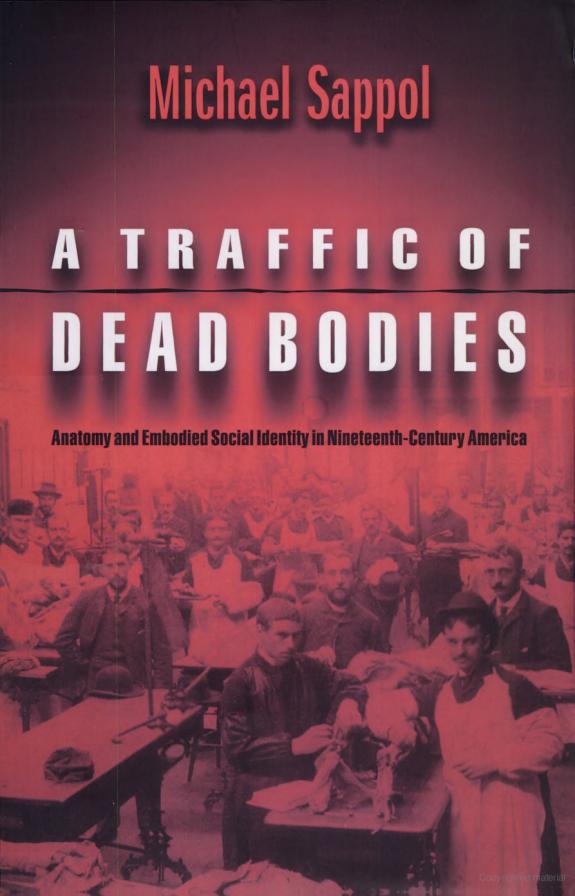
A Traffic of Dead Bodies enters the sphere of bodysnatching medical students, dissection-room pranks, and anatomical fantasy. It shows how nineteenth-century American physicians used anatomy to develop a vital professional identity, while claiming authority over the living and the dead. It also introduces the middle-class women and men, working people, unorthodox healers, cultural radicals, entrepreneurs, and health reformers who resisted and exploited anatomy to articulate their own social identities and visions. The nineteenth century saw the rise of the American medical profession: a proliferation of practitioners, journals, organizations, sects, and schools. Anatomy lay at the heart of the medical curriculum, allowing American medicine to invest itself with the authority of European science. Anatomists crossed the boundary between life and death, cut into the body, reduced it to its parts, framed it with moral commentary, and represented it theatrically, visually, and textually. Only initiates of the dissecting room could claim the privileged healing status that came with direct knowledge of the body. But anatomy depended on confiscation of the dead--mainly the plundered bodies of African Americans, immigrants, Native Americans, and the poor. As black markets in cadavers flourished, so did a cultural obsession with anatomy, an obsession that gave rise to clashes over the legal, social, and moral status of the dead. Ministers praised or denounced anatomy from the pulpit; rioters sacked medical schools; and legislatures passed or repealed laws permitting medical schools to take the bodies of the destitute. Dissection narratives and representations of the anatomical body circulated in new places: schools, dime museums, popular lectures, minstrel shows, and sensationalist novels. Michael Sappol resurrects this world of graverobbers and anatomical healers, discerning new ligatures among race and gender relations, funerary practices, the formation of the middle-class, and medical professionalization. In the process, he offers an engrossing and surprisingly rich cultural history of nineteenth-century America.