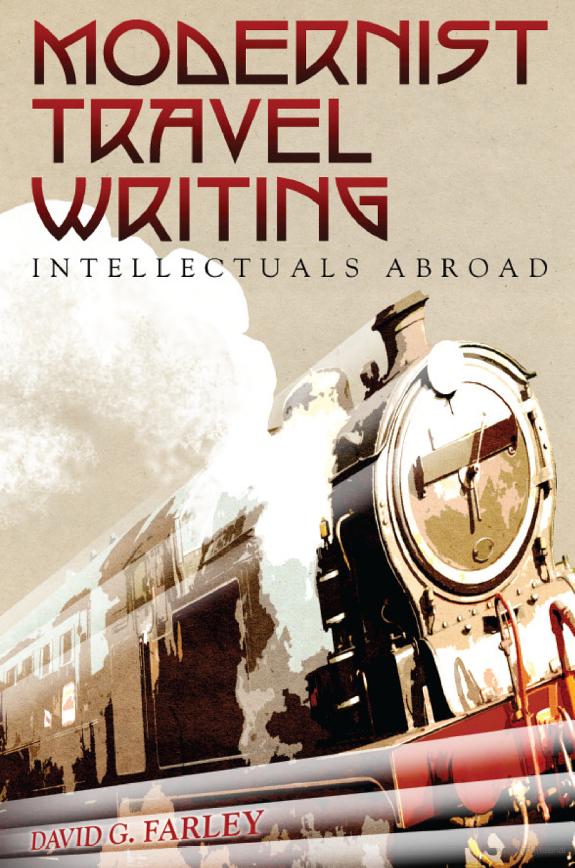
Modernist Travel Writing
Intellectuals Abroad
by David G. Farley
248 pages· 2010· ISBN 9780826272287
About
As the study of travel writing has grown in recent years, scholars have largely ignored the literature of modernist writers. Modernist Travel Writing: Intellectuals Abroad, by David Farley, addresses this gap by examining the ways in which a number of writers employed the techniques and stylistic innovations of modernism in their travel narratives to variously engage the political, social, and cultural milieu of the years between the world wars. Modernist Travel Writing argues that the travel book is a crucial genre for understanding the development of modernism in the years between the wars, despite the established view that travel writing during the interwar period was largely an escapist genre—one in which writers hearkened back to the realism of nineteenth-century literature in order to avoid interwar anxiety. Farley analyzes works that exist on the margins of modernism, generically and geographically, works that have yet to receive the critical attention they deserve, partly due to their classification as travel narratives and partly because of their complex modernist styles. The book begins by examining the ways that travel and the emergent travel regulations in the wake of the First World War helped shape Ezra Pound’s Cantos. From there, it goes on to examine E. E. Cummings’s frustrated attempts to navigate the “unworld” of Soviet Russia in his book Eimi,Wyndham Lewis’s satiric journey through colonial Morocco in Filibusters in Barbary,and Rebecca West’s urgent efforts to make sense of the fractious Balkan states in Black Lamb and Grey Falcon. These modernist writers traveled to countries that experienced most directly the tumult of revolution, the effects of empire, and the upheaval of war during the years between World War I and World War II. Farley’s study focuses on the question of what constitutes “evidence” for Pound, Lewis, Cummings, and West as they establish their authority as eyewitnesses, translate what they see for an audience back home, and attempt to make sense of a transformed and transforming modern world. Modernist Travel Writing makes an original contribution to the study of literary modernism while taking a distinctive look at a unique subset within the growing field of travel writing studies. David Farley’s work will be of interest to students and teachers in both of these fields as well as to early-twentieth-century literary historians and general enthusiasts of modernist studies.
Discuss Modernist Travel Writing with other readers
Join or start a book club for Modernist Travel Writing on Readfeed. Live chat, shared reading progress, and AI discussion questions — free to get started.
Frequently asked questions
How do I join a book club for Modernist Travel Writing?
Sign up free on Readfeed, then browse public clubs or start your own club with Modernist Travel Writing as the current read. Invite friends with a share link and discuss together with live chat and AI discussion questions.
Can I discuss Modernist Travel Writing with other readers online?
Yes. Readfeed book clubs let you chat live, share progress, and join discussions about Modernist Travel Writing with readers worldwide — whether your club is virtual, in-person, or hybrid.
Is Readfeed free?
Yes. Creating an account and joining book clubs is free. Sign up to find readers who love the same books and start discussing today.