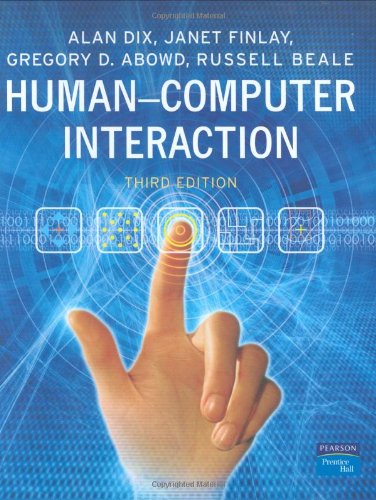
Human-computer Interaction
by Alan Dix
834 pages· 2004· ISBN 9780130461094
About
Much has changed since the first edition of "human computer interaction" was published. Ubiquitous computing and rich sensor-filled environments are finding their way out of the laboratory, not just into movies but also into our workplaces and homes. The computer has broken out of its plastic and glass bounds providing us with networked societies where personal computing devices from mobile phones to smart cards fill our pockets and electronic devices surround us at home and work. The web too has grown from a largely academic network into the hub of business and everyday lives. As the distinctions between the physical and the digital, and between work and leisure start to break down, human-computer interaction is also changing radically. The excitement of these changes is captured in this new edition, which also looks forward to other emerging technologies. However, the book is firmly rooted in strong principles and models independent of the passing technologies of the day: these foundations will be the means by which today s students will understand tomorrow s technology. The third edition of h"uman computer interaction" can be used for introductory and advanced courses on HCI, Interaction Design, Usability or Interactive Systems Design. It will also prove an invaluable reference for professionals wishing to design usable computing devices. Accompanying the text is a comprehensive website containing a broad range of material for instructors, students and practitioners, a full text search facility for the book, links to many sites of additional interest and much more: go to www.hcibook.com New to this edition: A revised structure, reflecting the growth of HCI as a discipline, separates out basic material suitable for introductory courses from more detailed models and theories. New chapter on Interaction Design adds material on scenarios and basic navigation design. New chapter on Universal Design, substantially extending the coverage of this material in the book. Updated and extended treatment of socio/contextual issues. Extended and new material on novel interaction, including updated ubicomp material, designing experience, physical sensors and a new chapter on rich interaction. Updated material on the web including dynamic content and WAP. Alan Dix is Professor in the Department of Computing, Lancaster, UK. Janet Finlay is Professor at the School of Computing, Leeds Metropolitan University, UK. Gregory Abowd is Assistant Professor in the College of Computing at Georgia Tech, USA. Russell Beale is lecturer at the School of Computer Science, University of Birmingham, UK. "
Discuss Human-computer Interaction with other readers
Join or start a book club for Human-computer Interaction on Readfeed. Live chat, shared reading progress, and AI discussion questions — free to get started.
Frequently asked questions
How do I join a book club for Human-computer Interaction?
Sign up free on Readfeed, then browse public clubs or start your own club with Human-computer Interaction as the current read. Invite friends with a share link and discuss together with live chat and AI discussion questions.
Can I discuss Human-computer Interaction with other readers online?
Yes. Readfeed book clubs let you chat live, share progress, and join discussions about Human-computer Interaction with readers worldwide — whether your club is virtual, in-person, or hybrid.
Is Readfeed free?
Yes. Creating an account and joining book clubs is free. Sign up to find readers who love the same books and start discussing today.