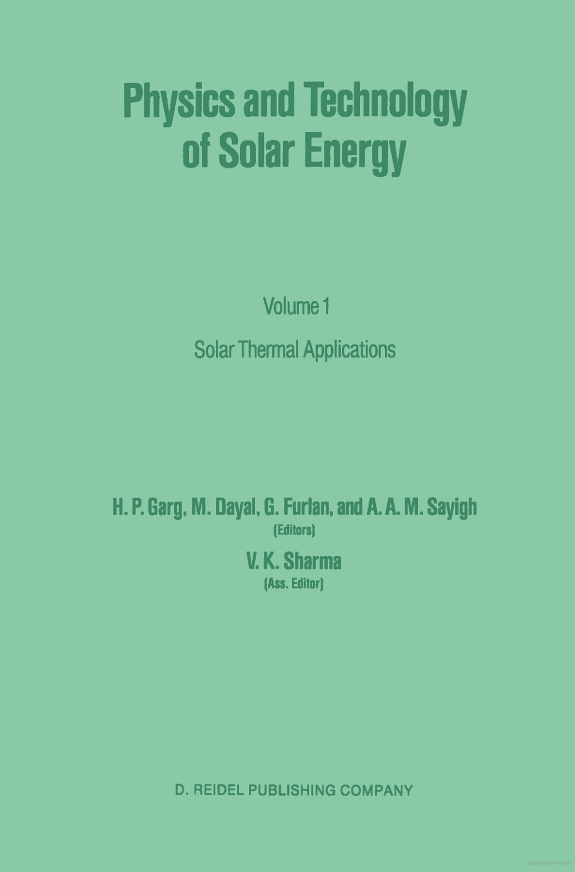
Physics and Technology of Solar Energy

Physics and Technology of Solar Energy

Volume 1: Solar Thermal Applications

by H.P. Garg, M. Dayal, G. Furlan, A.A.M Sayigh

609 pages· 2012· ISBN 9789400939394
About
The 'fuel crises' in 1972-73 generated world wide effort f6r the search for an Alternative Energy source to fossil fuels. Solar energy waS identified as one of the alternatives to fossil fuels. On one hand the developed countries are trying to maintain their standard of living while the developing countries are trying to solve their industrial, social and economical problems to increase their standard of living. After this period a lot of Research and Development in the field of solar energ'y was carried out both in developing and developed countries and solar energy i. utilized in domestic, agricultural and indvstrial sectors and also in the space. During the period of "Oil Crises" industrialized countries expended their activities in solar energy and substantial progress was made. In f. ew developing countries seperate funding in the field of solar energy R&D was also provided through national and international, organizations. Time has now come when one should . eriously look into the problems and screen, select, adapt, and manage emerging solar energy technology for its use in developing countries. Also the International Organizations will have to play a major role in this direction which may assist building up of a local Solar energy' R&D and manufacturing capabilities in developing countries which should be based ori a long term but on necessary basis.

Discuss Physics and Technology of Solar Energy with other readers

Join or start a book club for Physics and Technology of Solar Energy on Readfeed. Live chat, shared reading progress, and AI discussion questions — free to get started.

Frequently asked questions

How do I join a book club for Physics and Technology of Solar Energy?

Sign up free on Readfeed, then browse public clubs or start your own club with Physics and Technology of Solar Energy as the current read. Invite friends with a share link and discuss together with live chat and AI discussion questions.

Can I discuss Physics and Technology of Solar Energy with other readers online?

Yes. Readfeed book clubs let you chat live, share progress, and join discussions about Physics and Technology of Solar Energy with readers worldwide — whether your club is virtual, in-person, or hybrid.

Is Readfeed free?

Yes. Creating an account and joining book clubs is free. Sign up to find readers who love the same books and start discussing today.