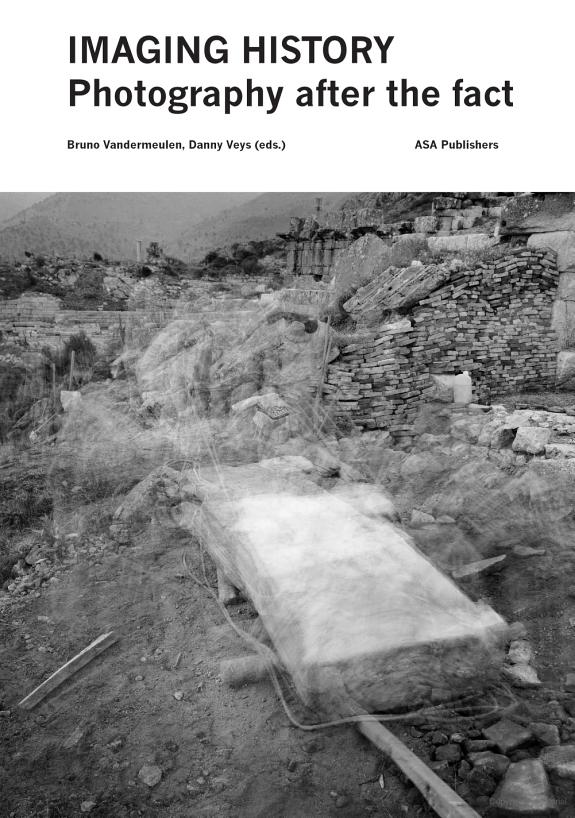
Imaging History
Photography After the Fact
by Bruno Vandermeulen, Danny Veys
160 pages· 2011· ISBN 9789461170132
About
In archaeology, photography is mainly used as a technique for gathering data and evidence. Within the framework of the research project '(in)site, site-specific photography revisited' the relationship between photography and archaeology, or broader, history is explored. How do photographers visualize history? What is the importance of place, particularly the place that remains after the event took place? How do photographers or artists use photography to depict the past, when time has become 'past time'? These articles and portfolios explore, both on practical and theoretical level, how history can be captured. The research project is an attempt to redefine the traditional relationship between archaeology and photography in order to produce new forms of image-making more adapted to contemporary visual culture. The project considers photography as a practice in which a picture is shaped and constructed by the photographer, not a practice in which a picture is mechanically taken.
Discuss Imaging History with other readers
Join or start a book club for Imaging History on Readfeed. Live chat, shared reading progress, and AI discussion questions — free to get started.
Frequently asked questions
How do I join a book club for Imaging History?
Sign up free on Readfeed, then browse public clubs or start your own club with Imaging History as the current read. Invite friends with a share link and discuss together with live chat and AI discussion questions.
Can I discuss Imaging History with other readers online?
Yes. Readfeed book clubs let you chat live, share progress, and join discussions about Imaging History with readers worldwide — whether your club is virtual, in-person, or hybrid.
Is Readfeed free?
Yes. Creating an account and joining book clubs is free. Sign up to find readers who love the same books and start discussing today.