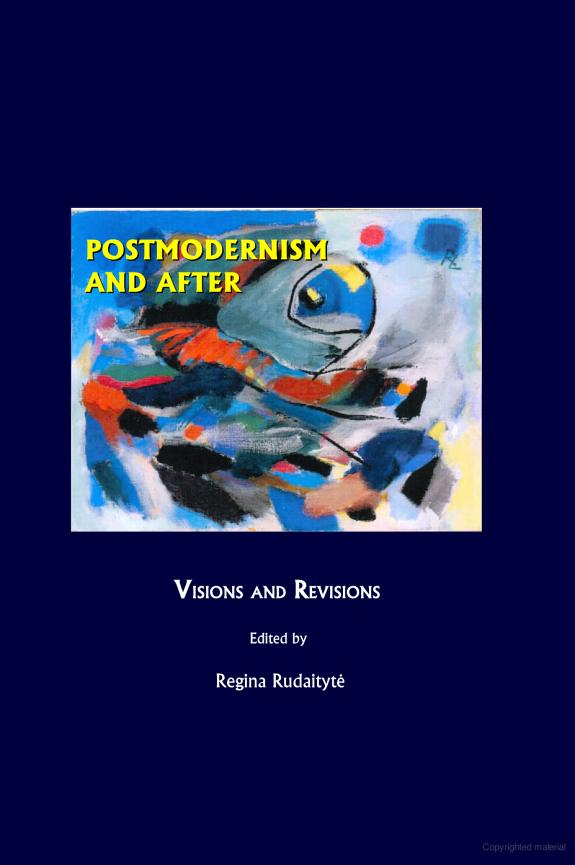
Postmodernism and After
Visions and Revisions
by Regina Rudaitytė
220 pages· 2009· ISBN 9781443810326
About
The present collection of academic articles is an attempt to reflect on new openings and recent developments in literature, literary theory and culture which seem to point beyond postmodernism and register a return to traditional concepts, theoretical premises and authorial practices. Interestingly enough, forty years after the publication of John Barth’s seminal essay “The Literature of Exhaustion” (1967), the book is trying to diagnose the exhaustion of postmodernism, which was predicted by David Lodge already two decades ago. It also attempts to trace the signs in contemporary literature indicating that postmodernism is past its heyday, that it is losing or has lost its shine, fascination and attraction and that writers have been turning to the “old” or pre-modern forms, practices and strategies. Herbert Grabes’ comprehensive and illuminating article “From the Postmodern to the Pre-Modern: More Recent Changes in Literature, Art, and Theory” which opens and sets the tone for this collection of essays is a major assessment of new developments in literary culture, focusing on the evolution of the postmodern to the premodern mode; it also highlights the role and current popularity of cultural studies and cultural history – theoretical movements which have been prevailing for some time now after the end of deconstruction. The articles assembled in this collection are on diverse thematics and written from diverse theoretical perspectives; they differ in scope and methodology, and their focus ranges from the postmodern, intertextual aspect to the open questioning of it and to more recent developments in the literary culture. Focusing on literary icons like A.S. Byatt, John Banville, Margaret Atwood, Umberto Eco, Vladimir Nabokov (but also extending into a less-known regions – geographically as well), they invite reconsideration and reconceptualization of such key notions as “truth”, meaning production, textuality and literary interpretation. This book aims at opening fresh discussion, debate and reflection on the new age reaching beyond postmodernism, and the budding literary mode, whatever labels we might stick to it.
Discuss Postmodernism and After with other readers
Join or start a book club for Postmodernism and After on Readfeed. Live chat, shared reading progress, and AI discussion questions — free to get started.
Frequently asked questions
How do I join a book club for Postmodernism and After?
Sign up free on Readfeed, then browse public clubs or start your own club with Postmodernism and After as the current read. Invite friends with a share link and discuss together with live chat and AI discussion questions.
Can I discuss Postmodernism and After with other readers online?
Yes. Readfeed book clubs let you chat live, share progress, and join discussions about Postmodernism and After with readers worldwide — whether your club is virtual, in-person, or hybrid.
Is Readfeed free?
Yes. Creating an account and joining book clubs is free. Sign up to find readers who love the same books and start discussing today.