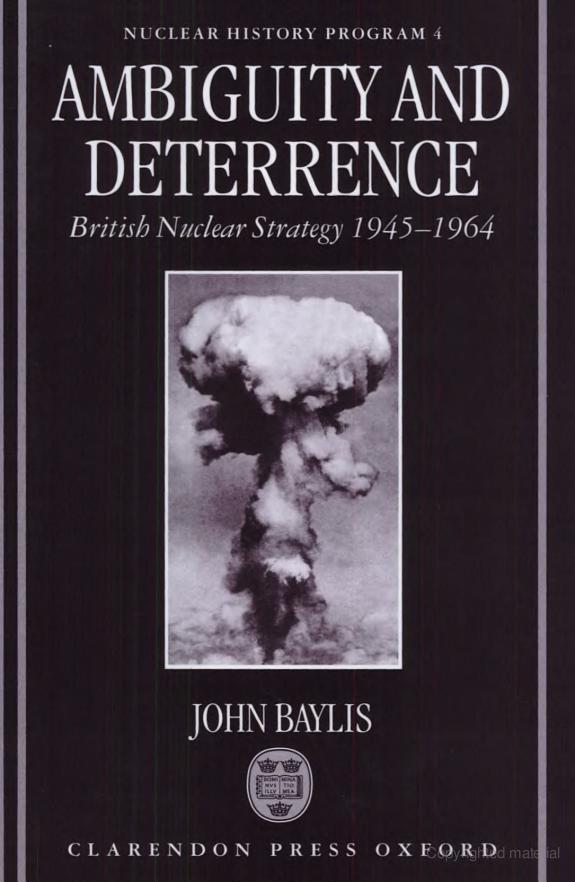
Ambiguity and Deterrence
British Nuclear Strategy, 1945-1964
by John Baylis
495 pages· 1995· ISBN 9780198280125
About
Ambiguity and Deterrence focuses on the role of competing strategic beliefs in the formulation of British nuclear strategy between 1945 and 1964. Based on recently released documents, it is argued that the British approach to nuclear weapons during this formative period was characterized by paradox and ambiguity. The paradox was that while there was a widespread consensus in political and military circles in favour of nuclear deterrence, there were constant disagreements over the requirements of an effective deterrent policy. These disagreements centred on six main questions: whether deterrence was best achieved through "punishment" or "denial"; whether detterence necessitated nuclear superiority; whether preparations had to be made for a long war or a short war; what strategic implications followed from nuclear stalemate; whether limited nuclear wars could be fought without escalation to all-out nuclear war; and whether pre-emption was politically acceptable and militarily necessary. It is argued that the failure of successive governments to provide clear political direction on these issues meant that British nuclear strategy was more ambiguous and much less coherent than is usually supposed.
Discuss Ambiguity and Deterrence with other readers
Join or start a book club for Ambiguity and Deterrence on Readfeed. Live chat, shared reading progress, and AI discussion questions — free to get started.
Frequently asked questions
How do I join a book club for Ambiguity and Deterrence?
Sign up free on Readfeed, then browse public clubs or start your own club with Ambiguity and Deterrence as the current read. Invite friends with a share link and discuss together with live chat and AI discussion questions.
Can I discuss Ambiguity and Deterrence with other readers online?
Yes. Readfeed book clubs let you chat live, share progress, and join discussions about Ambiguity and Deterrence with readers worldwide — whether your club is virtual, in-person, or hybrid.
Is Readfeed free?
Yes. Creating an account and joining book clubs is free. Sign up to find readers who love the same books and start discussing today.