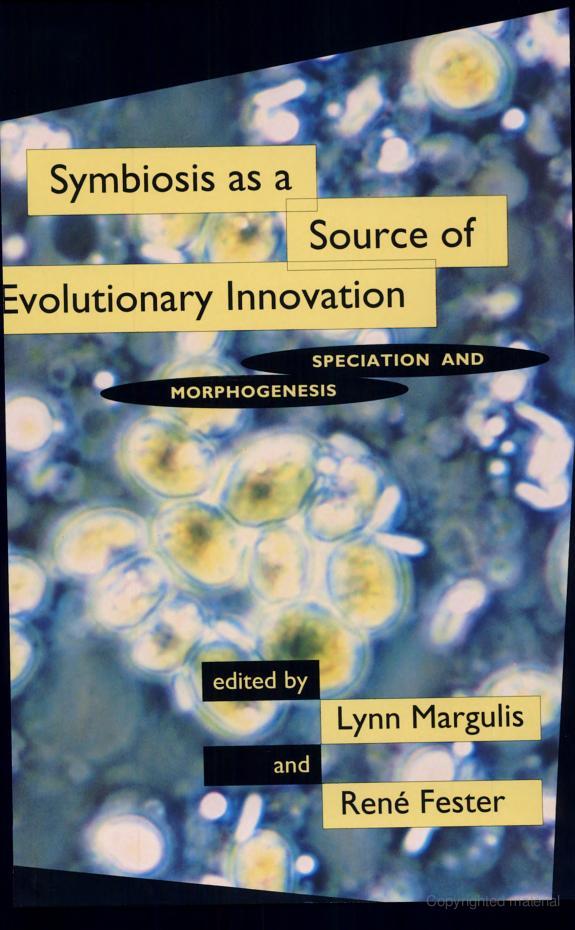
Symbiosis as a Source of Evolutionary Innovation

Symbiosis as a Source of Evolutionary Innovation

Speciation and Morphogenesis

by Lynn Margulis, René Fester

454 pages· 1991· ISBN 9780262132695
About
A departure from mainstream biology, the idea of symbiosis - as in the genetic andmetabolic interactions of the bacterial communities that became the earliest eukaryotes andeventually evolved into plants and animals - has attracted the attention of a growing number ofscientists.These original contributions by symbiosis biologists and evolutionary theorists addressthe adequacy of the prevailing neo-Darwinian concept of evolution in the light of growing evidencethat hereditary symbiosis, supplemented by the gradual accumulation of heritable mutation, resultsin the origin of new species and morphological novelty. They include reports of current research onthe evolutionary consequences of symbiosis, the protracted physical association between organisms ofdifferent species. Among the issues considered are individuality and evolution, microbial symbioses,animal­bacterial symbioses, and the importance of symbiosis in cell evolution, ecology, andmorphogenesis.Lynn Margulis, Distinguished Professor of Botany at the University of Massachusetts atAmherst, is the modern originator of the symbiotic theory of cell evolution. Once considered heresy,her ideas are now part of the microbiological revolution. René Fester is a graduate student in thebiological sciences at Northern Arizona University.Contributors: Peter Atsatt. Richard C. Back.David Bermudes. Paola Bonfante-Fasolo. René Fester. Lynda J. Goff. Anne-Marie Grenier. RicardoGuerrero. Robert H. Haynes. Rosmarie Honegger. Gregory Hinkle. Kwang W. Jeon. Bryce Kendrick.Richard Law. David Lewis. Lynn Margulis. John Maynard Smith. Margaret J. McFall-Ngai. Paul Nardon.Kenneth H. Nealson. Kris Pirozynski. Peter W. Price. Mary Beth Saffo. Jan Sapp. Silvano Scannerini.Werner Schwemmler. Sorin Sonea. Toomas H. Tiivel. Robert K. Trench. Russell Vetter.

Discuss Symbiosis as a Source of Evolutionary Innovation with other readers

Join or start a book club for Symbiosis as a Source of Evolutionary Innovation on Readfeed. Live chat, shared reading progress, and AI discussion questions — free to get started.

Frequently asked questions

How do I join a book club for Symbiosis as a Source of Evolutionary Innovation?

Sign up free on Readfeed, then browse public clubs or start your own club with Symbiosis as a Source of Evolutionary Innovation as the current read. Invite friends with a share link and discuss together with live chat and AI discussion questions.

Can I discuss Symbiosis as a Source of Evolutionary Innovation with other readers online?

Yes. Readfeed book clubs let you chat live, share progress, and join discussions about Symbiosis as a Source of Evolutionary Innovation with readers worldwide — whether your club is virtual, in-person, or hybrid.

Is Readfeed free?

Yes. Creating an account and joining book clubs is free. Sign up to find readers who love the same books and start discussing today.