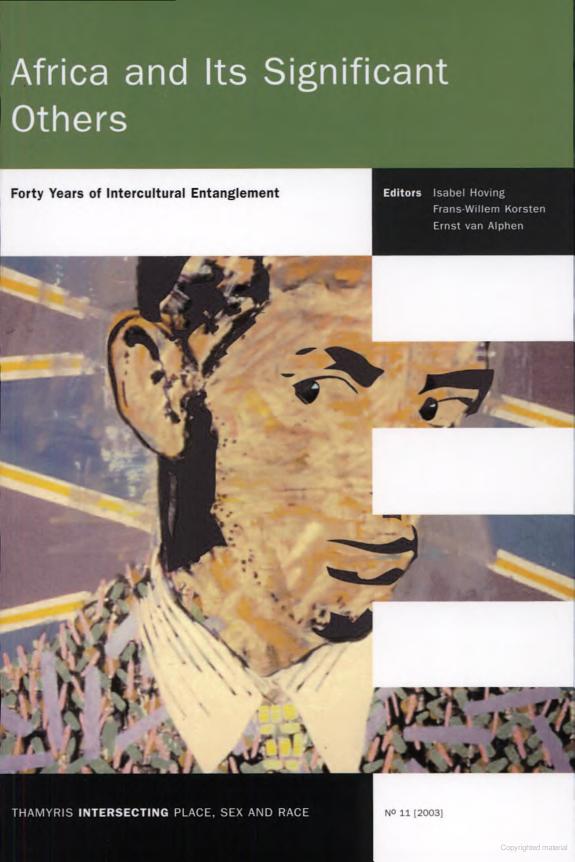
When did the intimate dialogue between Africa, Europe, and the Americas begin? Looking back, it seems as if these three continents have always been each other s significant others. Europe created its own modern identity by using Africa as a mirror, but Africans traveled to Europe and America long before the European age of discovery, and African cultures can be said to lie at the root of European culture. This intertwining has become ever more visible: Nowadays Africa emerges as a highly visible presence in the Americas, and African American styles capture Europe s youth, many of whom are of (North-) African descent. This entanglement, however, remains both productive and destructive. The continental economies are intertwined in ways disastrous for Africa, and African knowledge is all too often exported and translated for US and European scholarly aims, which increases the intercontinental knowledge gap. This volume proposes a fresh look at the vigorous and painful, but inescapable, relationships between these significant others. It does so as a gesture of gratitude and respect to one of the pioneering figures in this field. Dutch Africanist and literary scholar Mineke Schipper, who is taking her leave from her chair in Intercultural Literary Studies at the University of Leiden. Where have the past four decades of African studies brought us? What is the present-day state of this intercontinental dialogue? Sixteen of Mineke s colleagues and friends in Europe, Africa and the Americas look back and assess the relations and debates between Africa-Europe-America: Ann Adams, Ernst van Alphen, Mieke Bal, Liesbeth Bekers, Wilfried van Damme, Ariel Dorfman, Peter Geschiere, Kathleen Gyssels, Isabel Hoving, Frans-Willem Korsten, Babacar M Baye, Harry Olufunwa, Ankie Peypers, Steven Shankman, Miriam Tlali, and Chantal Zabus write about the place of Africa in today s African Diaspora, about what sisterhood between African and European women really means, about the drawbacks of an overly strong focus on culture in debates about Africa, about Europe s reluctance to see Africa as other than its mirror or its playing field, about the images of Africans in seventeenth-century Dutch writing, about genital excision, the flaunting of the African female body and the new self-writing, about new ways to look at classic African novels, and about the invigorating, disturbing, political art of intercultural reading."