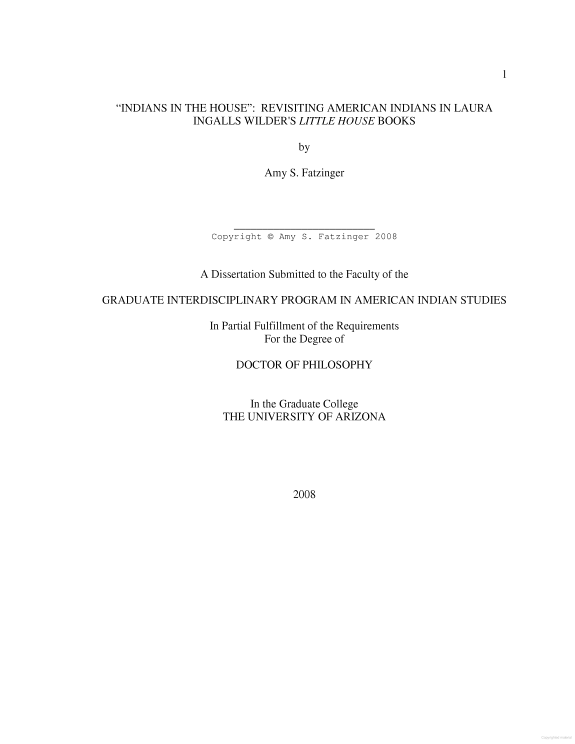
"Indians in the House": Revisiting American Indians in Laura Ingalls Wilder's "Little House" Books

"Indians in the House": Revisiting American Indians in Laura Ingalls Wilder's "Little House" Books

275 pages· 2008· ISBN 9780549536444
About
Laura Ingalls Wilder's eight-novel Little House series, published between 1932 and 1943, is among the most acclaimed and controversial examples of modern children's literature. The narrative tells the true story of Wilder's pioneer childhood in the 1870s and 80s, including her family's encounters with American Indians. Recently some scholars have argued that Wilder's depiction of American Indians is derogatory, but examining Wilder's literary devices and contextualizing the story in the eras in which it occurred and was written about reveals a more complex portrayal of Native themes. Biographical information about Wilder suggests that she deliberately crafted her story as she recorded it; such changes afforded opportunities to emphasize her political values and critique mythology associated with America's frontier era. Analyzing the narrative in the context of frontier Kansas, and more specifically as women's frontier literature, reveals the literary uniqueness of the Little House story and highlights fallacies inherent in the premise of Manifest Destiny. As Wilder recorded her memories with the help of her well-known libertarian daughter, Rose Wilder Lane, during the Depression they often emphasized their anti-New Deal politics and cautioned readers about the dangers of buying into "big government" policies. The Little House story also reflects trends of the Golden Age of children's literature which demonstrated respect for children by removing didactic lessons from the literature; thus the Little House texts present the controversial subject of America's frontier history in a manner that allows children to draw their own conclusions about it. Finally, two television versions of the Little House story present didactic, positive lessons about American Indians on the frontier, but diminish the possibility for multiple interpretations of the events inherent in Wilder's original story. In a non-fiction article in The Missouri Ruralist in 1920, Wilder reminded her neighbors that home is "the best place for teaching many things, first and most important of which is how to think for one's self." Wilder's texts offer opportunities for discussing the complex topics associated with frontier history and encourage young readers to think critically about Native issues in the texts---opportunities seldom found in mainstream American storybooks and curriculum.

Discuss "Indians in the House": Revisiting American Indians in Laura Ingalls Wilder's "Little House" Books with other readers

Join or start a book club for "Indians in the House": Revisiting American Indians in Laura Ingalls Wilder's "Little House" Books on Readfeed. Live chat, shared reading progress, and AI discussion questions — free to get started.

Frequently asked questions

How do I join a book club for "Indians in the House": Revisiting American Indians in Laura Ingalls Wilder's "Little House" Books?

Sign up free on Readfeed, then browse public clubs or start your own club with "Indians in the House": Revisiting American Indians in Laura Ingalls Wilder's "Little House" Books as the current read. Invite friends with a share link and discuss together with live chat and AI discussion questions.

Can I discuss "Indians in the House": Revisiting American Indians in Laura Ingalls Wilder's "Little House" Books with other readers online?

Yes. Readfeed book clubs let you chat live, share progress, and join discussions about "Indians in the House": Revisiting American Indians in Laura Ingalls Wilder's "Little House" Books with readers worldwide — whether your club is virtual, in-person, or hybrid.

Is Readfeed free?

Yes. Creating an account and joining book clubs is free. Sign up to find readers who love the same books and start discussing today.