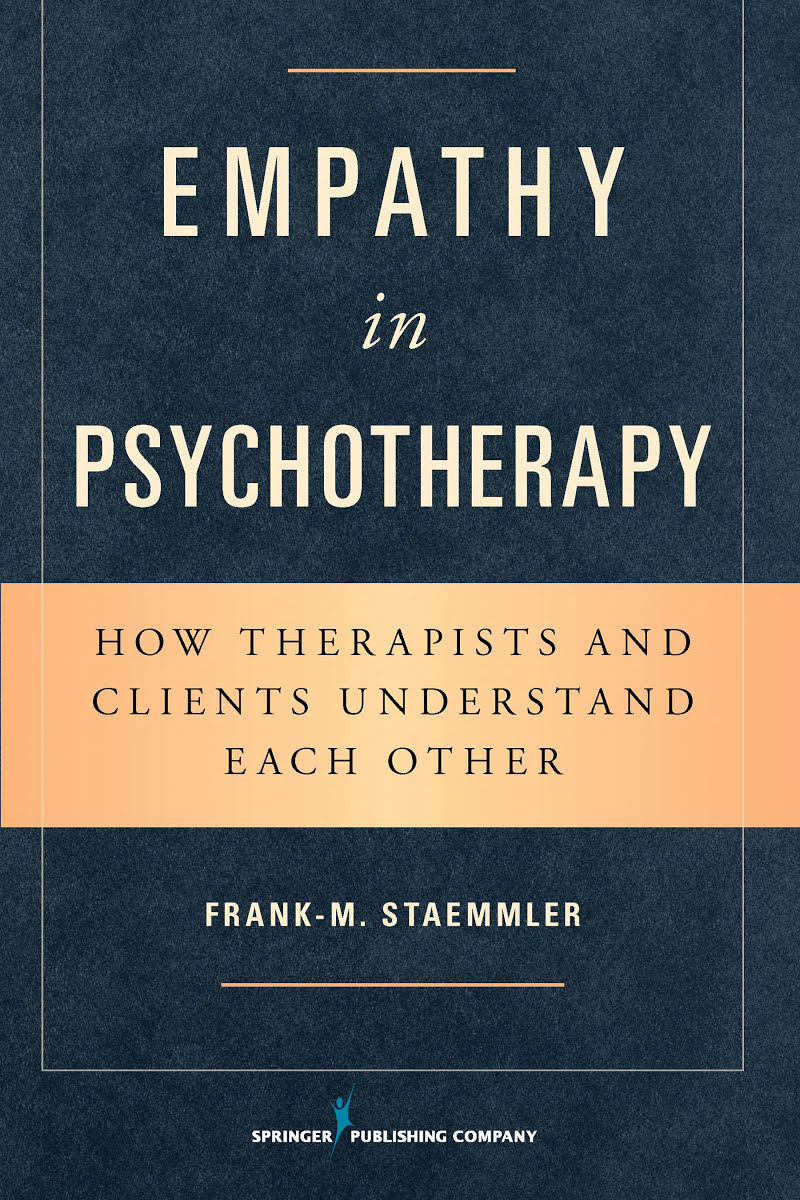
"In Empathy in Psychotherapy: How Therapists and Clients Understand Each Other, Frank-M. Staemmlerbrings together neuropsychology, the psychotherapy literature, the developmentalpsychology literature, and philosophical literature...to rigorously and thoroughly present a newview of the nature of empathy that makes it clear how the relationship can be healing. Thebook is an impressive effort of scholarship in which Staemmler has thoroughly grounded hisideas in the literatures that he brings to bear." --PsycCRITIQUES "Staemmler's new book on empathy, Empathy in Psychotherapy: How Therapists and Clients Understand Each Other, is a tour de force. Rarely have I read a book--surely not in psychoanalysis or psychotherapy--so scholarly and so accessible, so theoretically challenging and so humanistically rich." --International Journal of Psychoanalytic Self Psychology "People intuitively know that we travel the byways of life jointly. Dr. Staemmler takes this common sense perspective and through professionally astute examination transforms it into a dependable guideline for living. His de-mystification and humanization of the elusive dynamics of communal existence returns the reader to the old adage that we are all in the same boat and, further, that it is emotionally imperative to let ourselves be there." Erving Polster, PhD Director, The Gestalt Institute of San Diego According to large scale studies on therapeutic outcomes, psychotherapists' ability to understand their clients has been considered the second most important healing factor in all therapies. The author of this scholarly volume seeks to improve our understanding of the immense therapeutic potential that the human capacity for empathy holds, and to improve our use of it in therapeutic practice. Drawing from the work of great thinkers in philosophy, literature, theology, psychology, and social sciences, and recent discoveries in neuroscience, the author provides a critique of traditional concepts of empathy and creates a new, more expansive definition. More specifically, the author exposes the basic characteristics of current individualistic ideologies that are concealed within traditional concepts of empathy and focuses on the concept that empathic relating between human beings does not just take place in the psyche but is an embodied process. The book also considers scientific phenomena from the field of parapsychology such as telepathy and clairvoyance, which can be thought of as special cases of empathy. The potential for certain types of meditation to increase our empathic abilities is also explored. Key Features: Improves our understanding of the potential for empathy to greatly enhance therapeutic practice Draws from philosophy, literature, theology, psychology, social sciences, and neuroscience to create a new definition of empathy Critiques traditional concepts of empathy and highlights their strengths and weaknesses