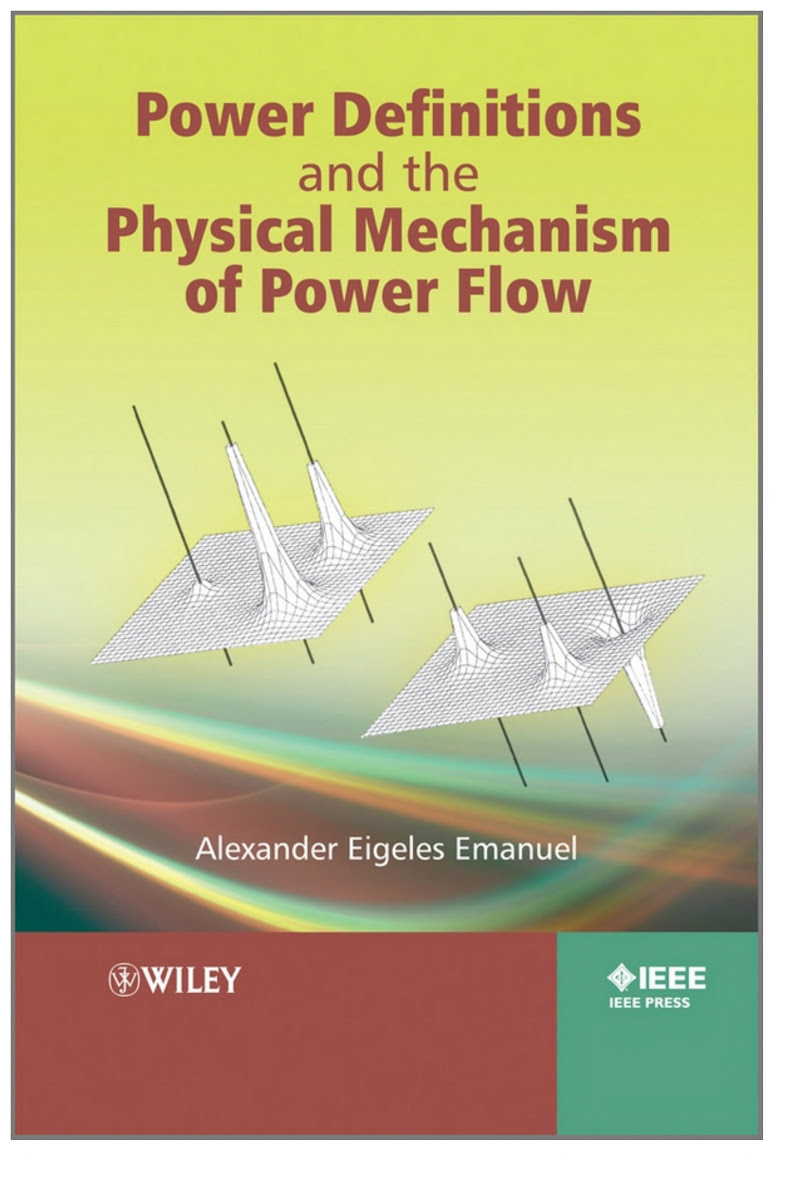
Power Definitions and the Physical Mechanism of Power Flow

Power Definitions and the Physical Mechanism of Power Flow

by Alexander Eigeles Emanuel

280 pages· 2011· ISBN 9781119957287
About
Professor Emanuel uses clear presentation to compare and facilitate understanding of two seminal standards, The IEEE Std. 1459 and The DIN 40110-2:2002-11. Through critical analysis of the most important and recent theories and review of basic concepts, a highly accessible guide to the essence of the standards is presented. Key features: Explains the physical mechanism of energy flow under different conditions: single- and three-phase, sinusoidal and nonsinusoidal, balanced and unbalanced systems Starts at an elementary level and becomes more complex, with six core chapters and six appendices to clarify the mathematical aspects Discusses and recommends power definitions that played a significant historical role in paving the road for the two standards Provides a number of original unsolved problems at the end of each chapter Introduces a new nonactive power; the Randomness power. Power Definitions and the Physical Mechanism of Power Flow is useful for electrical engineers and consultants involved in energy and power quality. It is also helpful to engineers dealing with energy flow quantification, design and manufacturing of metering instrumentation; consultants working with regulations related to renewable energy courses and the smart grid; and electric utility planning and operation engineers dealing with energy bill structure. The text is also relevant to university researchers, professors, and advanced students in power systems, power quality and energy related courses.

Discuss Power Definitions and the Physical Mechanism of Power Flow with other readers

Join or start a book club for Power Definitions and the Physical Mechanism of Power Flow on Readfeed. Live chat, shared reading progress, and AI discussion questions — free to get started.

Frequently asked questions

How do I join a book club for Power Definitions and the Physical Mechanism of Power Flow?

Sign up free on Readfeed, then browse public clubs or start your own club with Power Definitions and the Physical Mechanism of Power Flow as the current read. Invite friends with a share link and discuss together with live chat and AI discussion questions.

Can I discuss Power Definitions and the Physical Mechanism of Power Flow with other readers online?

Yes. Readfeed book clubs let you chat live, share progress, and join discussions about Power Definitions and the Physical Mechanism of Power Flow with readers worldwide — whether your club is virtual, in-person, or hybrid.

Is Readfeed free?

Yes. Creating an account and joining book clubs is free. Sign up to find readers who love the same books and start discussing today.