Systematics of Gonolobus and the Gonolobinae (Apocynaceae, Asclepiadoideae): Circumscription Based on Evidence from Molecules and Morphology; New Species and Combinations; Typification, Revision, and Conservation in the West Indies

Systematics of Gonolobus and the Gonolobinae (Apocynaceae, Asclepiadoideae): Circumscription Based on Evidence from Molecules and Morphology; New Species and Combinations; Typification, Revision, and Conservation in the West Indies

550 pages· 2007· ISBN 9780549551270
About
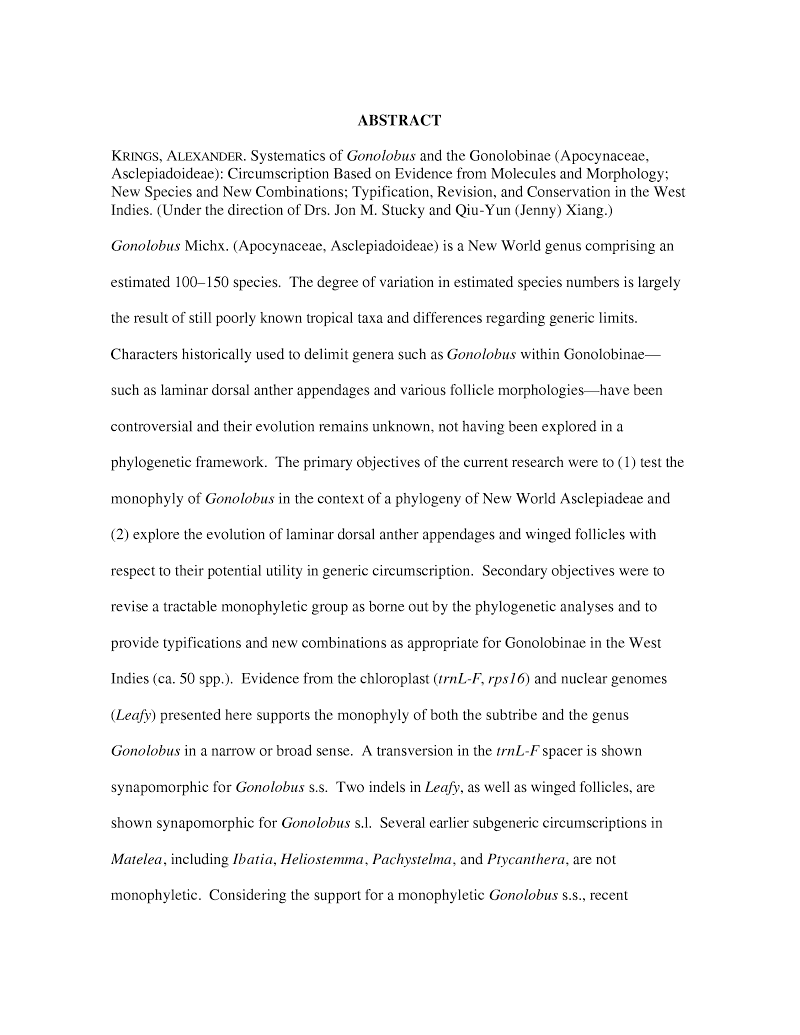
Gonolobus Michx. (Apocynaceae, Asclepiadoideae) is a New World genus comprising an estimated 100--150 species. The degree of variation in estimated species numbers is largely the result of still poorly known tropical taxa and differences regarding generic limits. Characters historically used to delimit genera such as Gonolobus within Gonolobinae---such as laminar dorsal anther appendages and various follicle morphologies---have been controversial and their evolution remains unknown, not having been explored in a phylogenetic framework. The primary objectives of the current research were to (1) test the monophyly of Gonolobus in the context of a phylogeny of New World Asclepiadeae and (2) explore the evolution of laminar dorsal anther appendages and winged follicles with respect to their potential utility in generic circumscription. Secondary objectives were to revise a tractable monophyletic group as borne out by the phylogenetic analyses and to provide typifications and new combinations as appropriate for Gonolobinae in the West Indies (ca. 50 spp.). Evidence from the chloroplast ( trnL-F, rps16) and nuclear genomes (Leafy) presented here supports the monophyly of both the subtribe and the genus Gonolobus in a narrow or broad sense. A transversion in the trnL-F spacer is shown synapomorphic for Gonolobus s.s. Two indels in Leafy, as well as winged follicles, are shown synapomorphic for Gonolobus s.l. Several earlier subgeneric circumscriptions in Matelea, including Ibatia, Heliostemma, Pachystelma, and Ptycanthera, are not monophyletic. Considering the support for a monophyletic Gonolobus s.s., recent taxonomic changes in West Indian taxa, and that several species have been published from the area since the last comprehensive treatment over a hundred years ago, a revision of the genus in the West Indies seemed appropriate and is provided. An index of names and typifications for Gonolobinae in the West Indies is also provided, including numerous lecto- and neotypifications. Twelve new species are described for the West Indies (5 Gonolobus spp., 5 Matelea spp.) and South America (2 Matelea spp.).

Discuss Systematics of Gonolobus and the Gonolobinae (Apocynaceae, Asclepiadoideae): Circumscription Based on Evidence from Molecules and Morphology; New Species and Combinations; Typification, Revision, and Conservation in the West Indies with other readers

Join or start a book club for Systematics of Gonolobus and the Gonolobinae (Apocynaceae, Asclepiadoideae): Circumscription Based on Evidence from Molecules and Morphology; New Species and Combinations; Typification, Revision, and Conservation in the West Indies on Readfeed. Live chat, shared reading progress, and AI discussion questions — free to get started.

Frequently asked questions

How do I join a book club for Systematics of Gonolobus and the Gonolobinae (Apocynaceae, Asclepiadoideae): Circumscription Based on Evidence from Molecules and Morphology; New Species and Combinations; Typification, Revision, and Conservation in the West Indies?

Sign up free on Readfeed, then browse public clubs or start your own club with Systematics of Gonolobus and the Gonolobinae (Apocynaceae, Asclepiadoideae): Circumscription Based on Evidence from Molecules and Morphology; New Species and Combinations; Typification, Revision, and Conservation in the West Indies as the current read. Invite friends with a share link and discuss together with live chat and AI discussion questions.

Can I discuss Systematics of Gonolobus and the Gonolobinae (Apocynaceae, Asclepiadoideae): Circumscription Based on Evidence from Molecules and Morphology; New Species and Combinations; Typification, Revision, and Conservation in the West Indies with other readers online?

Yes. Readfeed book clubs let you chat live, share progress, and join discussions about Systematics of Gonolobus and the Gonolobinae (Apocynaceae, Asclepiadoideae): Circumscription Based on Evidence from Molecules and Morphology; New Species and Combinations; Typification, Revision, and Conservation in the West Indies with readers worldwide — whether your club is virtual, in-person, or hybrid.

Is Readfeed free?

Yes. Creating an account and joining book clubs is free. Sign up to find readers who love the same books and start discussing today.