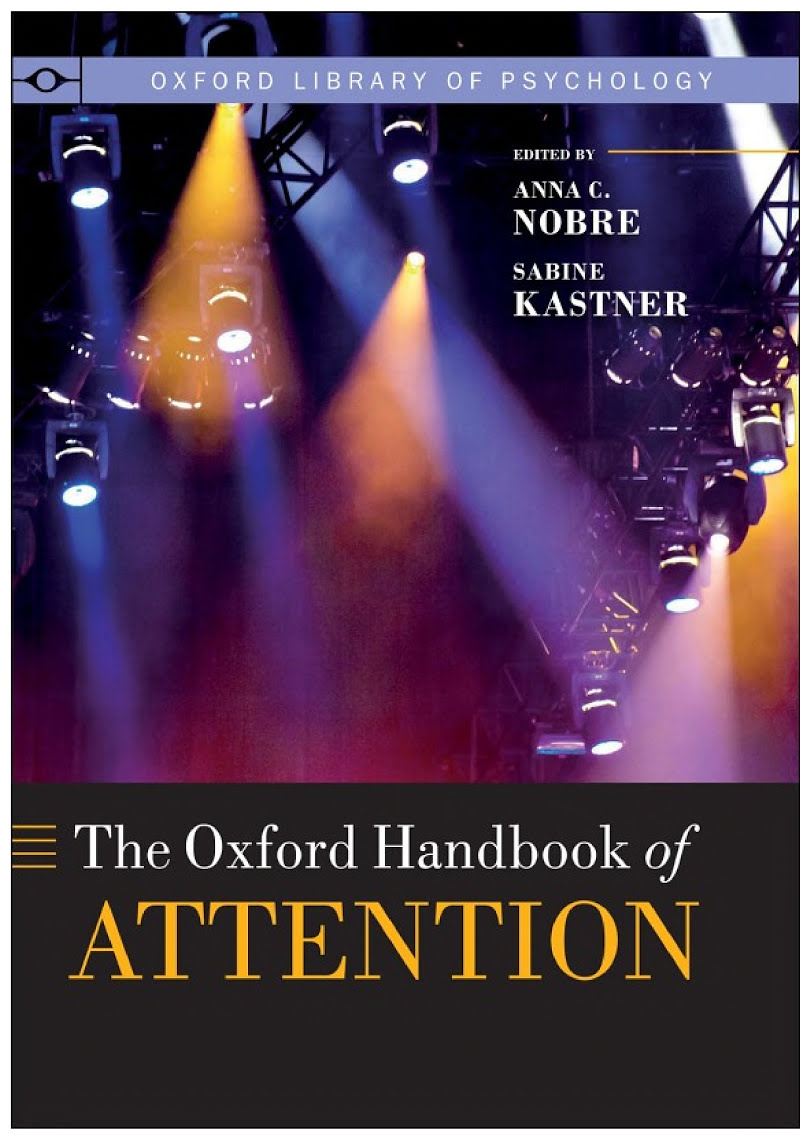
The Oxford Handbook of Attention
by Kia Nobre, Sabine Kastner
656 pages· 2014· ISBN 9780191662607
About
During the last three decades, there have been enormous advances in our understanding of the neural mechanisms of selective attention at the network as well as the cellular level. The Oxford Handbook of Attention brings together the different research areas that constitute contemporary attention research into one comprehensive and authoritative volume. In 40 chapters, it covers the most important aspects of attention research from the areas of cognitive psychology, neuropsychology, human and animal neuroscience, computational modelling, and philosophy. The book is divided into 4 main sections. Following an introduction from Michael Posner, the books starts by looking at theoretical models of attention. The next two sections are dedicated to spatial attention and non-spatial attention respectively. Within section 4, the authors consider the interactions between attention and other psychological domains. The last two sections focus on attention-related disorders, and finally, on computational models of attention. Aimed at both scholars and students, the Oxford Handbook of Attention provides a concise and state-of-the-art review of the current literature in this field.
Discuss The Oxford Handbook of Attention with other readers
Join or start a book club for The Oxford Handbook of Attention on Readfeed. Live chat, shared reading progress, and AI discussion questions — free to get started.
Frequently asked questions
How do I join a book club for The Oxford Handbook of Attention?
Sign up free on Readfeed, then browse public clubs or start your own club with The Oxford Handbook of Attention as the current read. Invite friends with a share link and discuss together with live chat and AI discussion questions.
Can I discuss The Oxford Handbook of Attention with other readers online?
Yes. Readfeed book clubs let you chat live, share progress, and join discussions about The Oxford Handbook of Attention with readers worldwide — whether your club is virtual, in-person, or hybrid.
Is Readfeed free?
Yes. Creating an account and joining book clubs is free. Sign up to find readers who love the same books and start discussing today.