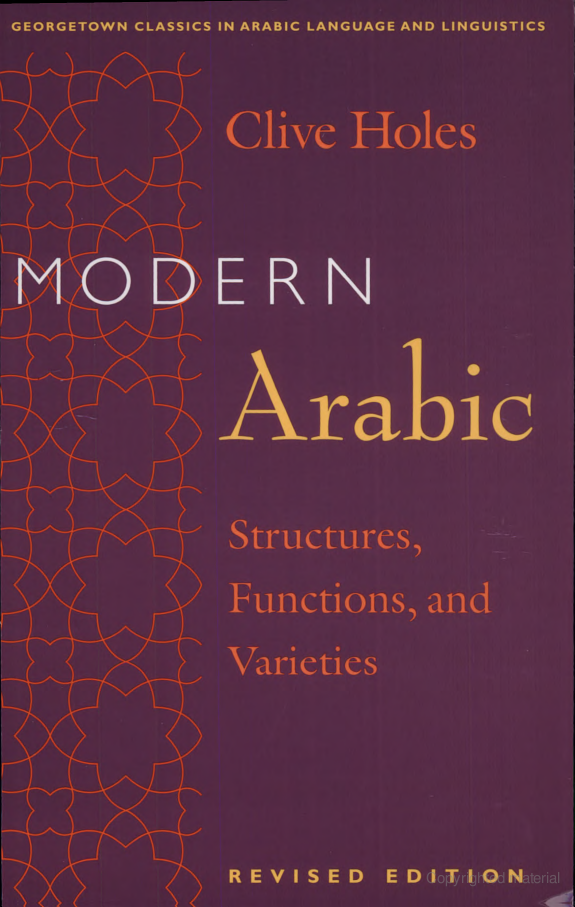
Modern Arabic
Structures, Functions, and Varieties
by Clive Holes
419 pages· 2004· ISBN 9781589010222
About
The revised and updated edition of Modern Arabic takes this authoritative, concise linguistic description of the structure and use of modern Arabic to an invaluable new level. Clive Holes traces the development of the Arabic language from Classical Arabic, the written language used in the 7th century for the Qur'an and poetry, through the increasingly symbiotic use of Modern Standard Arabic or MSA (the language of writing and formal speech) and dialectal Arabic (the language of normal conversation). He shows how Arabic has been shaped over the centuries by migration, urbanization, and education--giving us "a balanced, dispassionate, and accurate picture of the structures, functions, and varieties of the contemporary Arabic language." Holes explains the structural characteristics--phonology, morphology, syntax, semantics, and lexical and stylistic developments--that the majority of the dialects share, as distinguished from Modern Standard Arabic. He also shows how native speakers use both types of Arabic for different purposes, with MSA being the language of power and control as used on television and in political speeches, and the dialects serving as the language of intimacy and domesticity. He further shows how MSA and spoken dialects are not as compartmentalized as one might be led to believe. Modern Arabic illustrates the use of the Arabic language in real life, whether in conversation, news bulletins and newspaper articles, serious literature, or song. This new edition takes into account research published in several areas of Arabic linguistics since the first edition was published in 1995. It includes more extensive comment on the North African Arabic vocabulary of Modern Standard Arabic, more information about "mixed" varieties of written Arabic that are not in MSA (especially in Egypt), updated references, explanations, and many new examples. All Arabic is transcribed, except for an appendix presenting the Arabic alphabet and script. Students of the Arabic language will find Modern Arabic without peer--as will those general linguists who are interested in discovering how Arabic compares structurally and sociolinguistically with European languages.
Discuss Modern Arabic with other readers
Join or start a book club for Modern Arabic on Readfeed. Live chat, shared reading progress, and AI discussion questions — free to get started.
Frequently asked questions
How do I join a book club for Modern Arabic?
Sign up free on Readfeed, then browse public clubs or start your own club with Modern Arabic as the current read. Invite friends with a share link and discuss together with live chat and AI discussion questions.
Can I discuss Modern Arabic with other readers online?
Yes. Readfeed book clubs let you chat live, share progress, and join discussions about Modern Arabic with readers worldwide — whether your club is virtual, in-person, or hybrid.
Is Readfeed free?
Yes. Creating an account and joining book clubs is free. Sign up to find readers who love the same books and start discussing today.