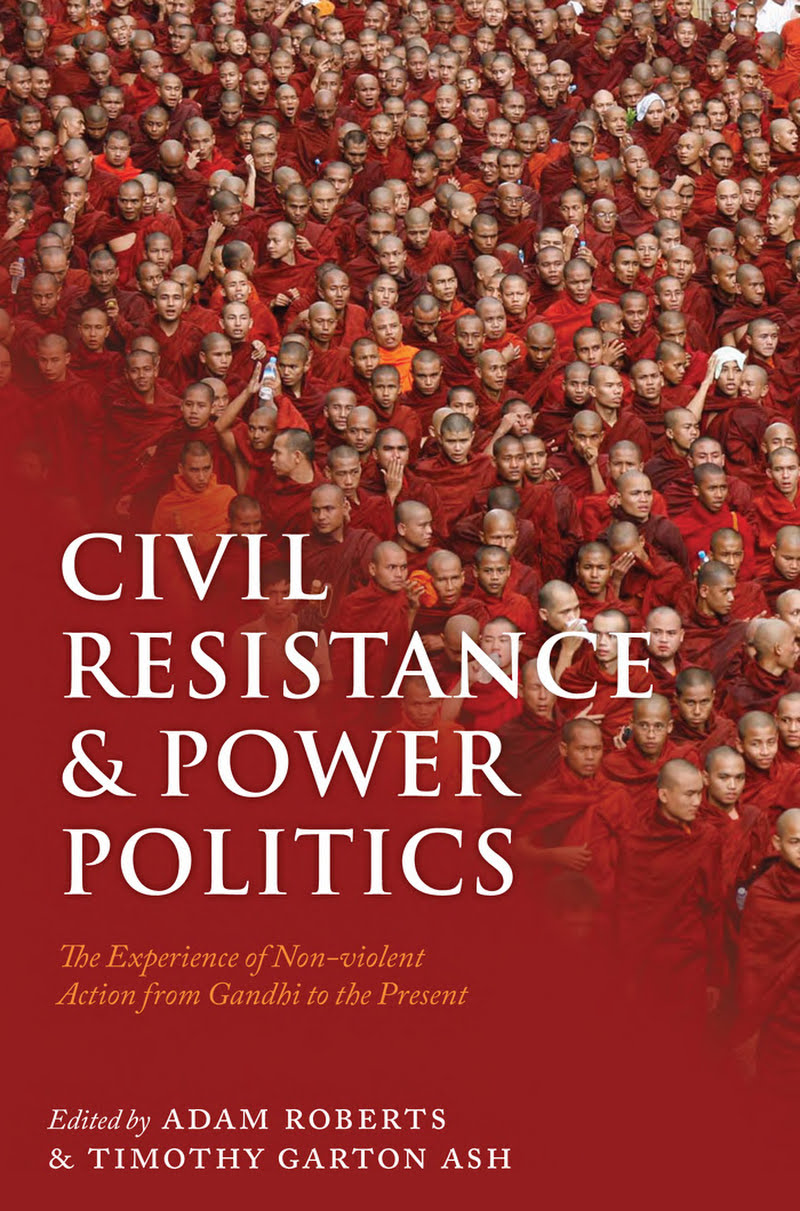
Civil Resistance and Power Politics:The Experience of Non-violent Action from Gandhi to the Present

Civil Resistance and Power Politics:The Experience of Non-violent Action from Gandhi to the Present

The Experience of Non-violent Action from Gandhi to the Present

by Timothy Garton Ash, Sir Adam Roberts

432 pages· 2009· ISBN 9780199552016
About
This widely-praised book identified peaceful struggle as a key phenomenon in international politics a year before the revolutions in Tunisia and Egypt confirmed its central argument. Civil resistance - non-violent action against such challenges as dictatorial rule, racial discrimination and foreign military occupation - is a significant but inadequately understood feature of world politics. Especially through the peaceful revolutions of 1989, and the developments in the Arab worldsince December 2010, it has helped to shape the world we live in.Civil Resistance and Power Politics covers most of the leading cases, including the actions master-minded by Gandhi, the US civil rights struggle in the 1960s, the Islamic revolution in Iran in 1979, the 'people power' revolt in the Philippines in the 1980s, the campaigns against apartheid in South Africa, the various movements contributing to the collapse of the Soviet Bloc in 1989-91, and, in this century, the 'colour revolutions' in Georgia and Ukraine. The chapters, written byleading experts, are richly descriptive and analytically rigorous.This book addresses the complex interrelationship between civil resistance and other dimensions of power. It explores the question of whether civil resistance should be seen as potentially replacing violence completely, or as a phenomenon that operates in conjunction with, and modification of, power politics. It looks at cases where campaigns were repressed, including China in 1989 and Burma in 2007. It notes that in several instances, including Northern Ireland, Kosovo and, Georgia, civilresistance movements were followed by the outbreak of armed conflict. It also includes a chapter with new material from Russian archives showing how the Soviet leadership responded to civil resistance, and a comprehensive bibliographical essay.Illustrated throughout with a remarkable selection of photographs, this uniquely wide-ranging and path-breaking study is written in an accessible style and is intended for the general reader as well as for students of Modern History, Politics, Sociology, and International Relations.

Discuss Civil Resistance and Power Politics:The Experience of Non-violent Action from Gandhi to the Present with other readers

Join or start a book club for Civil Resistance and Power Politics:The Experience of Non-violent Action from Gandhi to the Present on Readfeed. Live chat, shared reading progress, and AI discussion questions — free to get started.

Frequently asked questions

How do I join a book club for Civil Resistance and Power Politics:The Experience of Non-violent Action from Gandhi to the Present?

Sign up free on Readfeed, then browse public clubs or start your own club with Civil Resistance and Power Politics:The Experience of Non-violent Action from Gandhi to the Present as the current read. Invite friends with a share link and discuss together with live chat and AI discussion questions.

Can I discuss Civil Resistance and Power Politics:The Experience of Non-violent Action from Gandhi to the Present with other readers online?

Yes. Readfeed book clubs let you chat live, share progress, and join discussions about Civil Resistance and Power Politics:The Experience of Non-violent Action from Gandhi to the Present with readers worldwide — whether your club is virtual, in-person, or hybrid.

Is Readfeed free?

Yes. Creating an account and joining book clubs is free. Sign up to find readers who love the same books and start discussing today.