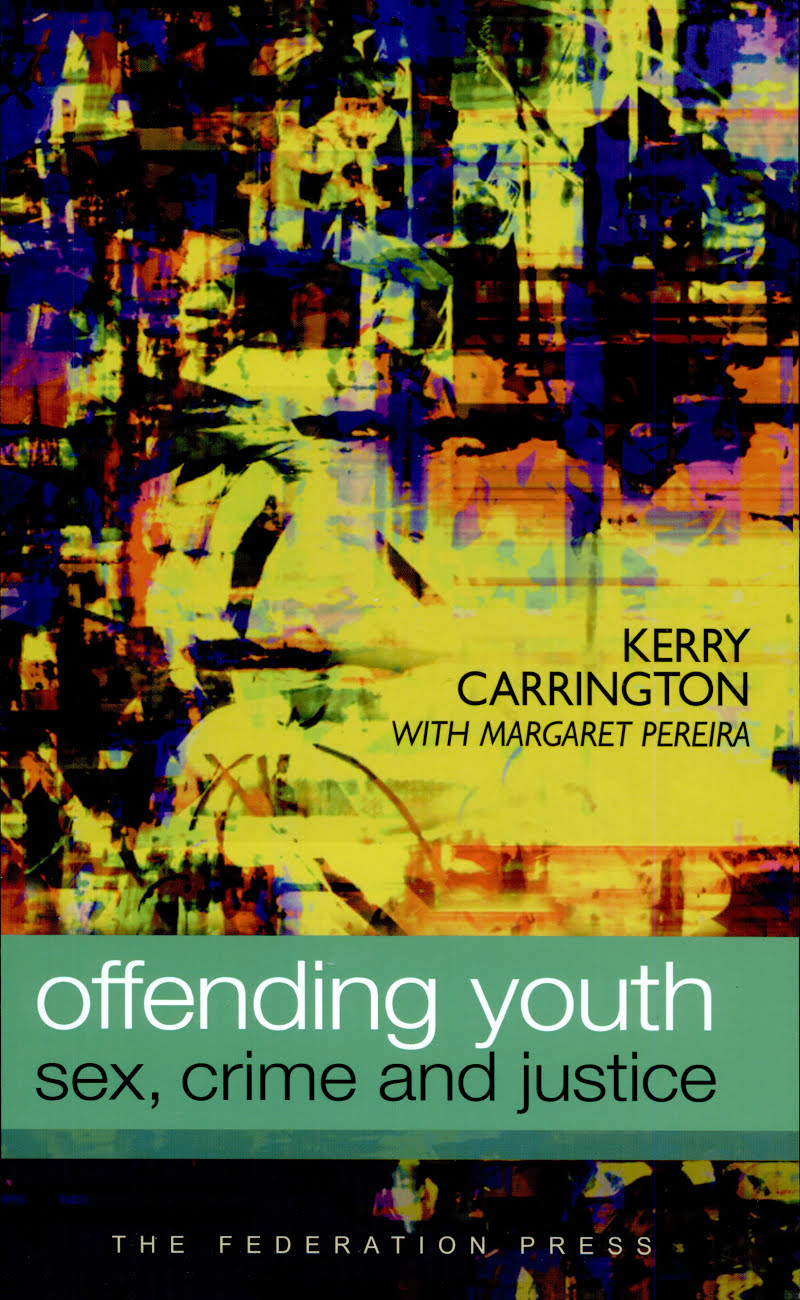
Offending Youth
Sex, Crime and Justice
by Kerry Carrington, Margaret Pereira
211 pages· 2009· ISBN 9781862877597
About
Rates of female delinquency, especially for violent crimes, are increasing in most common law countries. At the same time the growth in cyber-bullying, especially among girls, appears to be a related global phenomenon.While the gender gap in delinquency is narrowing in Australia, United States, Canada and the United Kingdom, boys continue to dominate the youth who commit crime and have a virtual monopoly over sexually violent crimes. Indigenous youth continue to be vastly over-represented in the juvenile justice system in every Australian jurisdiction. The Indigenisation of delinquency is a persistent problem in other countries such as Canada and New Zealand.Young people who gather in public places are susceptible to being perceived as somehow threatening or riotous, attracting more than their share of public order policing. Professional football has been marred by repeated scandals involving sexual assault, violence and drunkenness. Given the cultural significance of footballers as role models to thousands, if not millions, of young men around the world, it is vitally important to address this problem. Offending Youth explores these key contemporary patterns of delinquency, the response to these by the juvenile justice agencies and moreover what can be done to address these problems.The book also analyses the major policy and legislative changes from the nineteenth to twenty first centuries, chiefly the shift the penal welfarism to diversion and restorative justice. Using original cases studied by Carrington twenty years ago, Offending Youth illustrates how penal welfarism criminalised young people from socially marginal backgrounds, especially Aboriginal children, children from single parent families, family-less children, state wards and young people living in poverty or in housing commission estates. A number of inquiries in Australia and the United Kingdom have since established that children committed to these institutions, supposedly for their own good, experienced systemic physical, sexual and psychological abuse during their institutionalisation. The book is dedicated to the survivors of these institutions who only now are receiving official recognition of the injustices they suffered.The underlying philosophy of juvenile justice has fundamentally shifted away from penal welfarism to embrace positive policy responses to juvenile crime, such as youth conferencing, cautions, warnings, restorative justice, circle sentencing and diversion examined in the concluding chapter.Offending Youth is aimed at a broad readership including policy makers, juvenile justice professionals, youth workers, families, teachers, politicians as well as students and academics in criminology, policing, gender studies, masculinity studies, Indigenous studies, justice studies, youth studies and the sociology of youth and deviance more generally.
Discuss Offending Youth with other readers
Join or start a book club for Offending Youth on Readfeed. Live chat, shared reading progress, and AI discussion questions — free to get started.
Frequently asked questions
How do I join a book club for Offending Youth?
Sign up free on Readfeed, then browse public clubs or start your own club with Offending Youth as the current read. Invite friends with a share link and discuss together with live chat and AI discussion questions.
Can I discuss Offending Youth with other readers online?
Yes. Readfeed book clubs let you chat live, share progress, and join discussions about Offending Youth with readers worldwide — whether your club is virtual, in-person, or hybrid.
Is Readfeed free?
Yes. Creating an account and joining book clubs is free. Sign up to find readers who love the same books and start discussing today.