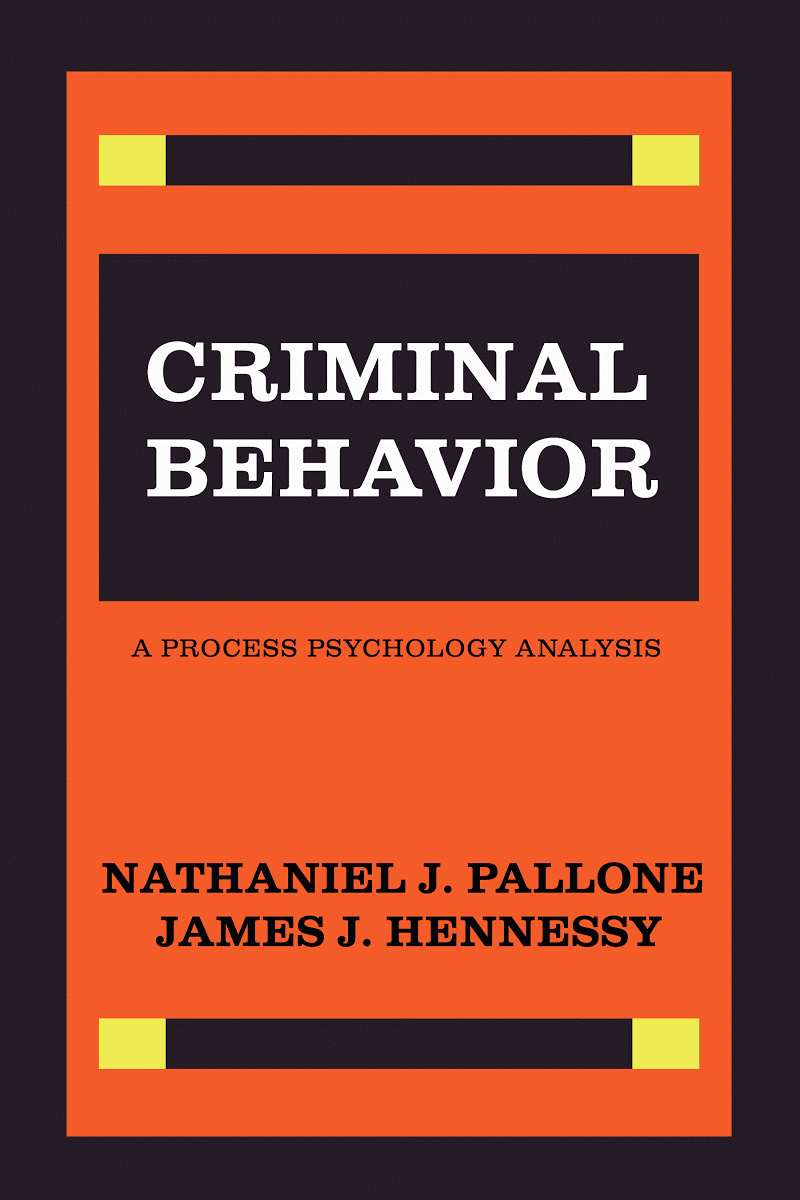
Criminal Behavior
A Process Psychology Analysis
by Nathaniel J. Pallone, James J. Hennessy
465 pages· 1992· ISBN 9781560007296
About
Crime Statistics suggest that Americans are not a notably law-abiding people. With some 13 million felonies reported every year, it is not surprising that few topics engage public attention and imagination more compellingly than the dynamics of criminal behavior. Volume and ubiquity alone might suggest the psychology of criminal behavior is well understood and there exists an integrated body of explanatory theory and empirical evidence. But in fact only fragmentary and incomplete accounts have thus far appeared. Criminal Behavior is virtually unique in providing a comprehensive psychological paradigm that fits across variant species of crime, while meeting the requirements of science and the needs of law enforcement and administration of justice in controlling criminal behavior. The authors begin this remarkable text by outlining a model for criminal behavior based not on abnormal psychology but on the tenets of social learning theory. They illuminate the processes by which criminal activity is initiated and repeated, including personal constructs, stimulus determinants, and behavioral repertoires. They define four process elements that interact in precipitating criminal behavior-inclination, opportunity, expectation of reward, expectation of impunity. They show how these process elements are regulated and confined by a series of complex and variable boundary conditions in specific criminal offenses. Conceptual, methodological, and operational constraints on the study of criminal behavior are defined, and statistically and behavioral science data bearing upon larceny and homicide, two crimes at diametric extremes, are examined in detail. Pallone and Hennessy locate and define those psychological variables that render comprehensible the process whereby formally criminal acts are construed as possible and desirable by individual actors and show how those actors self-select psychosocial environments that facilitate or at least do not impede the commission of crime. They identify and explain the phenomenon of “tinderbox violence.” Its comprehensive perspective and balanced consideration of competing viewpoints make Criminal Behavior an ideal text for students and teachers of criminology and of the psychology of criminal behavior. It is also a pioneering work for psychologists, sociologists, criminologists, and law-enforcement official.
Discuss Criminal Behavior with other readers
Join or start a book club for Criminal Behavior on Readfeed. Live chat, shared reading progress, and AI discussion questions — free to get started.
Frequently asked questions
How do I join a book club for Criminal Behavior?
Sign up free on Readfeed, then browse public clubs or start your own club with Criminal Behavior as the current read. Invite friends with a share link and discuss together with live chat and AI discussion questions.
Can I discuss Criminal Behavior with other readers online?
Yes. Readfeed book clubs let you chat live, share progress, and join discussions about Criminal Behavior with readers worldwide — whether your club is virtual, in-person, or hybrid.
Is Readfeed free?
Yes. Creating an account and joining book clubs is free. Sign up to find readers who love the same books and start discussing today.