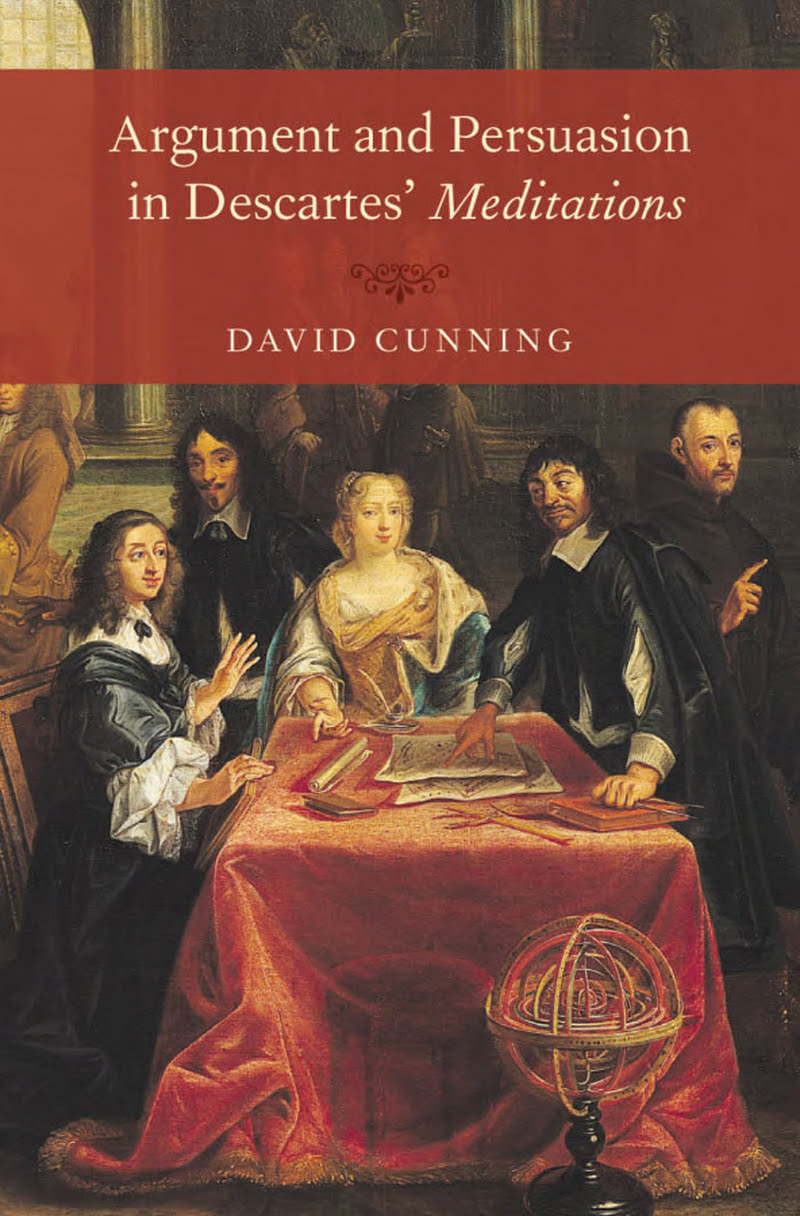
Argument and Persuasion in Descartes' Meditations

Argument and Persuasion in Descartes' Meditations

by David Cunning

248 pages· 2010· ISBN 9780199774470
About
Descartes' Meditations on First Philosophy has proven to be not only one of the canonical texts of Western philosophy, but also the site of a great deal of interpretive activity in scholarship on the history of early modern philosophy over the last two decades. David Cunning's monograph proposes a new interpretation, which is that from beginning to end the reasoning of the Meditations is the first-person reasoning of a thinker who starts from a confused non-Cartesian paradigm and moves slowly and awkwardly toward a grasp of just a few of the central theses of Descartes' system. The meditator of the Meditations is not a full-blown Cartesian at the start or middle or even the end of inquiry, and accordingly the Meditations is riddled with confusions throughout. Cunning argues that Descartes is trying to capture the kind of reasoning that a non-Cartesian would have to engage in to make the relevant epistemic progress, and that the Meditations rhetorically models that reasoning. He proposes that Descartes is reflecting on what happens in philosophical inquiry: we are unclear about something, we roam about using our existing concepts and intuitions, we abandon or revise some of these, and then eventually we come to see a result as clear that we did not see as clear before. Thus Cunning's fundamental insight is that Descartes is a teacher, and the reader a student. With that reading in mind, a significant number of the interpretive problems that arise in the Descartes literature dissolve when we make a distinction between the Cartesian and non-Cartesian elements of the Meditations, and a better understanding of surrounding texts is achieved as well. This important volume will be of great interest to scholars of early modern philosophy.

Discuss Argument and Persuasion in Descartes' Meditations with other readers

Join or start a book club for Argument and Persuasion in Descartes' Meditations on Readfeed. Live chat, shared reading progress, and AI discussion questions — free to get started.

Frequently asked questions

How do I join a book club for Argument and Persuasion in Descartes' Meditations?

Sign up free on Readfeed, then browse public clubs or start your own club with Argument and Persuasion in Descartes' Meditations as the current read. Invite friends with a share link and discuss together with live chat and AI discussion questions.

Can I discuss Argument and Persuasion in Descartes' Meditations with other readers online?

Yes. Readfeed book clubs let you chat live, share progress, and join discussions about Argument and Persuasion in Descartes' Meditations with readers worldwide — whether your club is virtual, in-person, or hybrid.

Is Readfeed free?

Yes. Creating an account and joining book clubs is free. Sign up to find readers who love the same books and start discussing today.