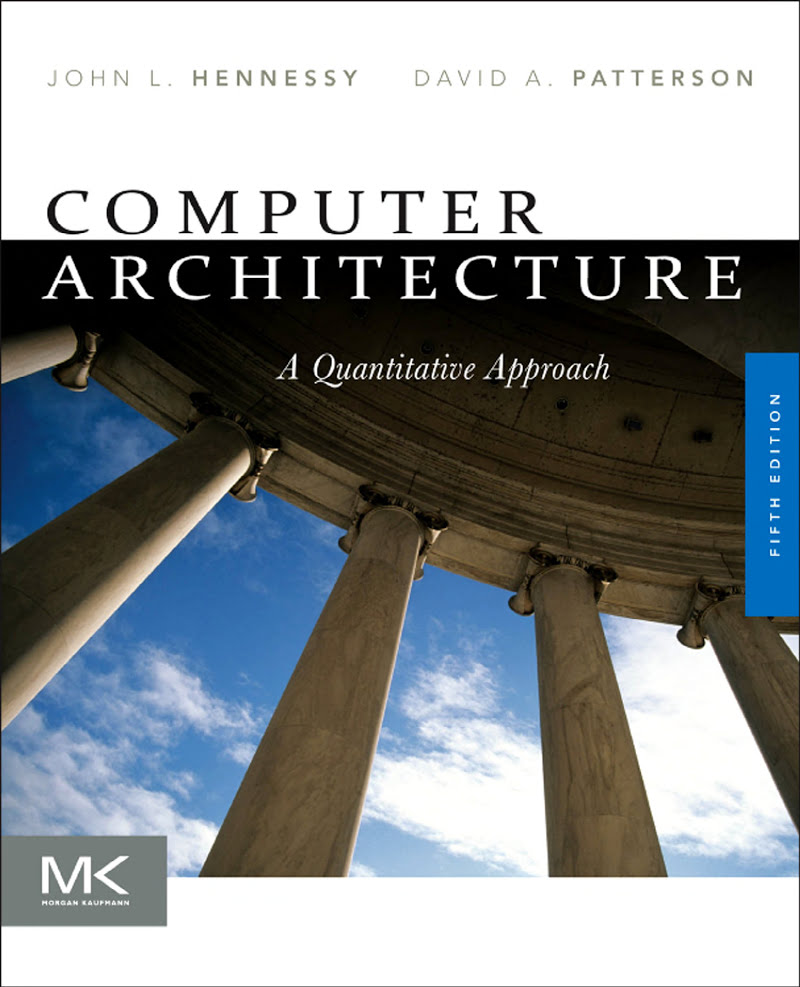
Computer Architecture
A Quantitative Approach
by David A. Patterson
856 pages· 2011· ISBN 9780123838735
About
Computer Architecture: A Quantitative Approach explores the ways that software and technology in the cloud are accessed by digital media, such as cell phones, computers, tablets, and other mobile devices. The book became a part of Intel's 2012 recommended reading list for developers, and it covers the revolution of mobile computing. The text also highlights the two most important factors in architecture today: parallelism and memory hierarchy. The six chapters that this book is composed of follow a consistent framework: explanation of the ideas in each chapter; a ""crosscutting issues"" section, which presents how the concepts covered in one chapter connect with those given in other chapters; a ""putting it all together"" section that links these concepts by discussing how they are applied in real machine; and detailed examples of misunderstandings and architectural traps commonly encountered by developers and architects. The first chapter of the book includes formulas for energy, static and dynamic power, integrated circuit costs, reliability, and availability. Chapter 2 discusses memory hierarchy and includes discussions about virtual machines, SRAM and DRAM technologies, and new material on Flash memory. The third chapter covers the exploitation of instruction-level parallelism in high-performance processors, superscalar execution, dynamic scheduling and multithreading, followed by an introduction to vector architectures in the fourth chapter. Chapters 5 and 6 describe multicore processors and warehouse-scale computers (WSCs), respectively. This book is an important reference for computer architects, programmers, application developers, compiler and system software developers, computer system designers and application developers. Part of Intel's 2012 Recommended Reading List for Developers Updated to cover the mobile computing revolution Emphasizes the two most important topics in architecture today: memory hierarchy and parallelism in all its forms. Develops common themes throughout each chapter: power, performance, cost, dependability, protection, programming models, and emerging trends ("What's Next") Includes three review appendices in the printed text. Additional reference appendices are available online. Includes updated Case Studies and completely new exercises.
Discuss Computer Architecture with other readers
Join or start a book club for Computer Architecture on Readfeed. Live chat, shared reading progress, and AI discussion questions — free to get started.
Frequently asked questions
How do I join a book club for Computer Architecture?
Sign up free on Readfeed, then browse public clubs or start your own club with Computer Architecture as the current read. Invite friends with a share link and discuss together with live chat and AI discussion questions.
Can I discuss Computer Architecture with other readers online?
Yes. Readfeed book clubs let you chat live, share progress, and join discussions about Computer Architecture with readers worldwide — whether your club is virtual, in-person, or hybrid.
Is Readfeed free?
Yes. Creating an account and joining book clubs is free. Sign up to find readers who love the same books and start discussing today.