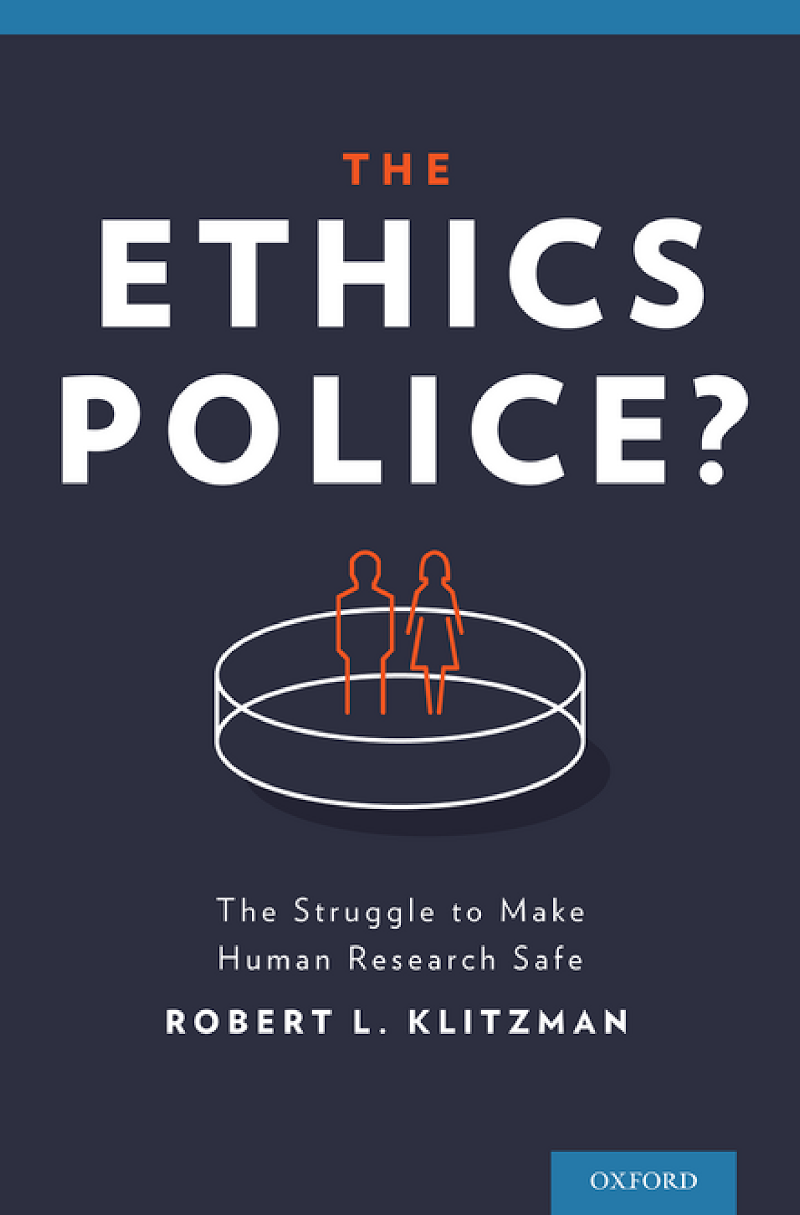
The Ethics Police?
The Struggle to Make Human Research Safe
by Robert Klitzman
432 pages· 2015· ISBN 9780199364602
About
Research on human beings saves countless lives, but has at times harmed the participants. To what degree then should government regulate science, and how? The horrors of Nazi concentration camp experiments and the egregious Tuskegee syphilis study led the US government, in 1974, to establish Research Ethics Committees, known as Institutional Review Boards (IRBs) to oversee research on humans. The US now has over 4,000 IRBs, which examine yearly tens of billions of dollars of research -- all studies on people involving diseases, from cancer to autism, and behavior. Yet ethical violations persist. At the same time, critics have increasingly attacked these committees for delaying or blocking important studies. Partly, science is changing, and the current system has not kept up. Since the regulations were first conceived 40 years ago, research has burgeoned 30-fold. Studies often now include not a single university, but multiple institutions, and 40 separate IRBs thus need to approve a single project. One committee might approve a study quickly, while others require major changes, altering the scientific design, and making the comparison of data between sites difficult. Crucial dilemmas thus emerge of whether the current system should be changed, and if so, how. Yet we must first understand the status quo to know how to improve it. Unfortunately, these committees operate behind closed doors, and have received relatively little in-depth investigation. Robert Klitzman thus interviewed 45 IRB leaders and members about how they make decisions. What he heard consistently surprised him. This book reveals what Klitzman learned, providing rare glimpses into the conflicts and complexities these individuals face, defining science, assessing possible future risks and benefits of studies, and deciding how much to trust researchers -- illuminating, more broadly, how we view and interpret ethics in our lives today, and perceive and use power. These committees reflect many of the most vital tensions of our time - concerning science and human values, individual freedom, government control, and industry greed. Ultimately, as patients, scientists, or subjects, the decisions of these men and women affect us all.
Discuss The Ethics Police? with other readers
Join or start a book club for The Ethics Police? on Readfeed. Live chat, shared reading progress, and AI discussion questions — free to get started.
Frequently asked questions
How do I join a book club for The Ethics Police??
Sign up free on Readfeed, then browse public clubs or start your own club with The Ethics Police? as the current read. Invite friends with a share link and discuss together with live chat and AI discussion questions.
Can I discuss The Ethics Police? with other readers online?
Yes. Readfeed book clubs let you chat live, share progress, and join discussions about The Ethics Police? with readers worldwide — whether your club is virtual, in-person, or hybrid.
Is Readfeed free?
Yes. Creating an account and joining book clubs is free. Sign up to find readers who love the same books and start discussing today.