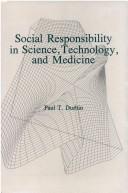
Social responsibility in science, technology, and medicine

Social responsibility in science, technology, and medicine

by Paul T. Durbin

About
"In this book, Paul T. Durbin presents a scholarly plea for social responsibility on the part of technical professionals. Examples chosen include biomedical researchers, computer professionals, nuclear experts, and ecologists, as well as medical educators, technology literacy educators, and media professionals. Even academic philosophers are urged to shoulder social responsibilities. While the language of social responsibility is not totally lacking in contemporary discussions of the ethical obligations of technical professionals, it is given a new urgency here." "The background of the discussion is an increasing number of calls, by leaders of professional societies, urging their members to shoulder greater social responsibilities associated with contemporary social ills. What these calls seem most often to lack is a sense of urgency, a demand for activism on the part of technical professionals. The book aims to attack this failing head-on." "A second part of the book attempts to answer philosophical objections to this sort of plea as a way of dealing with urgent contemporary issues. One sort of objection comes from radical critics saying that nothing can be done. But there are many other kinds of objections, and several of them are faced in this part of the book." "The thesis defended in the study is straightforward and optimistic - namely, that something can be done to solve social problems, in spite of the difficulties." "Where radical critics say nothing can be done, conservatives say that nothing ought to be done - at least nothing that smacks of social engineering. While these extreme views are addressed, the main focus is on mainstream activists in the technical professions. A secondary focus is on how more technical professionals can get involved so that the whole movement can be more effective in solving the problems discussed." "Not everyone agrees that professionals - including academic philosophers - need to be actively engaged in this fashion. So another theme throughout is an argument against non-engaged philosophers, non-engaged scientists, and other non-engaged professionals." "The social problems of a technological society are manifest. The book attempts to show, in a scholarly way, how they might be addressed effectively."--Jacket.

Discuss Social responsibility in science, technology, and medicine with other readers

Join or start a book club for Social responsibility in science, technology, and medicine on Readfeed. Live chat, shared reading progress, and AI discussion questions — free to get started.

Frequently asked questions

How do I join a book club for Social responsibility in science, technology, and medicine?

Sign up free on Readfeed, then browse public clubs or start your own club with Social responsibility in science, technology, and medicine as the current read. Invite friends with a share link and discuss together with live chat and AI discussion questions.

Can I discuss Social responsibility in science, technology, and medicine with other readers online?

Yes. Readfeed book clubs let you chat live, share progress, and join discussions about Social responsibility in science, technology, and medicine with readers worldwide — whether your club is virtual, in-person, or hybrid.

Is Readfeed free?

Yes. Creating an account and joining book clubs is free. Sign up to find readers who love the same books and start discussing today.