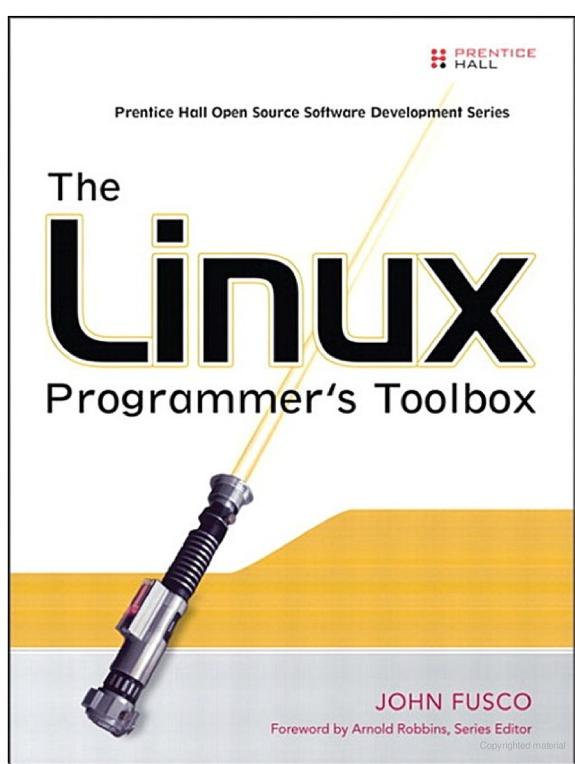
The Linux Programmer's Toolbox
by John Fusco
656 pages· 2007· ISBN 9780132703048
About
Master the Linux Tools That Will Make You a More Productive, Effective Programmer The Linux Programmer's Toolbox helps you tap into the vast collection of open source tools available for GNU/Linux. Author John Fusco systematically describes the most useful tools available on most GNU/Linux distributions using concise examples that you can easily modify to meet your needs. You'll start by learning the basics of downloading, building, and installing open source projects. You'll then learn how open source tools are distributed, and what to look for to avoid wasting time on projects that aren't ready for you. Next, you'll learn the ins and outs of building your own projects. Fusco also demonstrates what to look for in a text editor, and may even show you a few new tricks in your favorite text editor. You'll enhance your knowledge of the Linux kernel by learning how it interacts with your software. Fusco walks you through the fundamentals of the Linux kernel with simple, thought-provoking examples that illustrate the principles behind the operating system. Then he shows you how to put this knowledge to use with more advanced tools. He focuses on how to interpret output from tools like sar, vmstat, valgrind, strace, and apply it to your application; how to take advantage of various programming APIs to develop your own tools; and how to write code that monitors itself. Next, Fusco covers tools that help you enhance the performance of your software. He explains the principles behind today's multicore CPUs and demonstrates how to squeeze the most performance from these systems. Finally, you'll learn tools and techniques to debug your code under any circumstances. Coverage includes Maximizing productivity with editors, revision control tools, source code browsers, and "beautifiers" Interpreting the kernel: what your tools are telling you Understanding processes–and the tools available for managing them Tracing and resolving application bottlenecks with gprof and valgrind Streamlining and automating the documentation process Rapidly finding help, solutions, and workarounds when you need them Optimizing program code with sar, vmstat, iostat, and other tools Debugging IPC with shell commands: signals, pipes, sockets, files, and IPC objects Using printf, gdb, and other essential debugging tools Foreword Preface Acknowledgments About the Author Chapter 1 Downloading and Installing Open Source Tools Chapter 2 Building from Source Chapter 3 Finding Help Chapter 4 Editing and Maintaining Source Files Chapter 5 What Every Developer Should Know about the Kernel Chapter 6 Understanding Processes Chapter 7 Communication between Processes Chapter 8 Debugging IPC with Shell Commands Chapter 9 Performance Tuning Chapter 10 Debugging Index
Discuss The Linux Programmer's Toolbox with other readers
Join or start a book club for The Linux Programmer's Toolbox on Readfeed. Live chat, shared reading progress, and AI discussion questions — free to get started.
Frequently asked questions
How do I join a book club for The Linux Programmer's Toolbox?
Sign up free on Readfeed, then browse public clubs or start your own club with The Linux Programmer's Toolbox as the current read. Invite friends with a share link and discuss together with live chat and AI discussion questions.
Can I discuss The Linux Programmer's Toolbox with other readers online?
Yes. Readfeed book clubs let you chat live, share progress, and join discussions about The Linux Programmer's Toolbox with readers worldwide — whether your club is virtual, in-person, or hybrid.
Is Readfeed free?
Yes. Creating an account and joining book clubs is free. Sign up to find readers who love the same books and start discussing today.