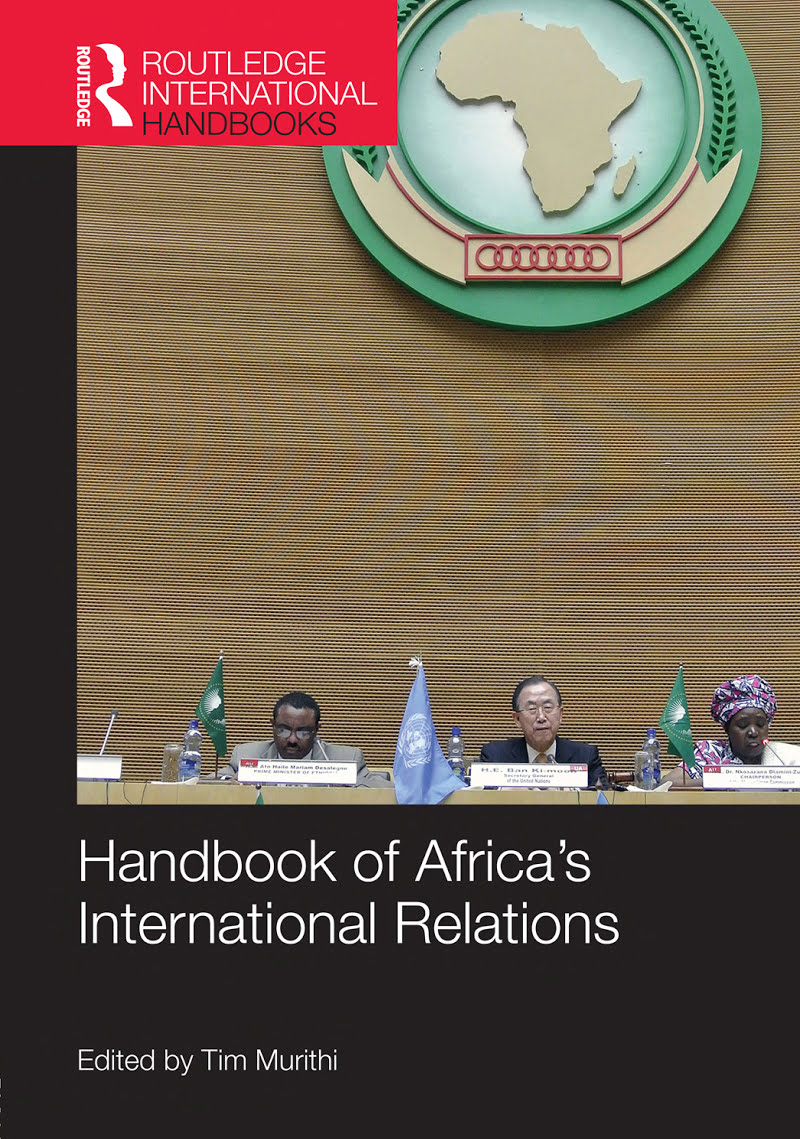
Handbook of Africa's International Relations

Handbook of Africa's International Relations

by Tim Murithi

512 pages· 2013· ISBN 9781136636967
About
Africa’s international relations have often been defined and oriented by the dominant international and geopolitical agendas of the day. In the aftermath of colonialism the Cold War became a dominant paradigm that defined the nature of the continent’s relationship with the rest of the world. The contemporary forces of globalization are now exerting an undue influence and impact upon Africa’s international relations. Increasingly, the African continent is emerging as a vocal, and in some respects an influential, actor in international relations. There is a paucity of analysis and research on this emerging trend. This timely book proposes to fill this analytical gap by engaging with a wide range of issues, with chapters written by experts on a variety of themes. The emerging political prominence of the African continent on the world stage is predicated on an evolving internal process of continental integration. In particular, there are normative and policy efforts to revive the spirit of Pan-Africanism: the 21st century is witnessing the evolution of Pan-Africanism, notably through the constitution and establishment of the African Union (AU). Given the fact that there is a dearth of analysis on this phenomemon, this volume will also interrogate the notion of Pan-Africanism through various lenses – notably peace and security, development, the environment and trade. The volume will also engage with the emerging role of the AU as an international actor, e.g. with regard to its role in the reform of the United Nations Security Council, climate change, the International Criminal Court (ICC), the treaty establishing Africa as a nuclear-free zone, Internally Displaced Persons, the Millennium Development Goals (MDGs), international trade, the environment, public health issues, security, and development issues. This book will assess how the AU’s role as an international actor is complicated by the difficulty of promoting consensus among African states and then maintaining that consensus in the face of often divergent national interests. This book will in part assess the role of the AU in articulating collective and joint policies and in making interventions in international decision and policy-making circles. The Handbook will also assess the role of African social movements and their relationship with global actors. The role of African citizens in ameliorating their own conditions is often underplayed in the international relations discourse, and this volume will seek to redress this oversight. Throughout the book the various chapters will also assess the role that these citizen linkages have contributed towards continental integration and in confronting the challenges of globalization.

Discuss Handbook of Africa's International Relations with other readers

Join or start a book club for Handbook of Africa's International Relations on Readfeed. Live chat, shared reading progress, and AI discussion questions — free to get started.

Frequently asked questions

How do I join a book club for Handbook of Africa's International Relations?

Sign up free on Readfeed, then browse public clubs or start your own club with Handbook of Africa's International Relations as the current read. Invite friends with a share link and discuss together with live chat and AI discussion questions.

Can I discuss Handbook of Africa's International Relations with other readers online?

Yes. Readfeed book clubs let you chat live, share progress, and join discussions about Handbook of Africa's International Relations with readers worldwide — whether your club is virtual, in-person, or hybrid.

Is Readfeed free?

Yes. Creating an account and joining book clubs is free. Sign up to find readers who love the same books and start discussing today.