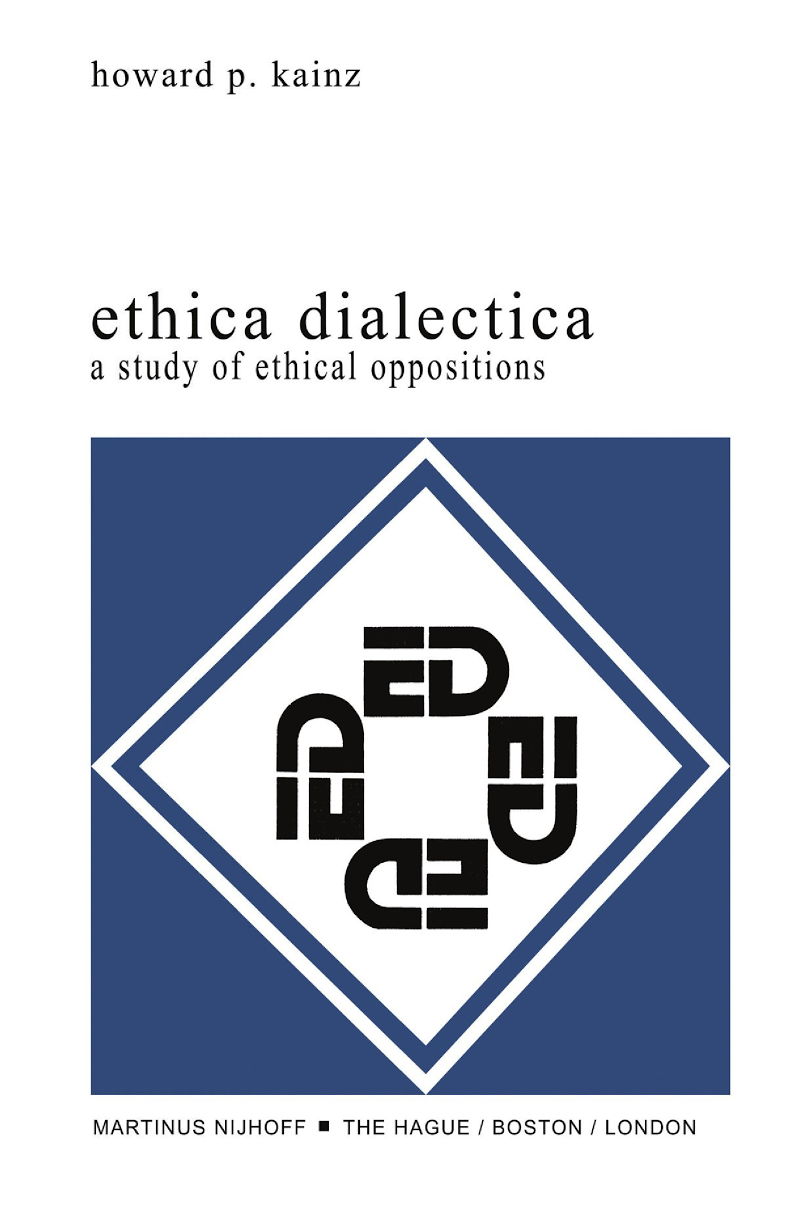
Ethica Dialectica
A Study of Ethical Oppositions
by H.P. Kainz
164 pages· 2012· ISBN 9789400992672
About
"Dialectic" is a fulcrum word. Aristotle attacked this belief, saying that the dialectic was only suitable for some purpose- to enquire into men's beliefs, to arrive at truths about eternal forms of things, known as Ideas, which were fixed and un changing and constituted reality for Plato. Aristotle said there is also the method of science, or "physical" method, which observes physical facts and arrives at truths about substances, which undergo change. This duality ofform and substance and the scientific method of arriving at facts about substances were central to Aristotle's philosophy. Thus the dethronement of dialectic from what Socrates and Plato held it to be was ab solutely essential for Aristotle, and "dialectic" was and still is a fulcrum word . . . I think it was Coleridge who said everyone is either a Plato nist or an Aristotelian . . . Plato is the essential Buddha-seeker who appears again and again in each generation, moving on ward and upward toward the "one. " Aristotle is the eternal motorcycle mechanic who prefers the "many. " R.
Discuss Ethica Dialectica with other readers
Join or start a book club for Ethica Dialectica on Readfeed. Live chat, shared reading progress, and AI discussion questions — free to get started.
Frequently asked questions
How do I join a book club for Ethica Dialectica?
Sign up free on Readfeed, then browse public clubs or start your own club with Ethica Dialectica as the current read. Invite friends with a share link and discuss together with live chat and AI discussion questions.
Can I discuss Ethica Dialectica with other readers online?
Yes. Readfeed book clubs let you chat live, share progress, and join discussions about Ethica Dialectica with readers worldwide — whether your club is virtual, in-person, or hybrid.
Is Readfeed free?
Yes. Creating an account and joining book clubs is free. Sign up to find readers who love the same books and start discussing today.