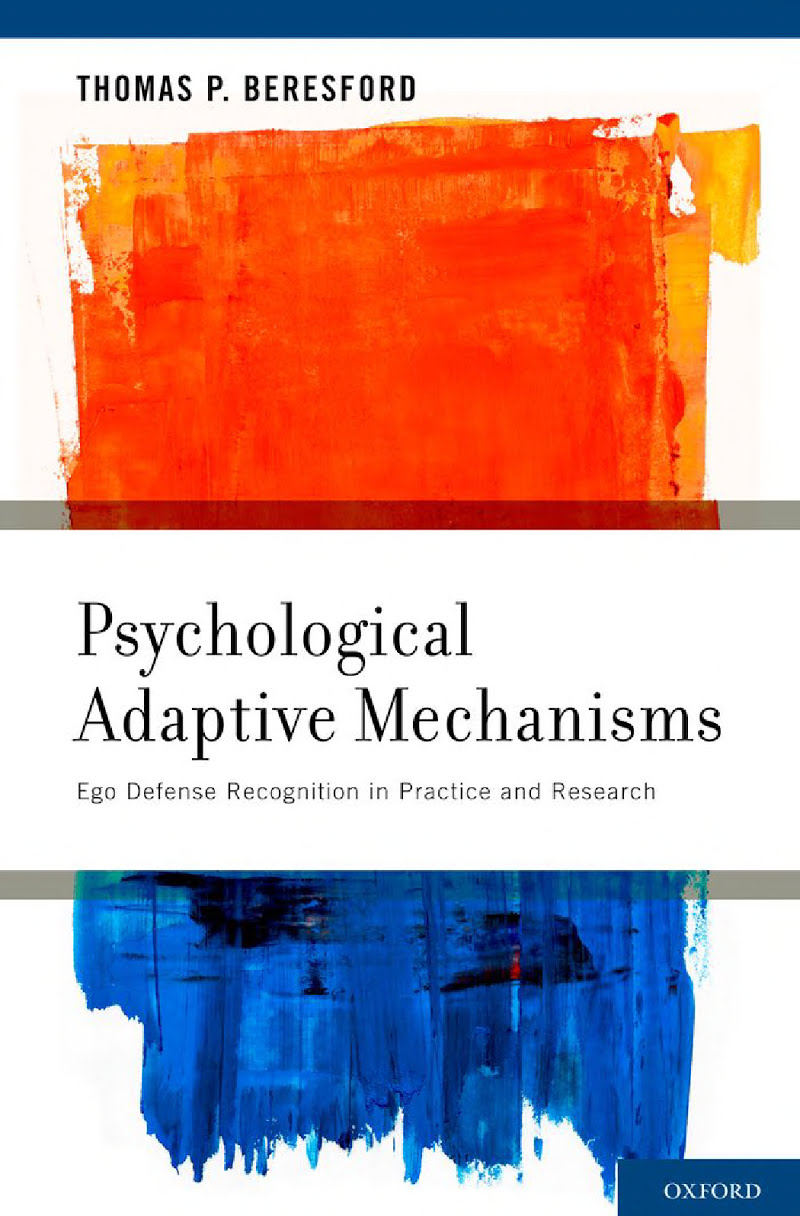
Psychological Adaptive Mechanisms

Psychological Adaptive Mechanisms

Ego Defense Recognition in Practice and Research

by Thomas P. Beresford

224 pages· 2012· ISBN 9780199794508
About
This book will demonstrate how to use novel, systematic method for recognizing psychological adaptive mechanisms (known in psychoanalytic theory as ego defenses) in clinical encounters. This clinical method is based in published theoretical and empirical studies of these mechanisms over the past 14 years as well as working with successive classes of mental health trainees of varying disciplines at the University of Colorado. The result is an approach that trainees both apprehend and find useful. This work will offer the mental health disciplines, and even wider audiences, a platform both for 1) clinical use in everyday practice, 2) continuing clinical studies of adaptive psychology as well as 3) direct application of psychological adaptive mechanisms theory in clinical research that will improve the diagnosis and treatment of persons with mental or emotional disorders. This an important empirical model for understanding how humans adapt to the stressful experiences of their lives. They have developmental, biological, and evolutionary significance and all of these will be discussed in the book. Psychological Adaptive Mechanisms are observable behaviors that range on a developmental hierarchy from the Primitive defenses of normal early childhood and of major mental illness in adults, through the Mature defenses of fully functioning adulthood. They also serve to limit and to direct the human anxiety response, giving the "fight or flight" reaction to threat many more than those two classically described behavioral options.These mechanisms are likely transduced by the brain and, in providing wider ranges of adaptive behavior, most probably reflect an evolutionary selection towards greater flexibility of adaptation.

Discuss Psychological Adaptive Mechanisms with other readers

Join or start a book club for Psychological Adaptive Mechanisms on Readfeed. Live chat, shared reading progress, and AI discussion questions — free to get started.

Frequently asked questions

How do I join a book club for Psychological Adaptive Mechanisms?

Sign up free on Readfeed, then browse public clubs or start your own club with Psychological Adaptive Mechanisms as the current read. Invite friends with a share link and discuss together with live chat and AI discussion questions.

Can I discuss Psychological Adaptive Mechanisms with other readers online?

Yes. Readfeed book clubs let you chat live, share progress, and join discussions about Psychological Adaptive Mechanisms with readers worldwide — whether your club is virtual, in-person, or hybrid.

Is Readfeed free?

Yes. Creating an account and joining book clubs is free. Sign up to find readers who love the same books and start discussing today.